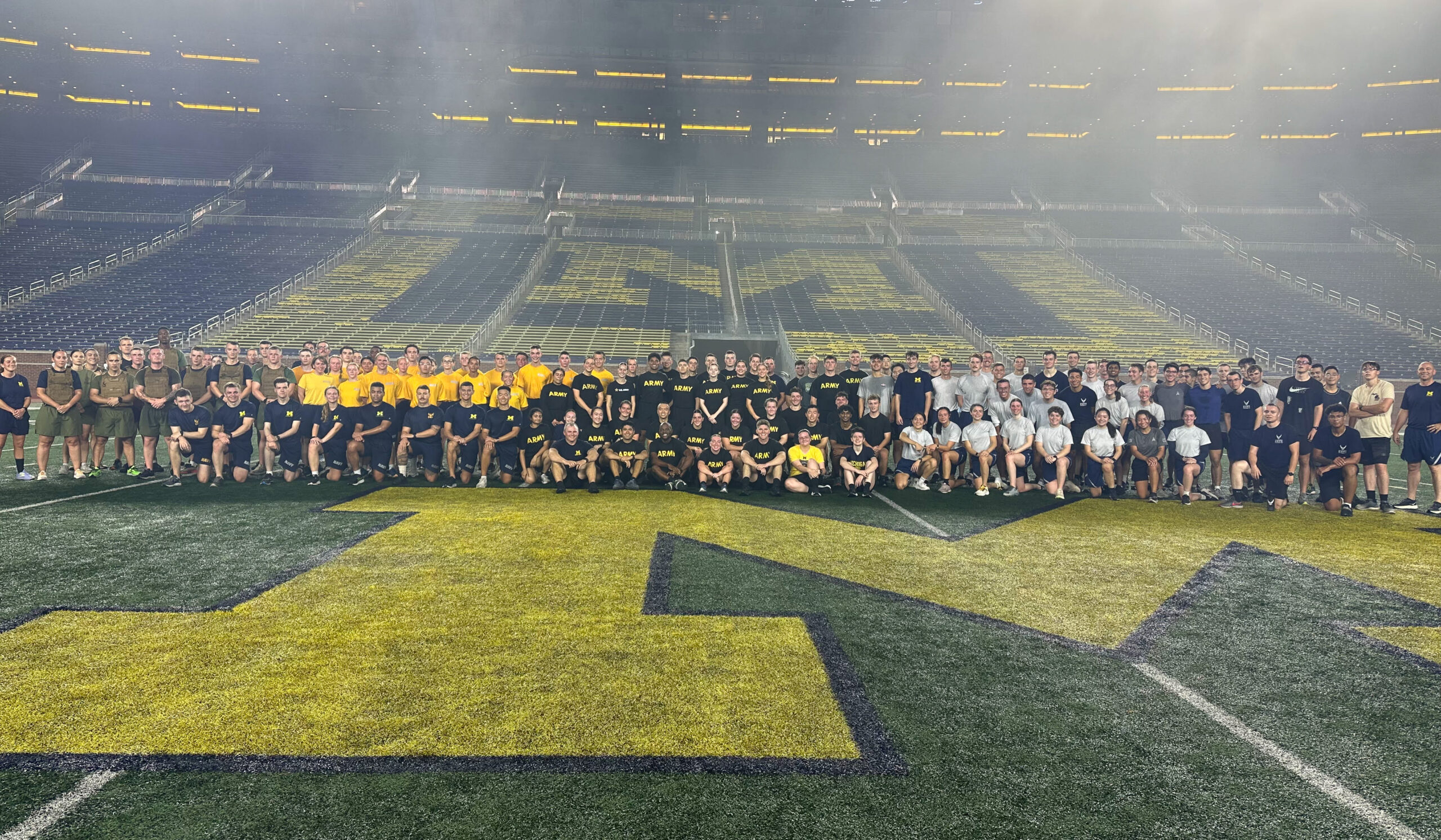
When Art Bartell, ’77, joined the Reserve Officers’ Training Corps (ROTC) at the University of Michigan in the wake of the Vietnam War in 1973, it was the smallest Army ROTC class in school history, he says. But Bartell was also part of a storied tradition at the University that’s counted Gemini 4 astronauts James McDivitt, ’59, HSCD’65, and Edward White, MSE’59; Skylab 3 astronaut Jack Lousma, ’59, HDAS’73; and actor James Earl Jones, ’55, HLHD’71, among its ranks.
“U-M has a history of producing extraordinary officers, and we want that to continue,” Bartell says.
It’s one of the reasons Bartell founded the University of Michigan ROTC Alumni Association (UMRA) this year, which joins the University of Michigan Muslim Alumni (UMMA) as the two newest affiliate groups for alumni.
Such groups foster a symbiotic relationship between students and alumni: students learn from the experiences of alumni, and alumni maintain a connection to the place that was instrumental in shaping their careers, and often the course of their lives.
New Groups
After a 36-year career in the Army, including three deployments and being stationed throughout the world, Bartell never lost his connection to U-M or the ROTC program. Now a Michigan resident and regular attendee at football games, Bartell began talking with professors and cadets about their interest and vision for an ROTC alumni group. Soon, he accepted the invitation to become the first president of the newly formed UMRA along with three other ROTC alumni: vice president Daniel Allmacher, ’94, treasurer David Babulak, ’92, and secretary Robert Vokac, ’78.
“The purpose of our association is first and foremost to support the ROTC programs, and thereby support the University by providing mentorship, by providing financial support where we can — but overall, to support the program,” he says.
Their first big event was this fall, when the group partnered with the Alumni Association for the homecoming tailgate on Oct. 4.
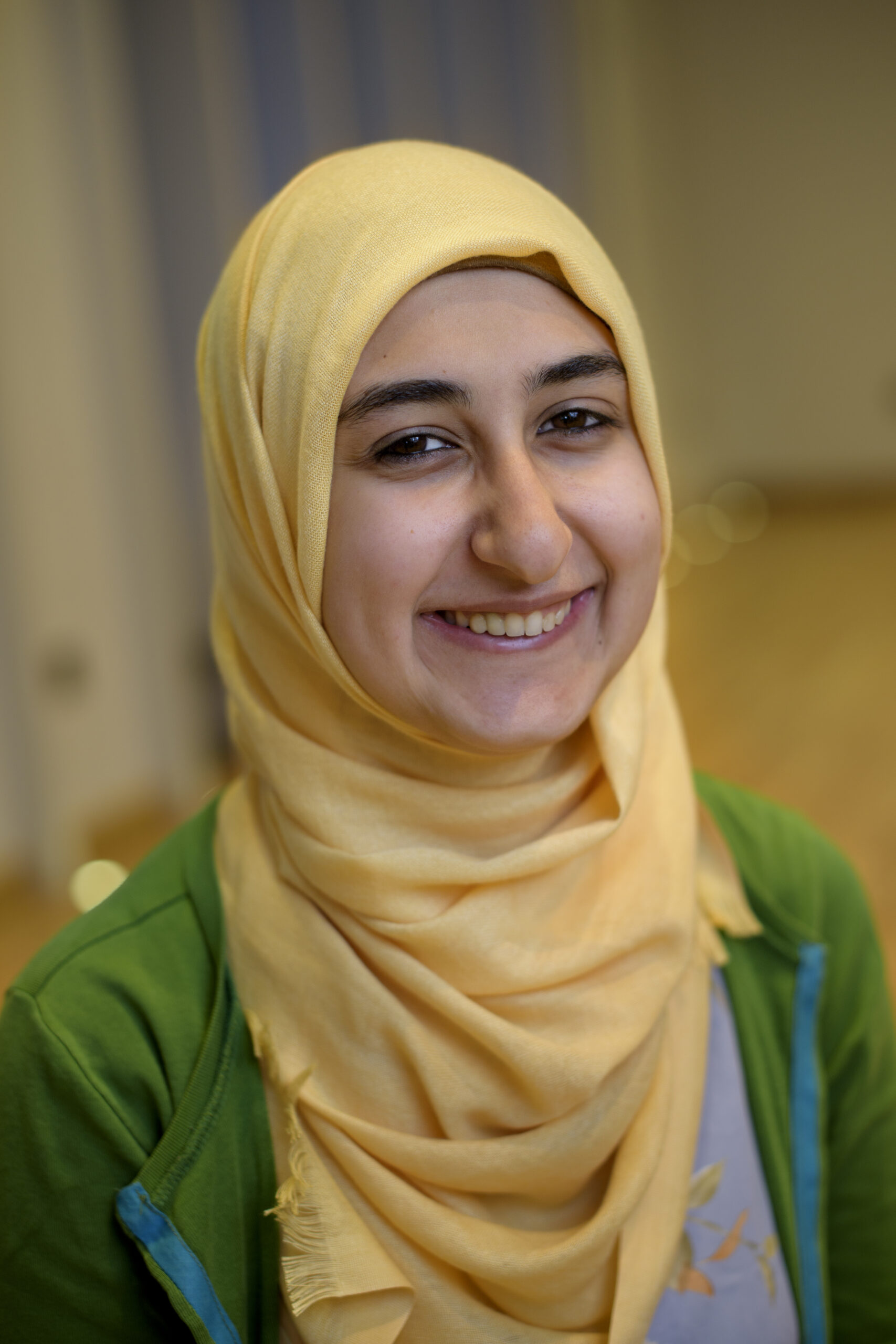
After becoming aware of the Association’s affiliate groups, Jumanah Saadeh, MA’19, a graduate student at U-M, recently helped launch UMMA alongside other inaugural board members Bilal Irfan, ’24, Jabeen Hamzavi, ’92, Nishath Hakim, ’90, Hassan Rehman, MS’22, and Fatima Makki, ’98, MSW’00, MPH’00. Saadeh notes there’s a strong Muslim student community on campus.
“But there hasn’t been a formalized mechanism for students to remain in connection with alums and vice versa,” she notes. UMMA is planning engagement opportunities, and members can expect social, educational, and volunteer-based events.
“We definitely want to be giving back and doing community service,” Saadeh says, adding that educational events will leverage the vast resources of the University.
Even before a year of activities gets rolling in earnest this fall, the response the UMMA has already received has been “really positive,” Saadeh says, noting people’s strong connection to the University.
“The University is super important to people’s lives in the sense that this is where careers start. This is where best friends are made. This is where marriages happen. It’s this pivotal moment in so many people’s lives whether they’re in med school, undergrad, doing a fellowship or whatever the case may be.”
More Connections
UMRA and UMMA are the two newest Alumni Association affiliate groups, which are categorized by educational, student, and special interest groups. UMRA and UMMA join eight other special interest groups, including the Alumnae Council and the University of Michigan Black Alumni. Though the groups aim to connect alumni with shared identities, backgrounds, or interests, all groups are open to all alums.
Affiliates create a board, craft bylaws, and must produce a roster of at least 50 alums with which they’re engaged. Judah Doty, the Alumni Association’s associate director of affiliate programs, says the groups benefit both those on campus as well as alumni scattered throughout the country and world. And for new groups looking to form, Doty says the reason should be organic.
“Think about the why, think about your campus partners,” she advises.
Once formed, the groups can draw on support from the Alumni Association, such as a website space and marginal funding as well as guidance from Doty, who can help point groups in the right direction in terms of campus partnerships and thought leadership.
“It’s about building community,” Doty says. “There is something in the water at the University. Our alums carry this place with them no matter where they are in the world.”
David Muller is a freelance writer based in Grosse Ile, Michigan.