Education to the Fifth Degree
•
Photo courtesy of Daniel Schaffa
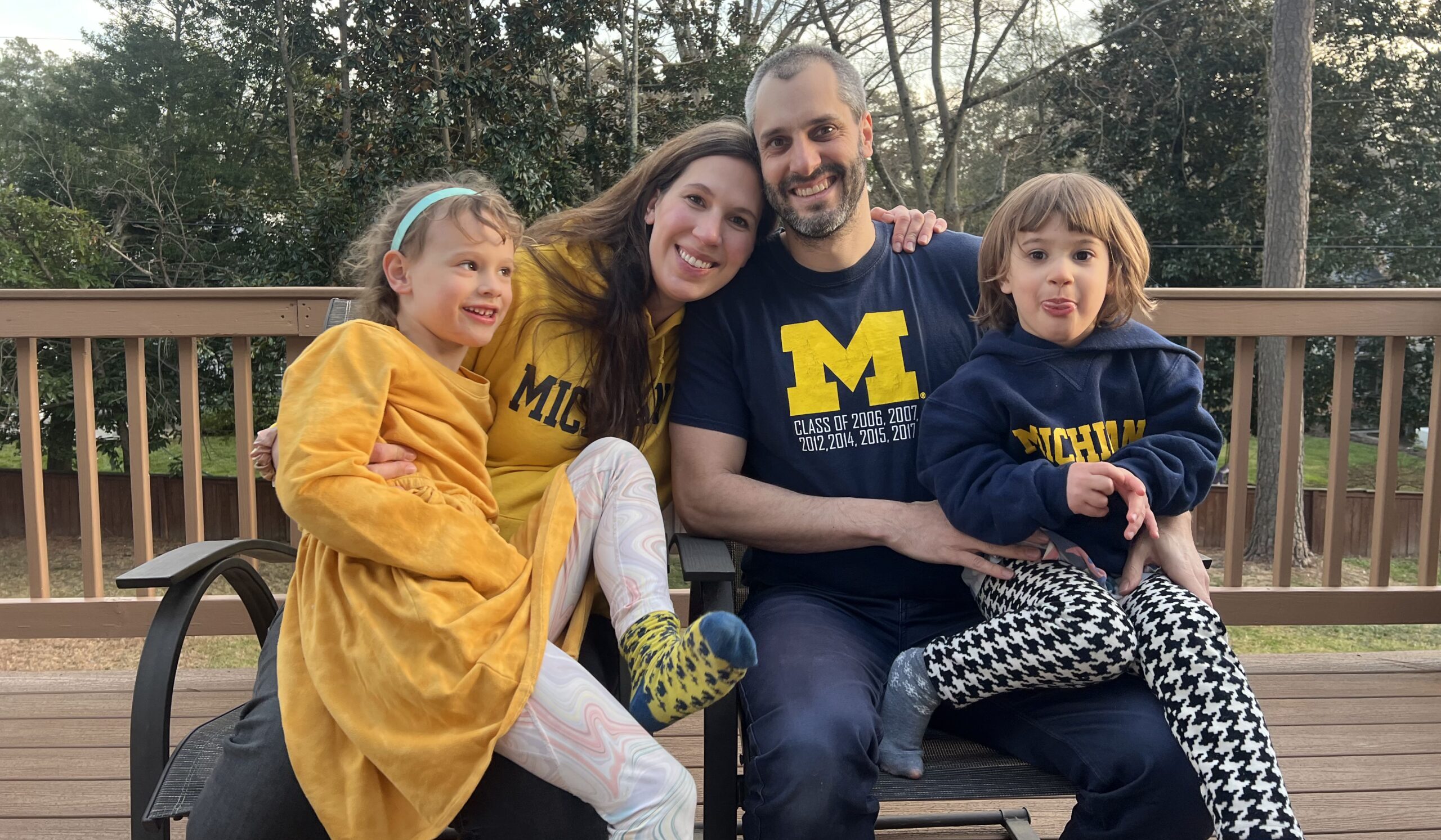
When Daniel Schaffa’s, ’06, MACC’07, MA’12, JD’14, MS’15, PhD’17, fifth University of Michigan degree arrived at his parents’ home — the address he’d left on file at the school — his father called him about the master’s of science in mathematics, saying he didn’t know it was in the works.
Schaffa was working on his Ph.D. and picked up an additional master’s and law degree on the way. He’s among a short list of living Wolverines who have five or more degrees from the University.
“My wife jokes sometimes that whenever we go back to campus, I’ll walk too close to the dentistry building and she says, ‘Don’t even think about it,’” he laughs.
Today, Schaffa is a professor at the University of Richmond School of Law, specializing in tax policy and law — an expertise informed by his degrees in economics, accounting, and mathematics.
The alums with the most degrees range from medical researchers to art teachers. But what they have in common is their love of education and U-M.
Schaffa was always intrigued by academia, but as a first-year student at U-M, he was on track for a career in finance. Credits from high school helped him finish his bachelor’s degree early, and Schaffa decided to complete a master’s degree in what would have been his senior year of undergrad. In 2007, he left Ann Arbor for New York to work at an investment bank, and seven months later, the market crashed and Schaffa was laid off.
“I came back to Ann Arbor and had no idea what I wanted to do. I was working in a chemistry lab. I took the LSAT. Eventually, I decided I wanted to do economics. So I started the Ph.D.,” he says.
In the first year of his Ph.D. program, Schaffa talked with his advisor, economics and law professor Jim Hines, about applying for a joint degree. The active LSAT score, it turns out, made the decision easy. Hines — who continues to be a mentor and friend — encouraged Schaffa to apply to the joint JD program at Michigan Law.
“And then, at some point, I wanted to become a little bit ‘techier’ with some of the economics I was doing, so I was taking some math classes. I realized I was close to a master’s, and I said, ‘You know what? We’re here. Let’s just go for it,’” Schaffa recalls, earning him his fifth degree.
Schaffa says he’s always been a curious person, and appreciated the University of Michigan because of the breadth of opportunities to explore different topics, take new classes, and expand his educational horizons.
With an education grounded in the humanities (four of his degrees are from the College of Literature, Science, and the Arts), Schaffa developed many hard and soft skills that support his career success, including better writing skills, a “fearlessness” to ask questions, and the importance of being a team player.
“I think being a person who is easy to work with is really undervalued in many contexts. I saw interactions and said, ‘I want to be like that,’” Schaffa says. “Jim Hines pointed out to me that the world just works out better if you are easy to work with and a good team player.”
‘A Teacher at Heart’
University of Michigan professor emerita Sharon Brooks, ’65, DDS’73, MS’76, MS’84, MS’89, didn’t necessarily set out to attain her last two master’s degrees.
The first, in environmental health science, began as a way to learn more about graduate subjects she was hoping to teach in the dental school at U-M.
“The fellow who taught radiation physics and biology retired. I went to the boss and said, ‘I’d like to take over his classes. I know I don’t know enough, but here’s where I’m going to get the info.’ So that’s when I started working on degree number four,” Brooks says. “I was only going to take two classes … [but] I might as well get the degree. I’m degree-oriented.”
The next came when Brooks heard about an “On Job/On Campus” program through the School of Public Health where she could study clinical research design and statistical analysis but only meet for three and a half days each month, allowing her to keep working at the dental school.
“That was just for fun,” she says.
Brooks initially wanted to study languages in college and started at Indiana University before being encouraged to transfer to the University of Michigan by her now-husband. There, she changed from a double major in Russian and chemistry to one in elementary education — feeling the pressure of the 1960s.
“There were two careers for a woman: you can be a teacher, or you can be a nurse, and I didn’t want to be a nurse,” Brooks says, adding that her path of interesting courses led to a “liberal, broad education.”
While working in a computer lab after graduation, Brooks’ interest was piqued while receiving orthodontic care, and she decided to apply to dental school. In Ann Arbor, Brooks narrowed in on diagnostics, completed her D.D.S. followed by a master’s in oral diagnosis and radiology, and began teaching at U-M two days after commencement.
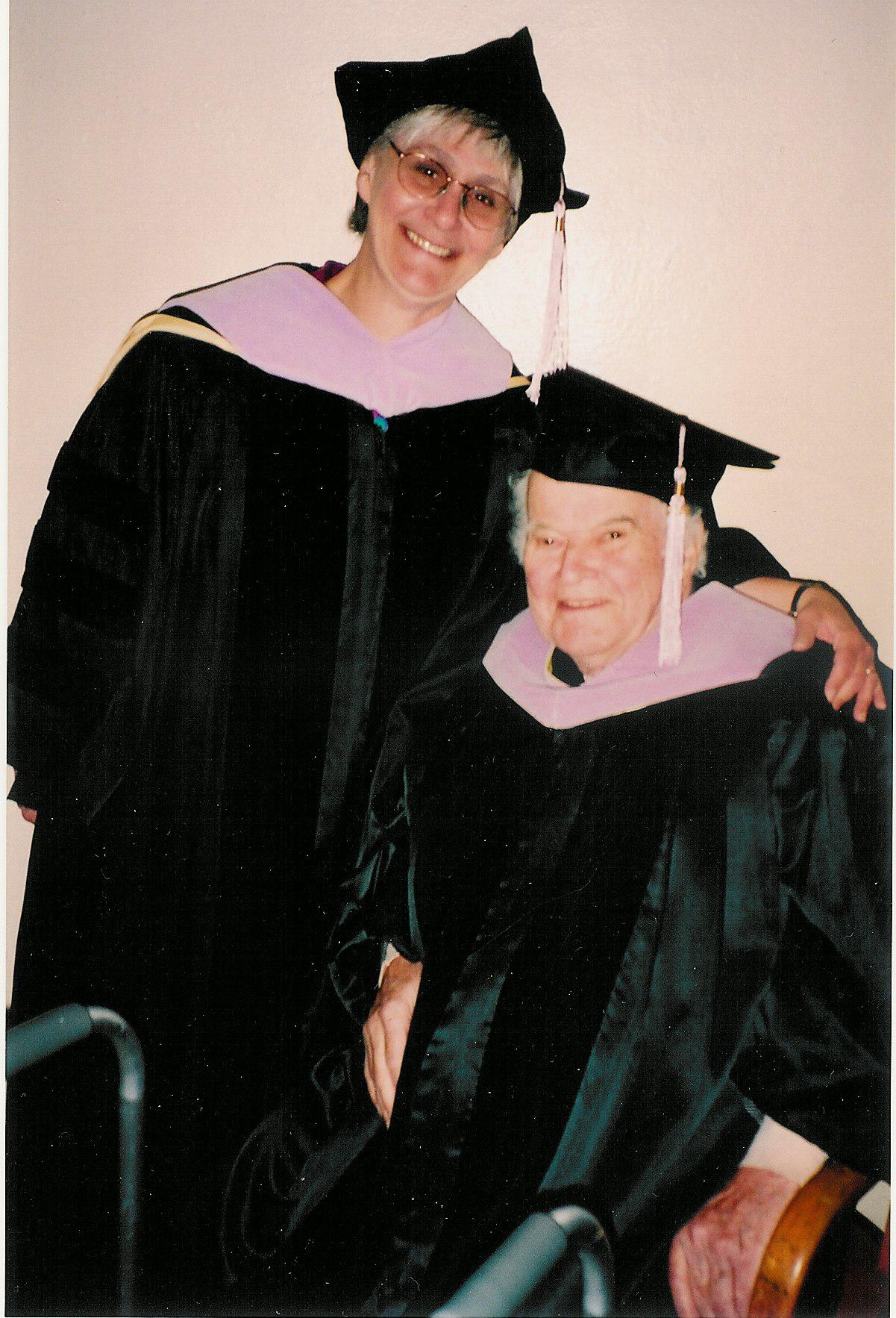
Brooks stayed at the University of Michigan because of the opportunities — both those that came her way, and those she forged herself.
“I was getting opportunities. Some of it, I was making opportunities. When I told my department chair that I wanted to do something, and this is where I was going to get the information — I did not just sit there and hope that everything would work out,” she says. “That’s what I do.”
As she followed her interests through her education, Brooks was steadily gaining the experience that would make her an expert in her field.
In the early 2000s, Brooks was working in the dental clinic when a patient, a student in biomedical engineering, said he was working on an imaging project and invited Brooks to see the prototype and computer program that was compiling X-rays into a 3D image — an early CT scanner. Brooks got involved in testing and sharing feedback, ultimately becoming an expert in Cone Beam Computer Tomography (CBCT), a medical imaging technology.
Brooks served on national and international committees and boards, including as the director and president of the American Board of Oral and Maxillofacial Radiology. Her research was used to develop guidelines and selection criteria for dental imaging.
After 37 years, Brooks retired from U-M in 2010 but didn’t stop working. Instead, she served as a radiological consultant with 40-50 cases per week, mentoring new radiologists along the way.
“I wasn’t ready to turn my brain off,” she says.
She also returned to her language roots and, in 2018, decided to get a sixth degree — this time in linguistics from Eastern Michigan University.
But the most rewarding part of her career was mentoring students. Despite not wanting to be an elementary school teacher, Brooks says she’s “a teacher at heart.”
“I’m never going to win a Nobel Prize or a Pulitzer or any of those, and that’s OK. I don’t need those,” Brooks says. “[I’m most proud] when I go places and meet former students that have good things to say.”
Career Pivots
In the late 1990s, Tammi Browning, ’85, ’99, MA’02, MPA’09, EDS’12, was back at the University of Michigan’s Flint campus more than a decade after completing her first undergraduate degree in anthropology in 1985.
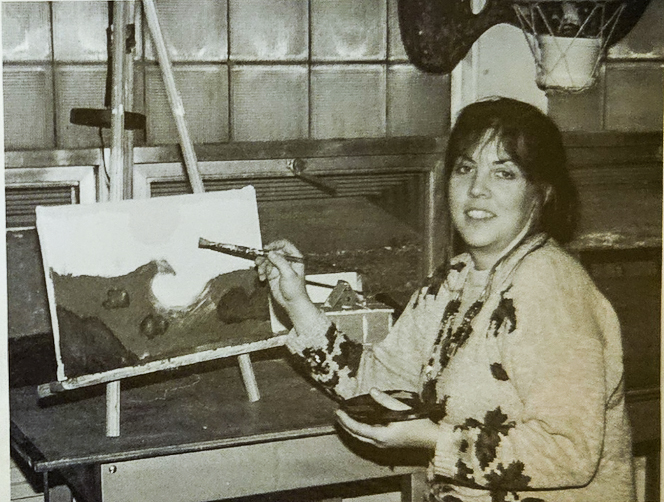
She’d become interested in anthropology while finding artifacts as a child growing up in Arizona and Colorado. But after trial careers in hospice, anthropological digging, and massage therapy weren’t proving as satisfying as she’d hoped, Browning was working on a new bachelor’s degree to pivot into becoming an art teacher — a career that she’d soon stick with for 20 years, and which allowed her to incorporate her lifelong love of art.
Browning spent her career in the Bentley School District in Burton, Michigan, joining the staff after completing her second degree in 1999. There, she became a beloved art teacher, and soon directed the theater program as well.
Browning was passionate about art education and found creative ways to tailor lessons for her students.
“I used to go around and talk to all the other teachers in my building and ask them what they’re teaching. And then I would create a lesson in art that had something to do with those [lessons], so the kids could connect that art is a part of all the subjects, if you want it to be,” she says.
She also helped advocate to add the arts into STEM-focused curriculum, working with the district to develop standardized testing for art as an emphasis on testing data grew across the country. Through these experiences, she was encouraged by her colleagues to get more involved.
“I felt very strongly [about] keeping the arts alive in education. I thought the administration avenue would be the best way to do that,” Browning says.
Browning returned to UM-Flint to complete her master’s of public administration and education specialist degrees while still teaching and raising her children, attending classes online, and heading to campus for the required in-person meetings.
Browning also nearly completed her Ph.D. focusing on curriculum, but found herself getting discouraged with the growing bureaucracy that had changed the landscape of education administration since she began her career, instead returning to teaching, and retiring in 2019.
But retiring didn’t mean slowing down. Spurred by numerous requests from friends and neighbors, Browning started Steel Magnolia’s Garden — a farm market stand she runs and supplies from her home farm. Browning got certificates from Michigan State University Extension’s programs on canning, food preservation, and even marketing to help ensure the stand’s success. She supplies eager customers with fresh tomatoes, peppers, berries, and other produce, plus canned salsas, sauces, jams, and more.
She’s also continued to serve in her community. While offering massage services for a charity event, Browning met a woman who had fallen on hard times that included a cancer diagnosis, and learned she was living through a Michigan winter without heat. Browning and her husband paid to have the woman’s propane tank filled, but she wanted to do more.
Founded in 2019, the Warm Hearts Fund helps local families pay home utility bills during challenging economic times. Browning’s organization helped 38 families last year alone.
“I know there’s lots of people who are going through some medical crisis and they have to choose whether they can have a roof over their head or lights on or their meds,” she says. “I just had to help. I had to do something.”
Cross-Disciplinary Approach
David Gutmann, ’79, MS’80, MS’83, PhD’84, MD’86, arrived at U-M in 1977, enrolled in the now-bygone Inteflex program which fast-tracked pre-med students to a medical degree in six years, rather than eight. He immersed himself in the University’s vast opportunities, taking a variety of courses (and requesting his counselor’s permission to stretch to 21 or 22 credits per semester), playing intramural sports, and being a disc jockey at the school’s radio station. At the end of his first year, Gutmann noticed that he’d achieved sufficient credits to be classified as a junior — a realization that “scared the living daylights” out of him.
“I went and talked to the folks in the Inteflex program and said, ‘I think I’m going to drop out. I don’t want to be fast tracked. Whenever I arrive at it for a career, I want to get there being a well-rounded person who thinks broadly, and this fast train is going to give me tunnel vision,’” he recalls.
Gutmann’s advisor encouraged him not to drop out, but to continue to explore research opportunities while still enrolled in the program. Soon, he enrolled in a master’s of human genetics and “fell under the spell” of professor James Neel, the program director and founder of U-M’s department of human genetics — the first of its kind in a U.S. medical school. It led Gutmann to pursue his Ph.D. training with John Niederhuber, MDRES’73, in microbiology and immunology.
Through his studies, and with the help of his mentors, Gutmann found his research pathway through human genetics, microbiology, and immunology. After completing his studies at U-M and his neurology residency at the University of Pennsylvania, Gutmann returned to U-M for research fellowship training with Francis Collins, HDSC’07, and began to focus on neurofibromatosis. During his fellowship, he identified the neurofibromatosis type 1 (NF1) protein and helped to elucidate its function. He was recruited to Washington University in 1993 and founded the Neurofibromatosis Center in 2004.
In his lab, Gutmann passes along many lessons learned from his time at U-M. The most common things he preaches are that it’s all about the team, that your plan can be flexible, and to embrace new challenges.
“Because I grew up with absolutely no fear — when it comes to risk taking academically — what I always preach to the folks in my lab or my clinical trainees is just embrace your ignorance,” he says. “You should never be ashamed of the fact you don’t know something. That’s part of what drives you to learn.”
Researchers in Gutmann’s laboratory have pioneered the use of unique preclinical models to identify the risk factors for brain tumors and autism and use those research insights to discover novel therapies for people living with NF1.
“We’ve been very successful over the years. We’ve been able to identify new drugs that nobody would have thought of because we had a multidisciplinary or cross-disciplinary approach to the way we conceptualize these tumors,” he says.
Gutmann’s interdisciplinary approach to leading his research teams comes directly from how his time at the University of Michigan impacted him.
“What resonates with me as a professor now is bringing together diverse viewpoints and levels of expertise to tackle difficult problems — that’s how I viewed the University of Michigan,” he says. “You have a campus that’s spread out but encompasses everything from music to medicine. And the fact that we were not siloed meant we all had an opportunity to contribute to the excellence the University is.”
Katherine Fiorillo is the senior editor of Michigan Alum.