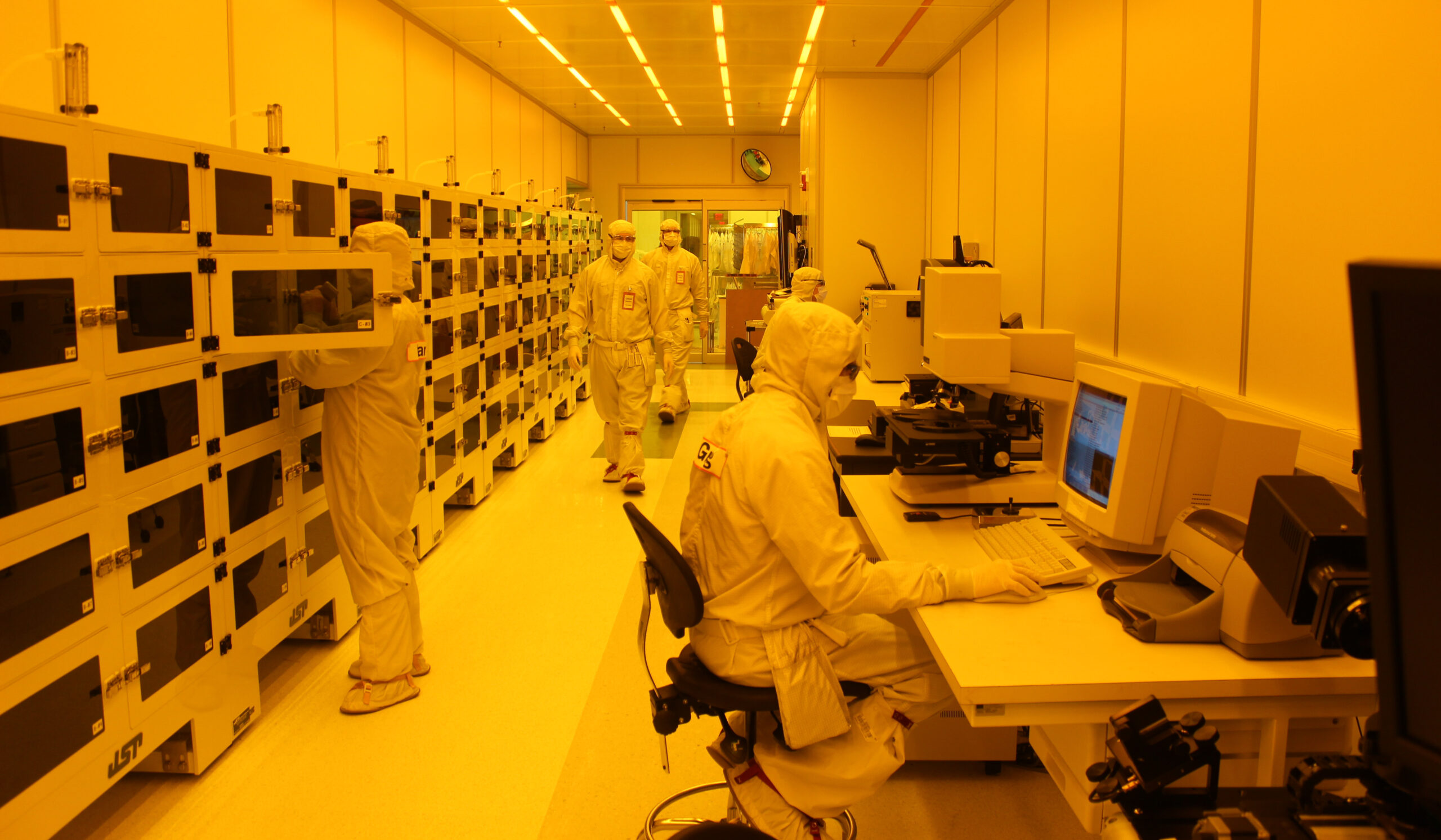
Ph.D student Yakshita Malhotra, MS’20, enters the gowning room and slips into a coverall, boots, gloves, hood, and safety glasses — not to protect her, but to protect the delicate work inside the adjacent cleanroom. Even a single speck of dust could disrupt the nanowire LEDs she’s here to develop, each approximately 100 times thinner than human hair.
It’s meticulous work — and the Robert H. Lurie Nanofabrication Facility (LNF) is built for it.
Located on U-M’s North Campus, the LNF is a world-class, 13,500 square foot cleanroom facility where filtered air keeps stray particles to a minimum. This ultra-clean environment is essential for nanofabrication, creating devices with dimensions measured in nanometers, the scale of billionths of a meter.
Becky Peterson, director of the LNF, says the facility is “where the magic happens” — where ideas are transformed into real-world solutions.
“The work that we do here is ultimately linked back to the technologies that we all rely on,” she explains. “That all starts with materials [and device] fabrication . . . it’s not all software. It takes new sensors, new electronics, new [displays and user interfaces], and this lab is where that happens.”
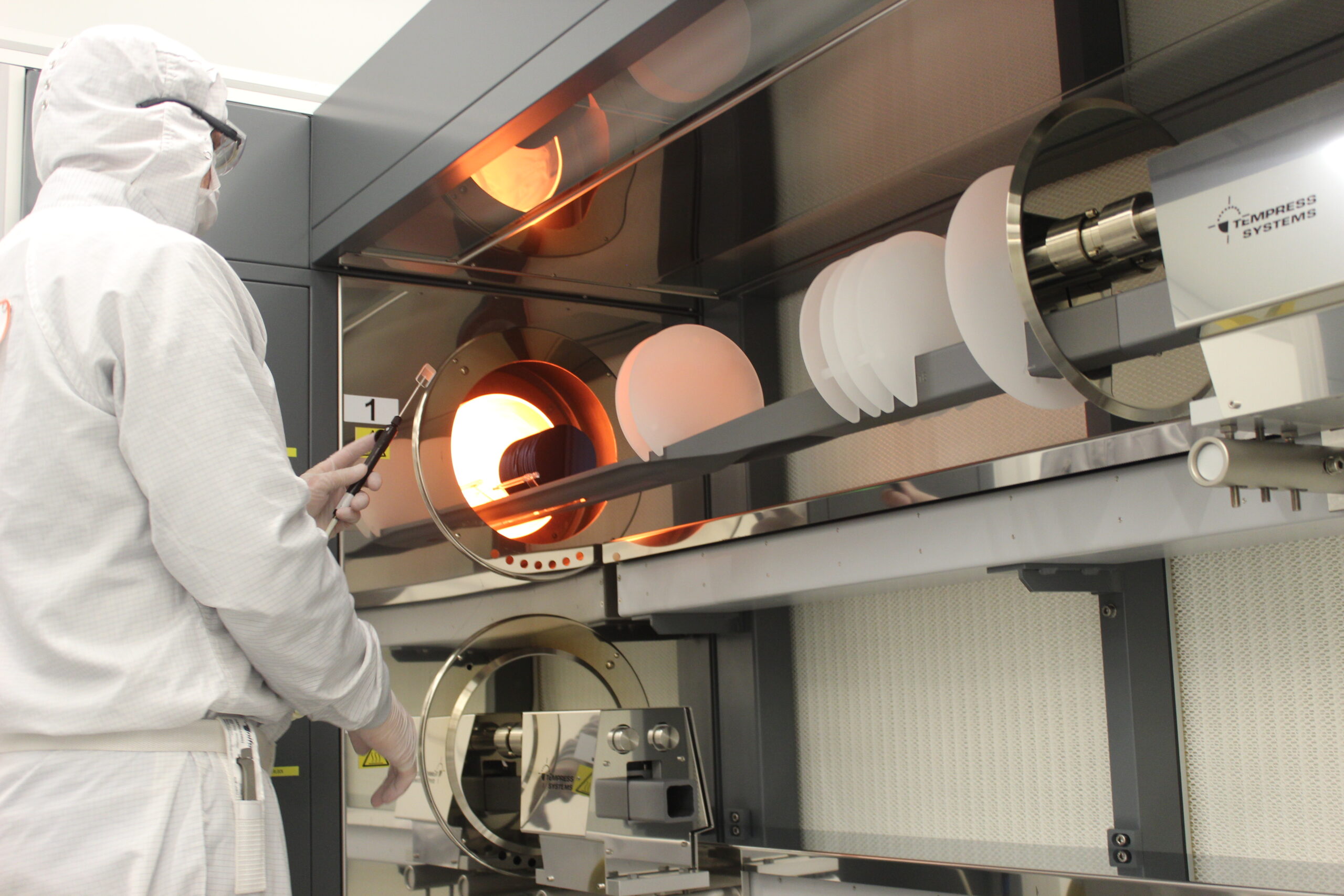
The LNF offers more than 135 specialized tools, from equipment that etches patterns only a few dozen atoms wide to systems that deposit ultra-thin layers of materials. These capabilities fuel innovation in fields that shape daily life: powering faster electronics, advancing clean energy solutions, improving medical devices, and driving breakthroughs in optics and photonics.
Behind those innovations are researchers like Malhotra. While nanowire LEDs are primarily used in display technology, she believes it’s just the beginning. With support from the LNF, she’s deepening her understanding of these tiny structures and exploring potential new applications, including virtual reality devices.
“It’s exciting to uncover the stories that these nanostructures are waiting to tell about the physical mechanisms that make them work, and figure out where it all fits with our existing knowledge,” Malhotra says.
Malhotra is just one of more than 400 users who rely on the LNF each year, including students, educators, researchers from other universities, and industry partners from across the country. It’s accessible 24 hours per day, 7 days per week, 365 days per year, but users must have a clear objective for being there, ensuring every visit is tied to a research project or experiment.
Supported by 20 LNF staff members, users benefit from an environment where knowledge is shared and collaborative problem-solving is encouraged. Peterson says the staff is there to support and help the users do impactful research and advance scientific knowledge.
“It’s really the success of the users that is the success of the facility,” she says.
In addition to advancing nanotechnology, the LNF is shaping the next generation of scientists and researchers. Through hands-on outreach programs for undergraduate and high school students, the facility gives them an opportunity to explore nanofabrication firsthand — and step into a space where ideas can become breakthroughs.
“We’re always trying to do something new and to push the edge of what we can accomplish with the existing tools and capabilities we have,” Peterson says. “The fact that [LNF users] can go into the facility and be successful developing new technologies, writing papers, discovering new scientific insights, and establishing new capabilities . . . it’s pretty astounding.”
Quinn Redick is a junior copywriter for the Alumni Association of the University of Michigan.