Built to Win
•
Header photo by Andrew Mascharka
Dusty May has not had much time to build a national championship-winning program. He’s only been at the University of Michigan for two basketball seasons, and his roster has already been through major changes.
During the 2025 offseason, the Wolverines faced a familiar modern dilemma. Danny Wolf, a star player in Michigan’s previous season, declared early for the NBA Draft, becoming a first-round pick of the Brooklyn Nets. Two additional starters, Vladislav Goldin and Rubin Jones, exhausted their eligibility, and five more players departed for new schools via the transfer portal.
With the increased movement from the portal and money from name, image, and likeness (NIL) deals quickly becoming a new factor in college players’ choices, May’s young program left some fans doubtful that the Wolverines could recruit enough talent and develop enough team chemistry to make a viable national championship run in just his second season.
“We knew if we were going to continue to win, we had to recruit some older players. As we all know, it’s very difficult to win with all freshmen in college basketball, so we just tried to identify the guys that fit our culture and our style of play,” says Dusty May, the head coach of the men’s basketball team at U-M.
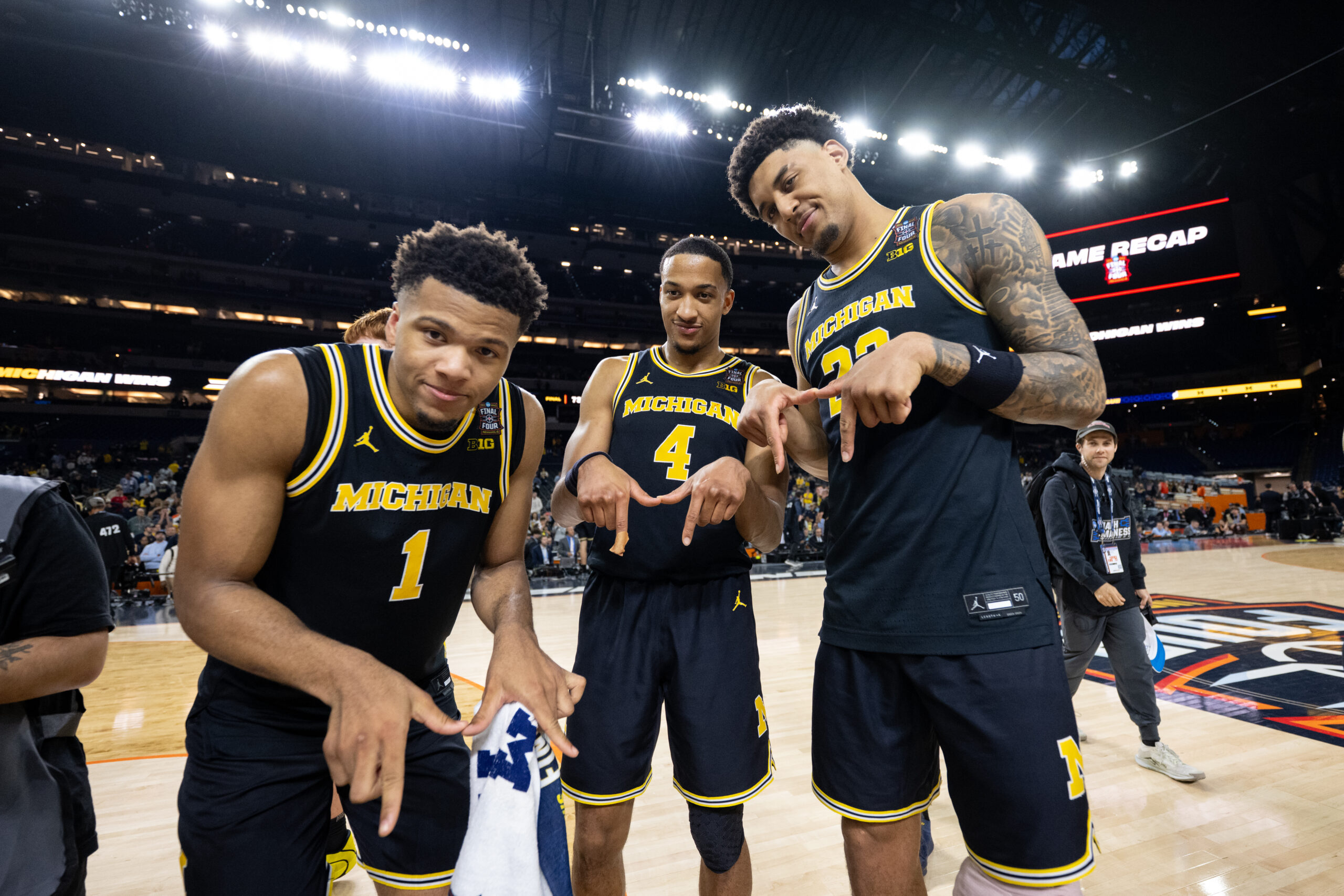
Four of the five national championship starters weren’t playing for the Wolverines the prior season, and the fifth, Nimari Burnett, had transferred to U-M two seasons earlier. To build a championship-bound roster, the coaches’ recruiting and selection strategy prioritized chemistry and culture.
“I believe it starts in the identification process of selecting the right people, not just the leading statistical players in college basketball,” May says.
Yaxel Lendeborg, who started his career at Arizona Western, a junior college, was the top-ranked player in the portal after collecting more and more impressive stats at the University of Alabama at Birmingham. But the others — Elliot Cadeau, Morez Johnson Jr., and Aday Mara — while still highly rated picks, had yet to find a team that brought out their best. Cadeau spent two seasons at the University of North Carolina at Chapel Hill, but hadn’t found the team that would allow him to become a dominant playmaker on the court. Johnson Jr. began at the University of Illinois but missed part of the season when he broke his wrist in a game against Michigan State. Mara, who played professionally in Spain as a teenager, was underutilized during his two seasons at the University of California, Los Angeles.
But NIL deals and changing transfer roles have transformed college basketball into something closer to a free-agent market.
“Sometimes you want a player, but another team has offered him more money,” May says. “With the budgetary constraints, with our academic constraints, our pool is somewhat limited. So the guys we identify, we have to have a very high ‘hit’ rate — we have to be extremely efficient in recruiting for those reasons.”
Top players juggle staggering competing offers. In a 2026 interview with The Associated Press, Lendeborg said that the University of Kentucky offered him “$7 (million) to $9 (million).”
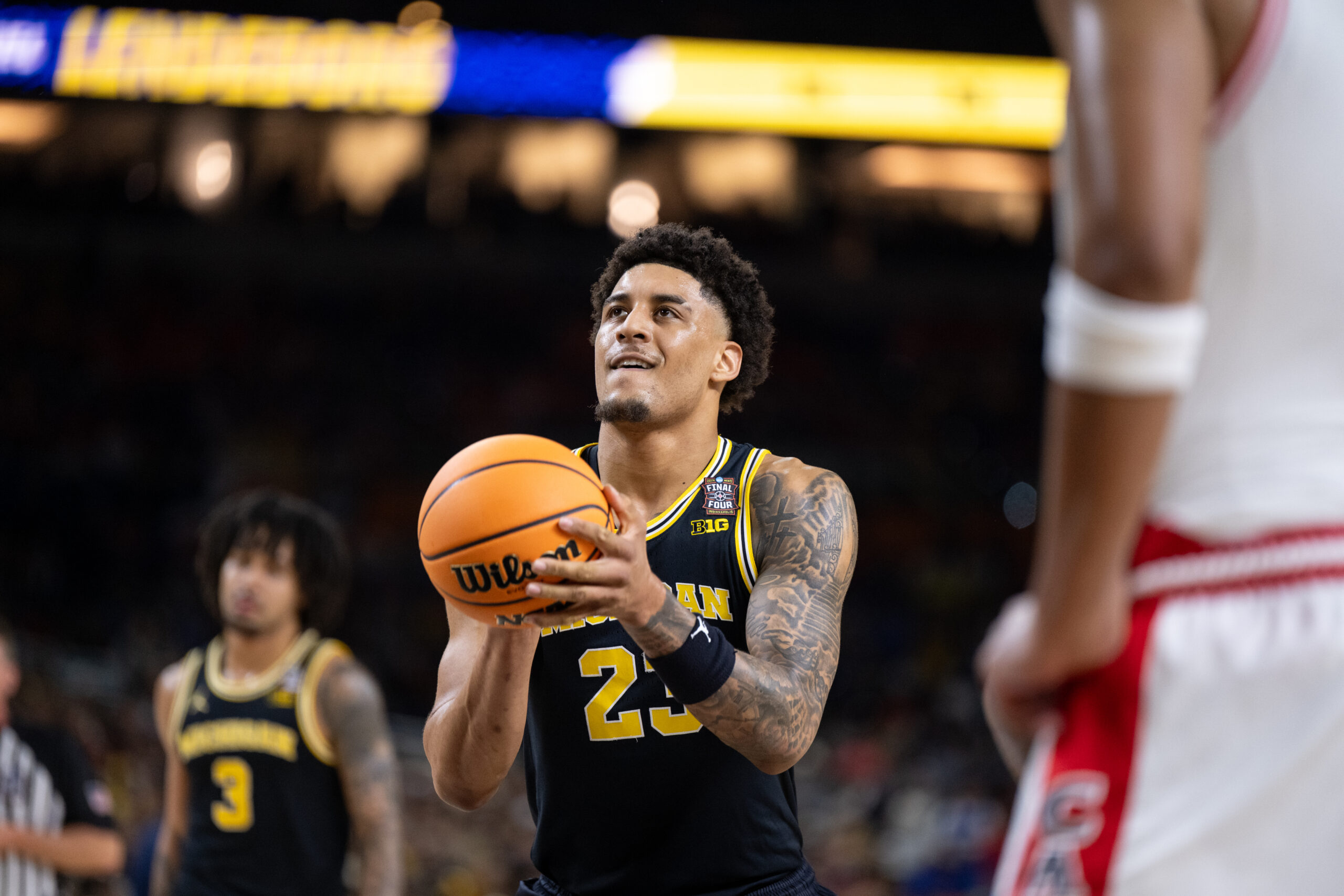
But NIL offers are not the only variable in the recruiting equation. School and team culture do remain important factors, even in an era of deals with life-changing figures. Lendeborg would have earned three times more money in Kentucky, but still chose to commit to the University of Michigan — even withdrawing from the NBA Draft to play for the Wolverines in the 2025-26 season.
That’s something May understood long before he began recruiting this year’s team, and it’s one of the reasons he wanted to coach in Ann Arbor.
“If you have 13 players on your team, all 13 aren’t going to be achieving the success that they had hoped, or their families hoped they would. And so, where’s a place that is difficult to leave or they would choose to attend if they didn’t play basketball?” May says. “And that’s why I thought Michigan was a place where you build and retain top-shelf talent, program guys, and glue guys, and those young men that appreciate all that Michigan has to offer, as opposed to just basketball.”
Developing Chemistry
Once assembled, the Wolverines’ chemistry began to take shape. In the last week of August 2025, the team took a trip to northern Michigan together to bond. Some cite the trip as the moment the team started to click.
“We had a lot of fun, spent time together, and really got to know each other better,” Mara says. “I honestly think that trip helped bring us closer as a team, and that made a big difference for us all season.”
“It’s a beautiful thing to watch. It’s very rewarding as a coach to see it grow throughout the summer, end of the fall, and then throughout the season,” May says. “It’s not easy to sacrifice the way our players did all season, especially as individualistic as sports have become, and everyone’s encouraged to have their own brand and their own identity. For those guys to buy into a team-first identity and a team brand was pretty special.”
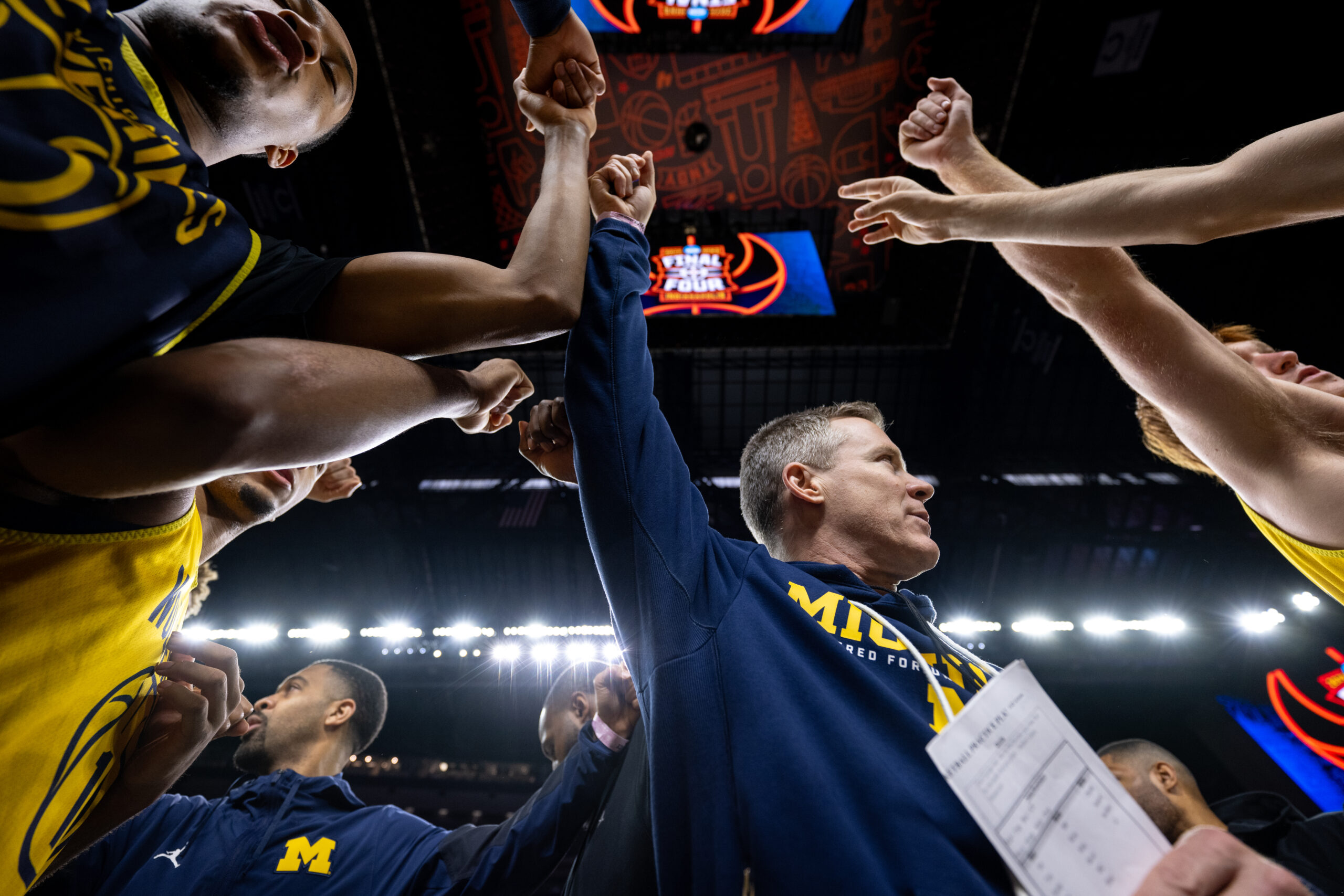
As coaches, fostering and maintaining team chemistry is challenging with an ever-changing roster. But May says the team’s cohesion came from the players themselves — seasoned teammates who had enough experience to know what they’d been missing.
“The staff has to force the right environment to learn and grow, and we have to value the right things, and reward the right behaviors. But also our guys — they wanted to do it together, and they knew because they’ve been at other [schools], they needed each other, and they’re also aware of each of them bring-ing their own unique gifts to the group that none of us are perfect. We all are flawed. But because we’re a part of the team, then we can each pick up the slack and support each other in the areas that need to be supported,” he says.
May says the team “had eight or nine different players that were considered starting caliber.” By testing lineup combinations and tracking which groups played most effectively together, the players adopted an unlikely mentality for a talent-rich team: “the belief that starting the game didn’t really matter,” May says.
It’s necessary for the long college basketball season, where injuries or other unforeseen circumstances — like L.J. Cason’s torn ACL in February — can change who is on the court.
With 40 games on the schedule, May commends “the endurance and stamina that it takes to do what the players did.”
“They never got complacent. They remained committed to the team, and these are the things over a five-month season that are much more difficult than the general public realizes,” he says.
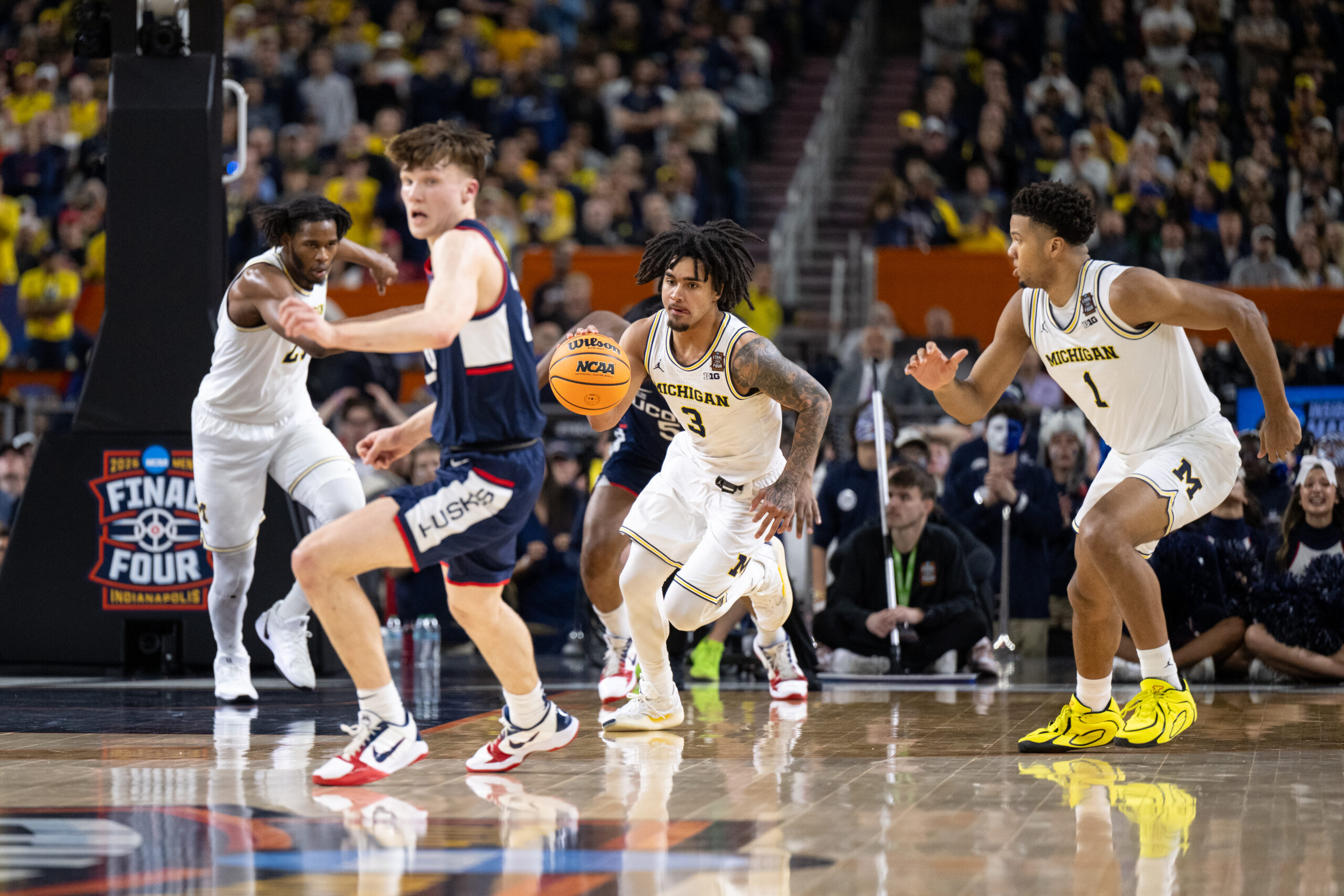
By February, U-M was ranked No. 1 in the AP poll for the first time since 2013. The Wolverines lost only one conference game during the regular season, finishing with a 37-3 record (and a national championship trophy).
“When you look at how tough the Big Ten is and to go through a conference slate undefeated on the road, I doubt that will ever happen again,” May says. “To only lose one game in a Power Five conference like we did — I don’t think that will happen anytime soon.”
Alumni Support
At the national championship in Indianapolis, maize and blue fans dominated the crowd. May says the outpouring of support from the U-M community made the national championship game feel like “a home game in Lucas Oil Stadium.”
“An event like this brings so many people together,” May says. “I met people and they were hanging out with their freshman year roommate from 40 years ago that they hadn’t seen in 20 years. And that event connected all of those people — young, old, new friends, old friends — and so that’s the power of sports, and the place that people have as much pride in as Michigan, where they want to come back and just share that moment with everyone who’s connected because they all went to school here.”
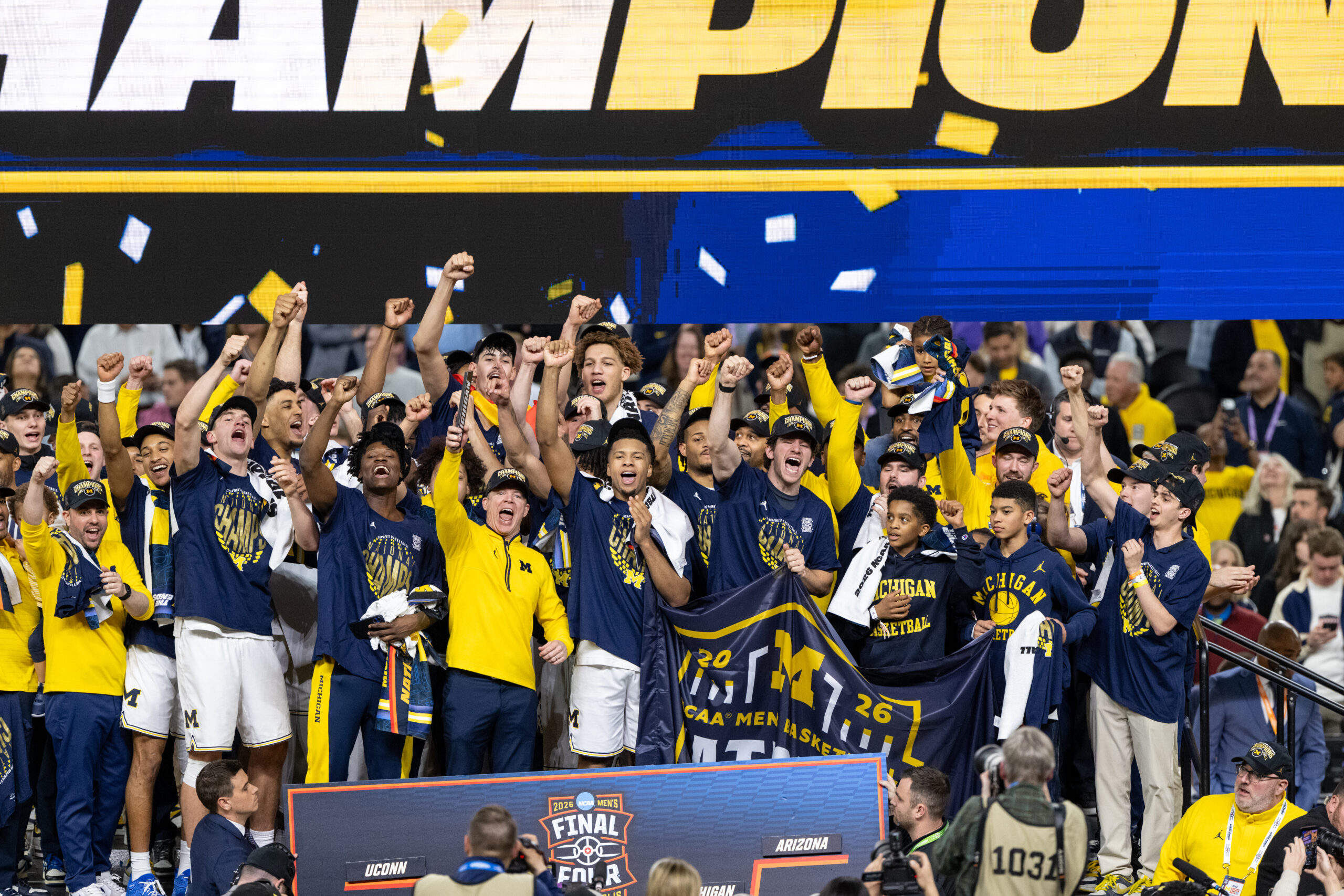
With the second-ever men’s basketball national championship at the University of Michigan, this team — and the improbable way they came together — will be remembered alongside the 1989 team’s magical tournament run and the Fab Five as defining moments in the program’s history. But ask May what he wants people to remember and he doesn’t mention any names.
“It was — is — a true team. We had guys that were labeled as superstars, but they weren’t really superstars — they were just a member of the team,” May says. “That’s the coolest part of it. It wasn’t as if one or two guys carried us. We had contributions from everyone. Everyone in our locker room brought great value and contributed to the success.”
Katherine Fiorillo is the senior editor of Michigan Alum.