
The central tenet of Wolverine Street Medicine is “meeting people where they’re at.” And for the student-founded-and-led organization, that means literally meeting patients on the streets of Washtenaw and Jackson counties, as well as in Detroit.
“The community is very receptive and very appreciative of what we’re doing,” says Neil Nixdorff, MDFEL’24. “A lot of the individuals that we see have had very sort of hostile, negative encounters with the health systems, through the nature of fragmented care, the delicacy of their positions, and not feeling listened to.”
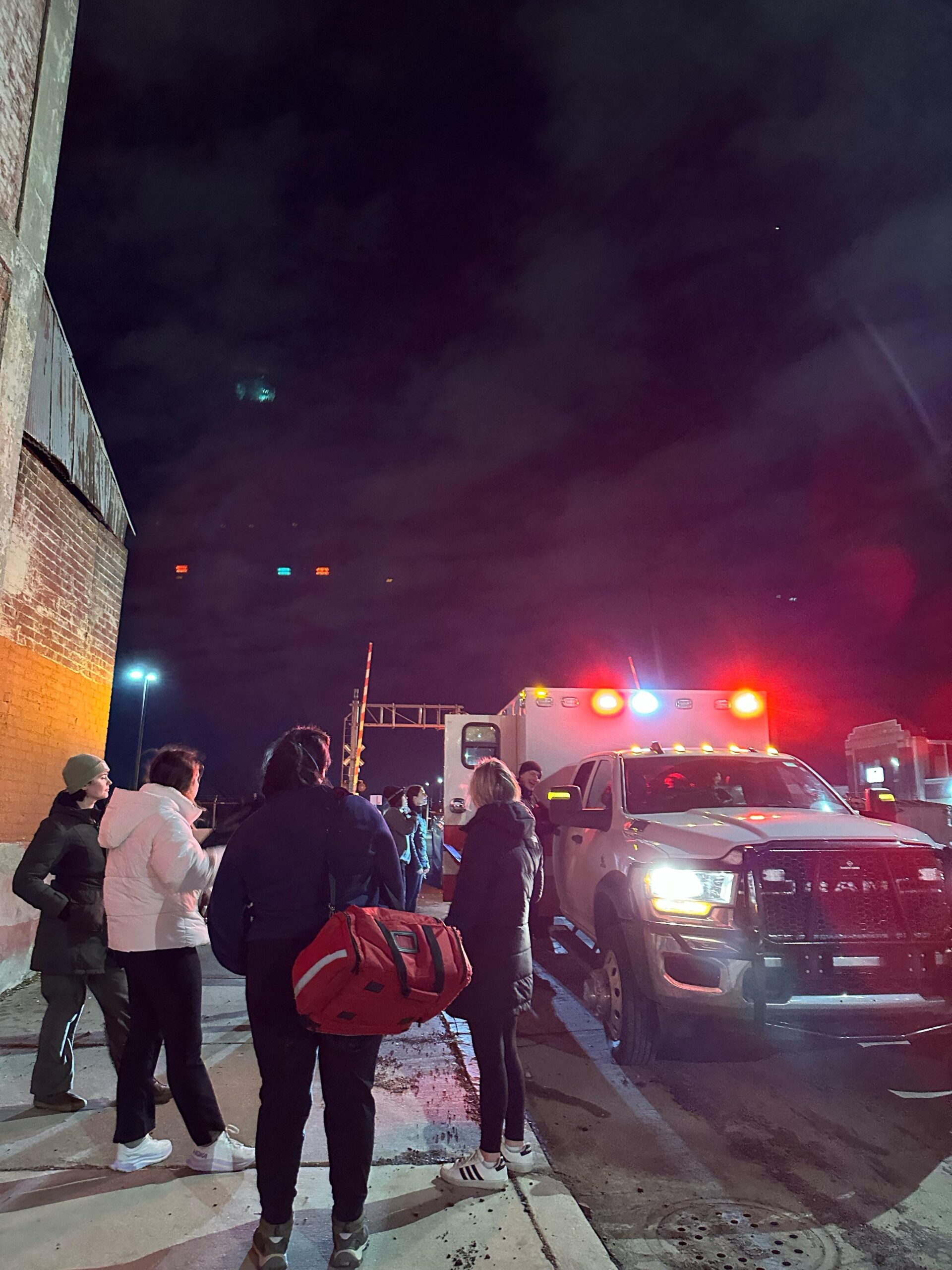
Established in 2017, Wolverine Street Medicine aims to increase access to high-quality health care for people experiencing homelessness. The group has six to eight outreach events per month, many of which are in partnership with established community events and drives, making it easier for community members to find them if they need care.
Nixdorff, a clinical instructor in the department of internal medicine at Michigan Medicine, has volunteered with Wolverine Street Medicine since 2022. He currently serves as medical director and a faculty advisor for the organization. Nixdorff says the group works to address people’s most pressing health care needs — whether it’s a growing foot infection, dental care, or chronic pain — which can be a learning curve for medical professionals.
“As a health care provider, I have my own agenda when I see somebody. I have my list of things that I think they need to pay attention to and take care of. And nowhere is that less important than on the streets,” Nixdorff says.
Wolverine Street Medicine also provides a valuable professional and personal development opportunity for medical students. The group is largely student-driven, creating a mutually beneficial opportunity for students to gain hands-on experience while helping to directly meet the needs of the community. A tangible result of this approach is the interdisciplinary crossover with nursing, podiatry, and dental students, who join to support and provide additional care while developing their clinical identities.
Nixdorff says many students go into medicine “with a very strong sense of social justice,” and Wolverine Street Medicine is an opportunity for them to help people in need.
“I think this is an essential part of training a workforce to really make the changes in medicine that we need to see made. I really see the Street Medicine framework as being a good foundation for the next evolution of health care,” Nixdorff says. “The populations that we serve, by and large, are so very appreciative, in a way that sometimes we lose or we don’t see nearly as much as we should within these large, complicated health care environments. And that — at the base of it — really is just one person caring for another person.”
Katherine Fiorillo is the senior editor of Michigan Alum.