
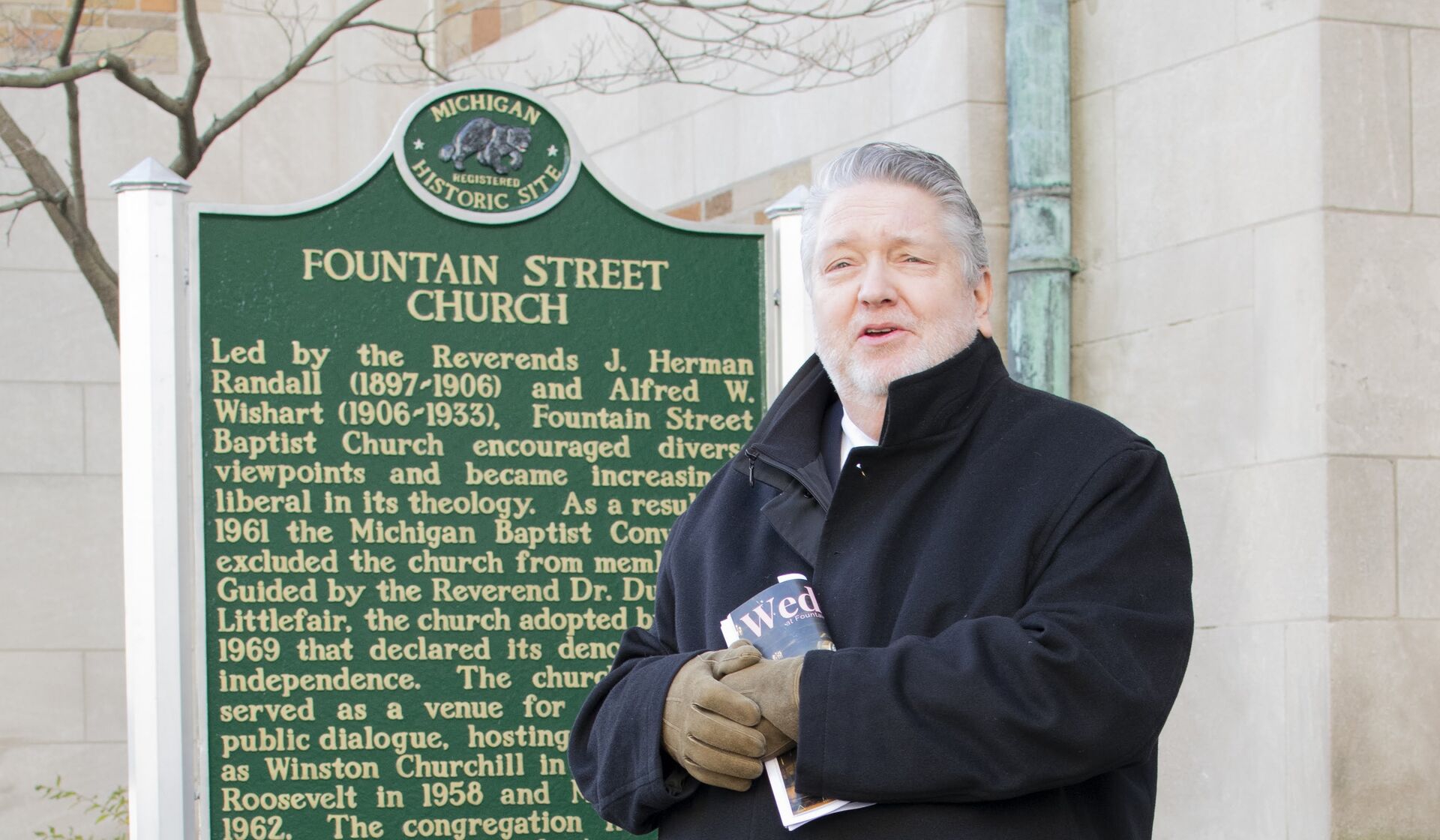
Timothy Chester, ’78, MA’79, came to U-M planning to study medicine and become a doctor. But his love of museums led him to the University’s museum studies program and, ultimately, to his work preserving the state’s history — “a lifelong career that I absolutely loved from the moment I got into it,” Chester says.
Chester is the director emeritus of the Grand Rapids Public Museum and has served as a volunteer on the Michigan Historical Commission since he was first appointed by the governor in 2016. The commission advises and works on behalf of the Michigan History Center, part of the Michigan Department of Natural Resources, advising the department’s director and approving historical markers.
His duties on the commission take him around the state, from Copper Harbor to U.S. Route 12, updating existing historical markers and creating new ones as part of the Michigan Historical Marker Program.
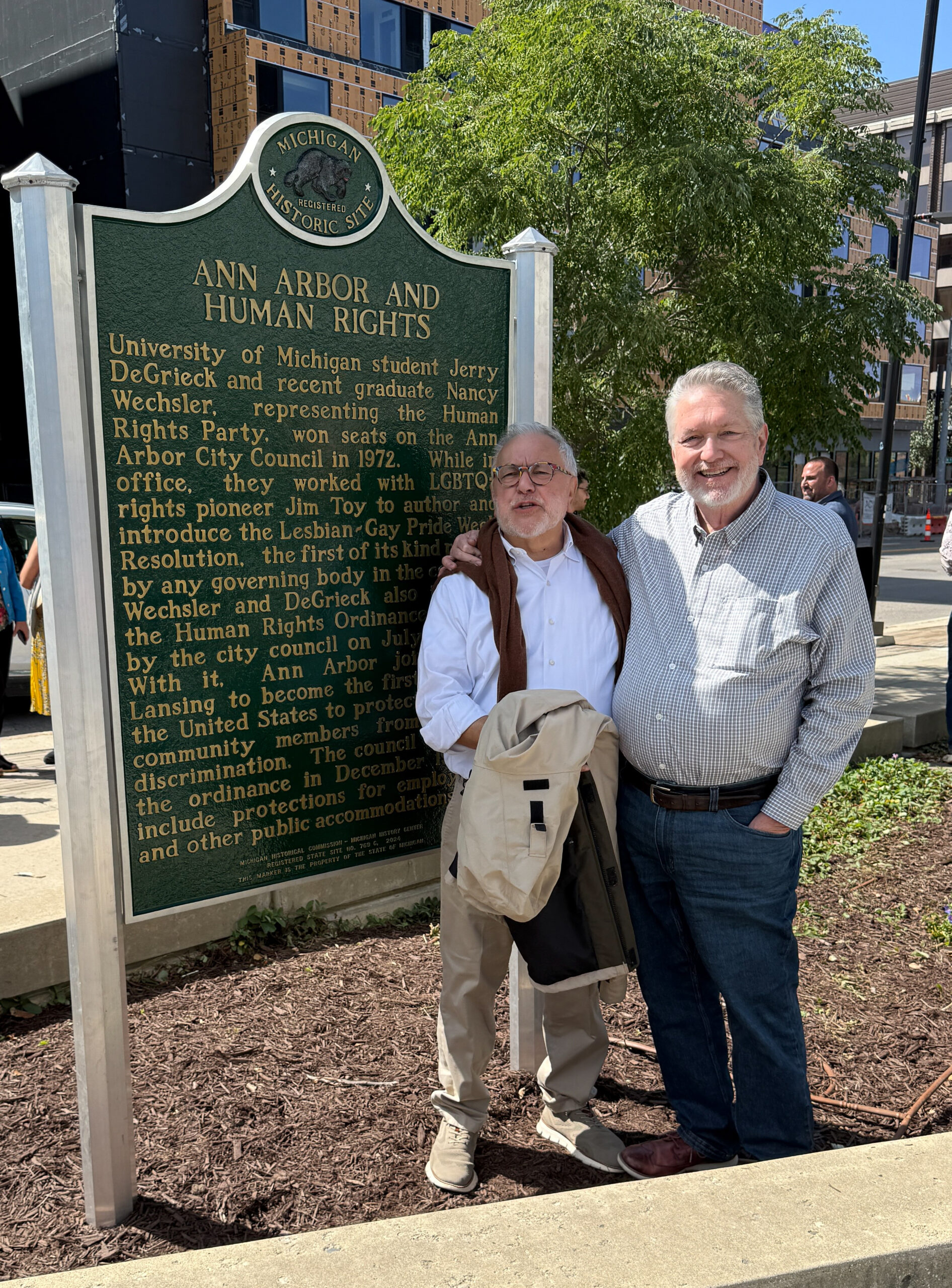
They’re more than “green signs with gold letters,” as Chester describes them; he sees them as opportunities to champion stories that might otherwise go untold. The public brings those stories forward through historical marker applications, helping cement more of them into history — or, in this case, cast into distinctive aluminum signs.
And with 1,800 historical markers standing across the state, Chester also helps ensure the stories they tell are accurate. For him, ensuring every story can stand the test of time is some of the commission’s most important work. The commission recently updated the Finney Barn historical marker in downtown Detroit, an important station on the Underground Railroad in the 1850s.
“There are stories out there where either the information is no longer accurate, the stories are not being told properly, or they’re not being told at all,” Chester says. “It’s incredibly moving for me to be involved in helping generate some of these stories that had no advocates.”
Quinn Redick is an intermediate copy writer at the Alumni Association of the University of Michigan.