Eli Neiburger is Redefining What a Library Can Be in Ann Arbor
•
Photo by Leisa Thompson, Michigan Photography
Play AADL's Summer Game with Michigan Alum
Earn points by reading or listening to books, finding codes in the Ann Arbor community, and solving online puzzles. Redeem points in the Summer Game shop when it opens in July 2026.

Earn Points
Redeem this Michigan Alum exclusive game code for 100 points when you play the Summer Game.
 Alumni Association Badge
Each Friday during the Summer Game, AADL drops new weekly badges with clues and codes to earn more points. Play the Alumni Association’s badge — dropping on the Summer Game website on June 12.
Eli Neiburger, ’96, wears the same shirt all summer. It doesn’t matter if he’s at work at the Ann Arbor District Library, grocery shopping, or mowing his lawn, he’s always wearing the same incredibly valuable piece of clothing. Or, at least, one of the seven copies of the same valuable shirt.
Neiburger knows, at any moment, he could be recognized — spotted by a child on a mission, or an experienced player who knows just what to look for. On both sides of his shirt, hidden in plain sight, is a coveted code worth a whopping 1,000 points in the Summer Game. And the only way to secure the points is to find the Ann Arbor District Library’s beloved director.
“Kids will come running up to me at the grocery store and they’re like, ‘There he is, there he is!’ And that’s wonderful,” Neiburger says. “They want to come up to me and tell me what they love about the Summer Game, and their parents want to tell me what they love about the Summer Game.”
The immensely popular Summer Game is the Ann Arbor District Library’s (AADL) modern version of a summer reading challenge. From June to August, players earn points by finding codes, reading books, and solving puzzles at the library and around Ann Arbor. It’s a way for patrons to experience and engage with the library that goes far beyond borrowing books or other media.
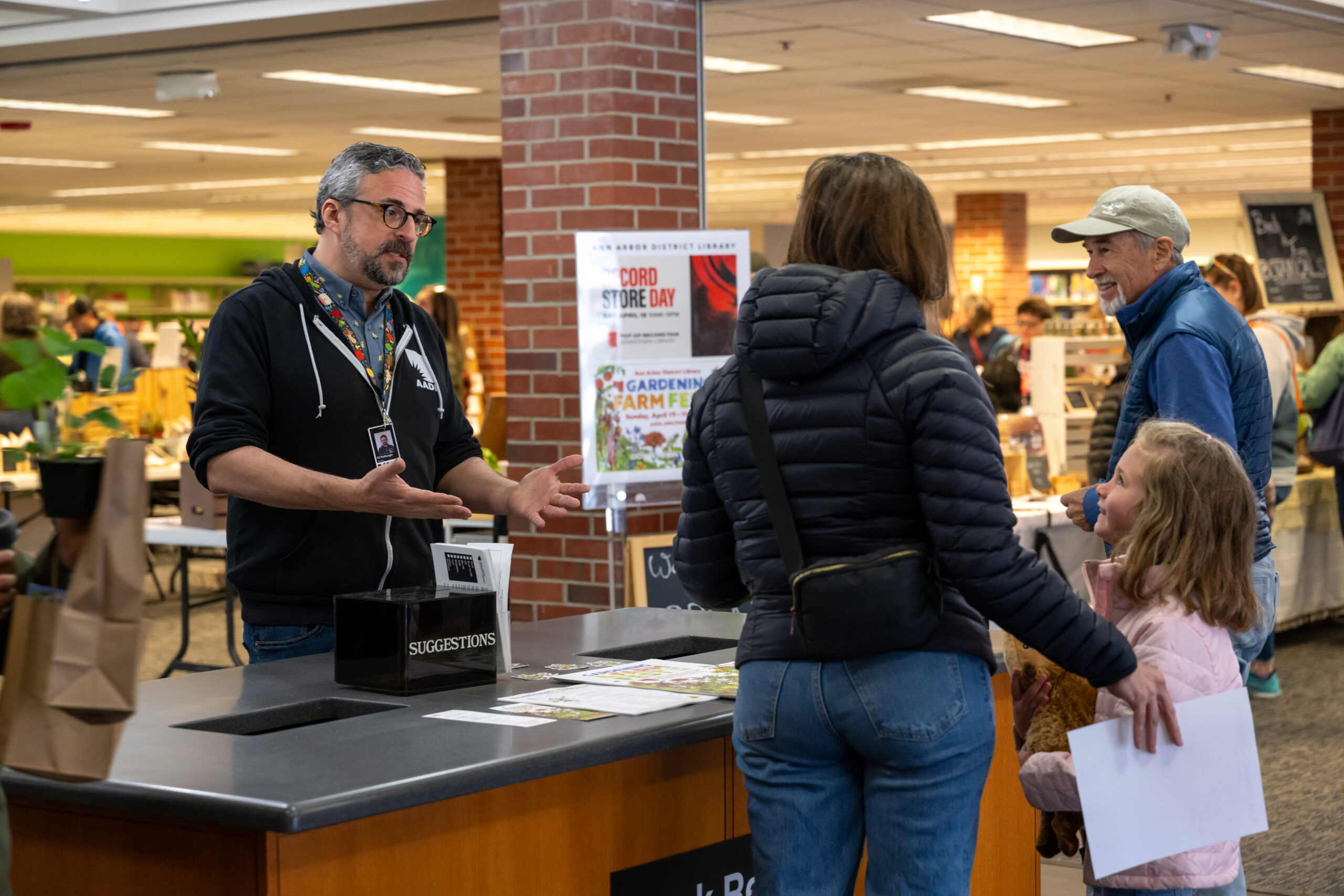
After nearly 30 years with AADL, Neiburger remains enthusiastic about the mission of the library system. His willingness to be quite literally part of the game reflects how interwoven he is with the institution he leads. Neiburger’s work is guided by a philosophy that libraries should have something for everyone, which has helped AADL expand its reach and redefined what a library can be to its community.
Shared Purpose
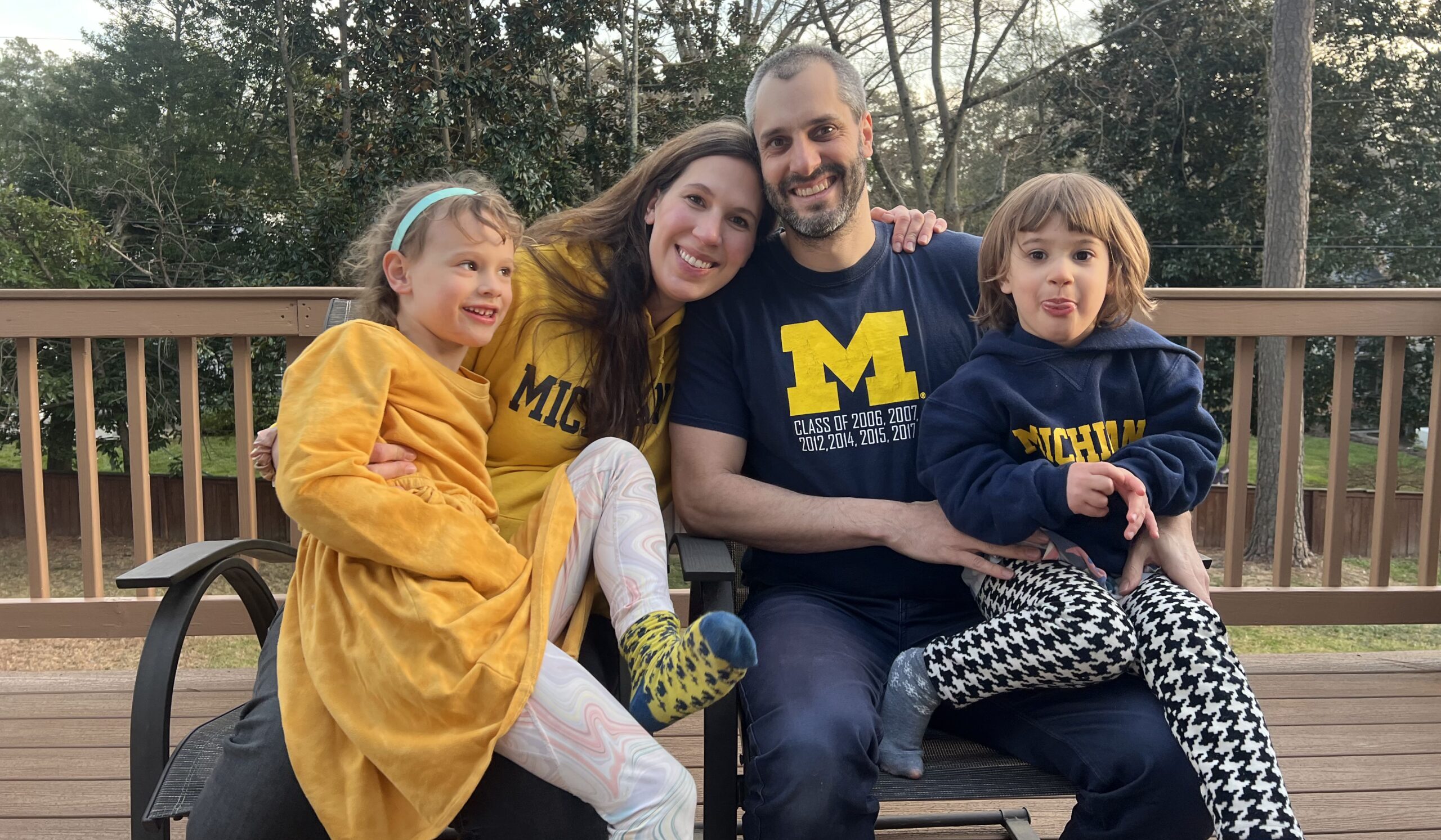
Neiburger originally came to the University of Michigan to play tuba in the marching band. The tuba section is where he met his wife, Deanne, ’97, and years later, one of their sons, Nemo, ’25, would follow the same path.
One year after graduation, and just after his honeymoon, Neiburger joined the AADL staff in 1997 as an IT help desk technician. With a U-M degree in architecture and some IT experience, he worked his way up through the department and library leadership, becoming the deputy director in 2014 and director in 2022.
Neiburger was mentored by supportive supervisors who encouraged his ideas along the way. At the library, his varied interests found a natural home.
“What’s the scope of the public library? Only all of human endeavor,” he says. “Everything that humans do is part of the library, and I certainly have never been able to narrow down what I’m interested in, so that worked very well.”
Books are only one piece of what AADL provides. The library is a coveted community resource that offers loaned tools and instruments, hosts community events, preserves local history, and offers a physical space for people to gather, learn, and explore.
“I always say that for a library to be all about books is no more appropriate than for a parks and recreation department to be all about baseball. It’s one of the things that you do, and in our case, it’s certainly one of the most important things that we do, and one of the things that we do that’s the most unique. We can’t be all things to all people, but we should have something for everybody,” Neiburger says. “You shouldn’t need to be a recreational reader to receive value from your library.”
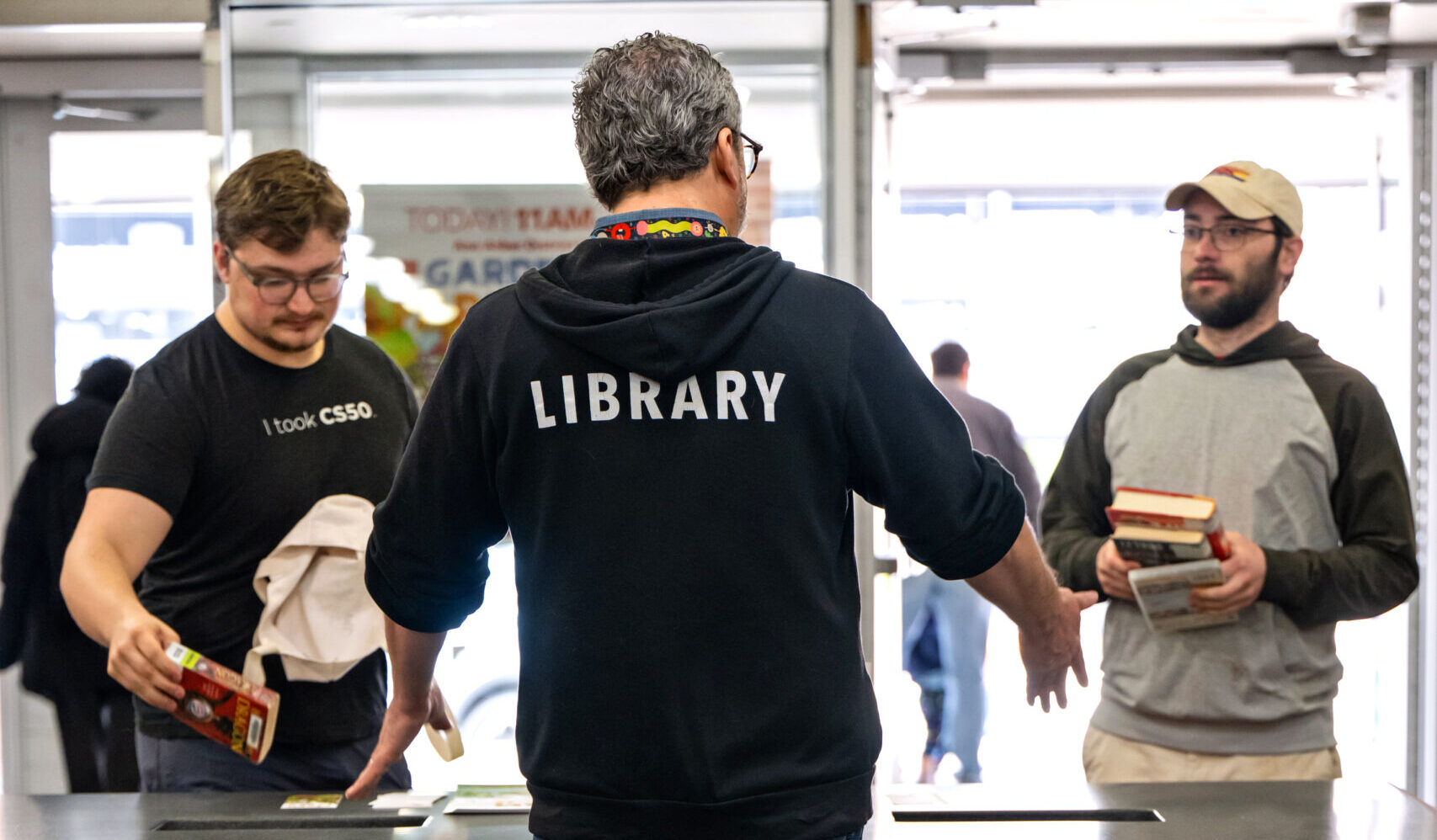
This philosophy has guided some of AADL’s distinctive programming. AADL was one of the first libraries hosting video game tournaments in the early 2000s — an unconventional concept at the time.
“Some people would say, ‘What are these kids learning when they come to these events?’” Neiburger says. “They’re learning their library cares about them, and that their leisure media consumption is just as important as the other end of the demographic is. It’s really about having an expansive and inclusive vision of what library service can be. And the further we’ve leaned into that, the more success we’ve found in reaching more diverse audiences, being more inclusive of all parts of the community, and in providing an excellent return on the public’s investment.”
The Summer Game
Neiburger’s philosophy is vivid in the design of the Summer Game — AADL’s annual program that transforms the city into an interactive playground for kids and adults. The idea was born of traditional summer reading challenges, which typically ask participants to read a set number of books. But Neiburger realized the model was measuring the wrong thing.
Instead of rewarding reading alone, AADL’s Summer Game rewards engagement of many kinds with the library and its services. Players redeem codes to earn points by visiting library locations, local parks, and neighborhoods and sites across the city; solving puzzles; as well as reading books and reviewing them on the library’s website.
“We’re not trying to be prescriptive about how you use the library. We’re not trying to say this use of the library is more valuable or more worthy or more valid than that use of the library. Just come use your library. It’s got amazing things for you, no matter what you’re into,” Neiburger says.
Since its current form launched in 2011, the game has grown steadily, evolving each year as staff refine what works and experiments with new ideas. One early addition to the game was the catalog scavenger hunt, where players search for codes in the online catalog. Another, born of pandemic-related restrictions that kept players from entering the library, was lawn codes. Now one of the most popular aspects of the game, more than 3,500 front yards across Ann Arbor were dotted with personalized game code signs in 2025, which was a 65 percent increase over the year prior.
“The Summer Game brings new people into a relationship with the library, and then they discover how amazing all the services are and all the things that are available to them and how easy it is to interact with the staff and what a positive experience it is. The Summer Game certainly makes passive users into active ones,” he says.
The focus on library and community engagement is paying off — 17,416 players earned points during the 2025 Summer Game, increasing from 14,672 players in 2024. This equates to about 10 percent of the population the library serves, an incredibly high rate of engagement for a public program. AADL serves Michigan’s seventh-largest library community at 177,696 people, yet ranks second in the state for library visits, with more than 1.4 million visits in the 2024-25 fiscal year — nearly double the next most-visited library.
Though more than half of Summer Game players are adults (the community is predominantly adults, after all), Neiburger says some of the most rewarding moments are when kids deeply engage with the game or the library — such as when young children, who are still learning how to write their letters, can be seen practicing by writing down game codes around town.
“The magic of seeing the really little kids getting into it — we’ve had teachers tell us that they wish they could get the intensity of kids engaging with reading and writing that the Summer Game brings during the school year,” he says.
Next Chapter
As the Summer Game continues to expand, Neiburger is thinking about the library’s future. AADL’s downtown branch is slated for major redevelopment in the coming years, with groundbreaking in 2029 or 2030. Plans include better spaces for community events and expos, like an auditorium, as well as a local history reading room, meeting rooms, and studios where patrons can use library equipment. The library will also include housing above it.
“[Neiburger] has been thinking about our building space, use, and long-term plans for so much longer than you might think,” says Sara Peltier, a collections librarian at AADL and a co-producer of the Summer Game. “He’s really got a good eye for not missing the day-to-day, but keeping a thumb on the long-term strategy of the library as a whole.”
Short- or long-term, Neiburger resists the idea that the library’s success is his own. Because of his community visibility, he’s often stopped by patrons eager to share positive library experiences — “I kind of am the recipient for all the love of the library throughout the community,” he says — but Neiburger insists that community support and trust are earned collectively.
“It takes a whole organization,” he says. “This is an organization that’s very focused on delivering excellent value to the community, and all my work has just been in service to that.”
Katherine Fiorillo is the senior editor of Michigan Alum.