
Camp Davis, a research and teaching facility owned by the University, relocated its annual summer courses to Dillon, Montana, while its home in Hoback Valley, Wyoming, undergoes a transformative renovation project.
Since 1929, Camp Davis, U-M’s Rocky Mountain Field Station, has provided U-M students with an immersive outdoor classroom in the Greater Yellowstone ecosystem. As part of the Department of Earth and Environmental Sciences in the College of Literature, Science, and the Arts, the program offers four- week courses in geology, environmental sciences, and ecology, combining classroom instruction with hands-on field experiences.
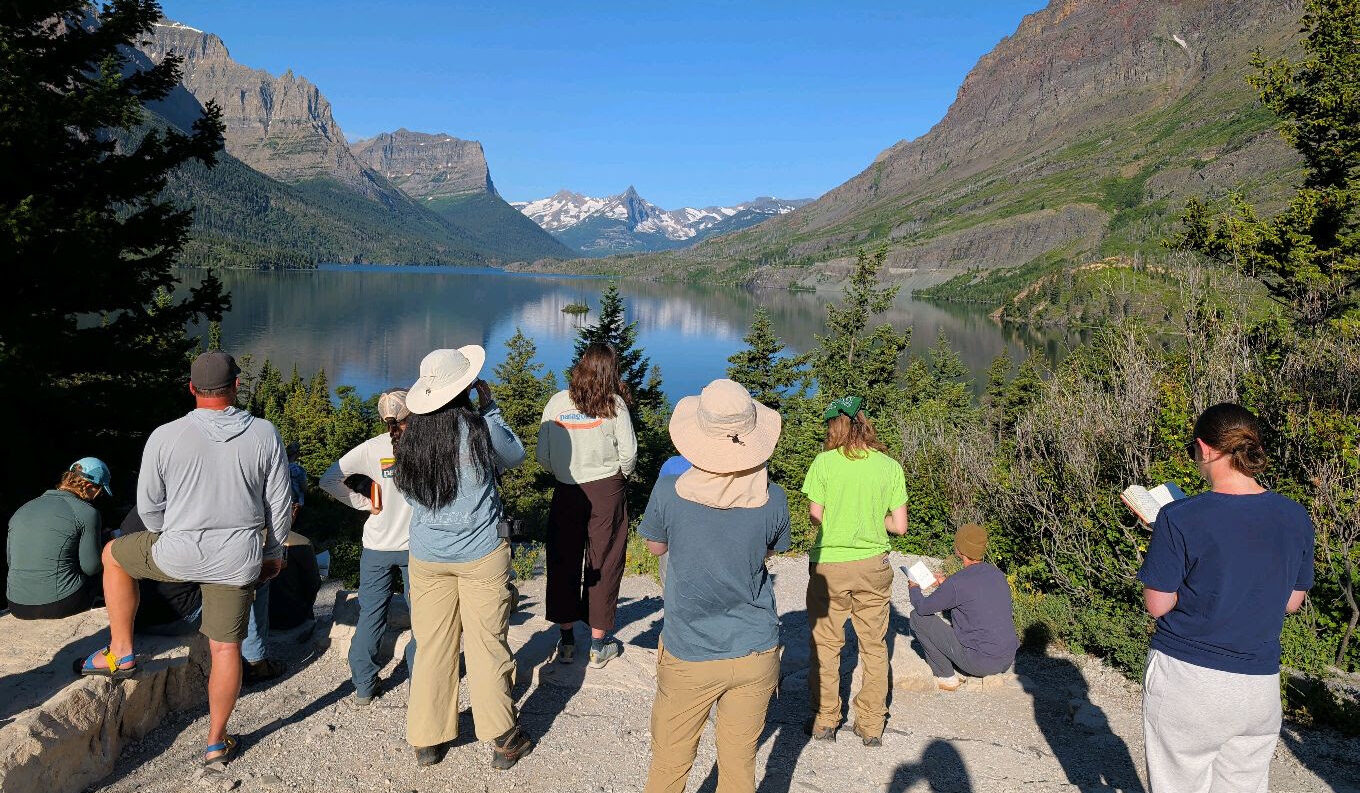
While Camp Davis undergoes renovations, including the construction of a new state-of-the-art lab and replacement of the existing dining hall, the temporary relocation to Montana created unique learning opportunities for about 70 undergraduate students, more than half of whom are majoring in Earth science. As part of this year’s program, students visited Glacier National Park, where they studied glacier features and billion-year-old rocks, using the landscape to explore how Earth has changed geologically over time.
Nathan Niemi, director of Camp Davis, says it’s “hard to imagine” a better place in the U.S. for a geology field camp because students can observe a range of Earth features and processes in one location.
“To bring students from Michigan — many of whom have never been out West and have never seen active volcanoes, places where mountains are currently being built, or glaciers — and they get to see all of that within four weeks in a 30-minute drive from camp, that’s what’s really amazing,” Niemi says.
Quinn Redick is an intermediate copywriter for the Alumni Association of the University of Michigan