BACK IN MY DAY…
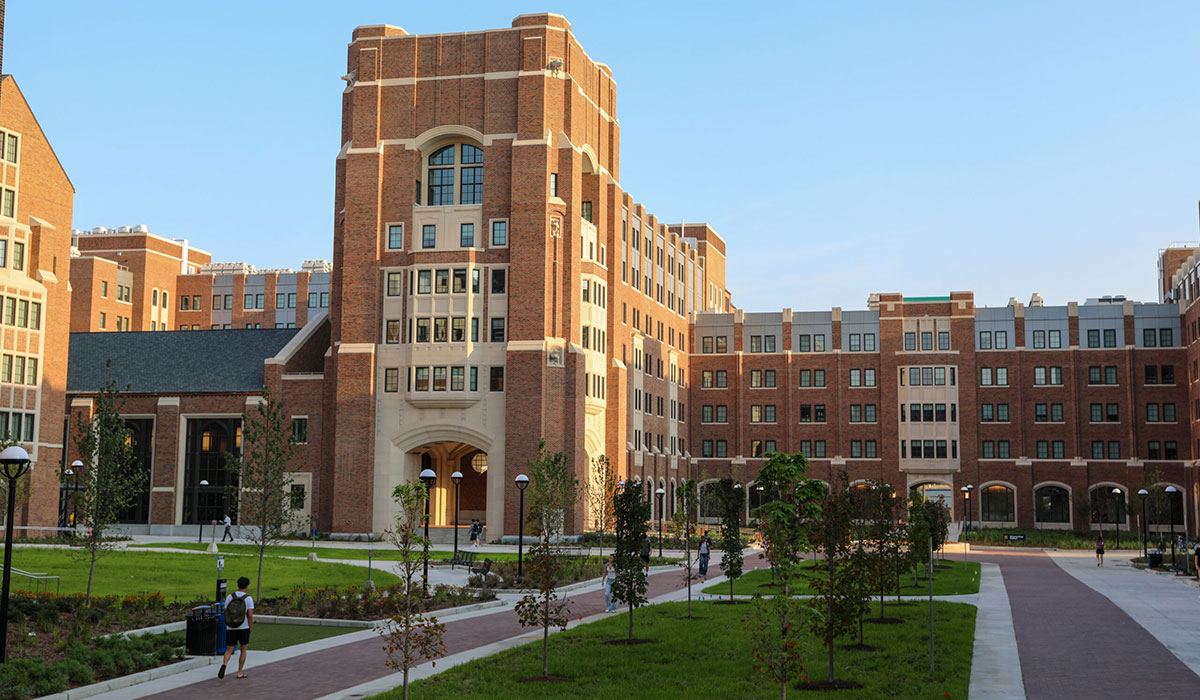
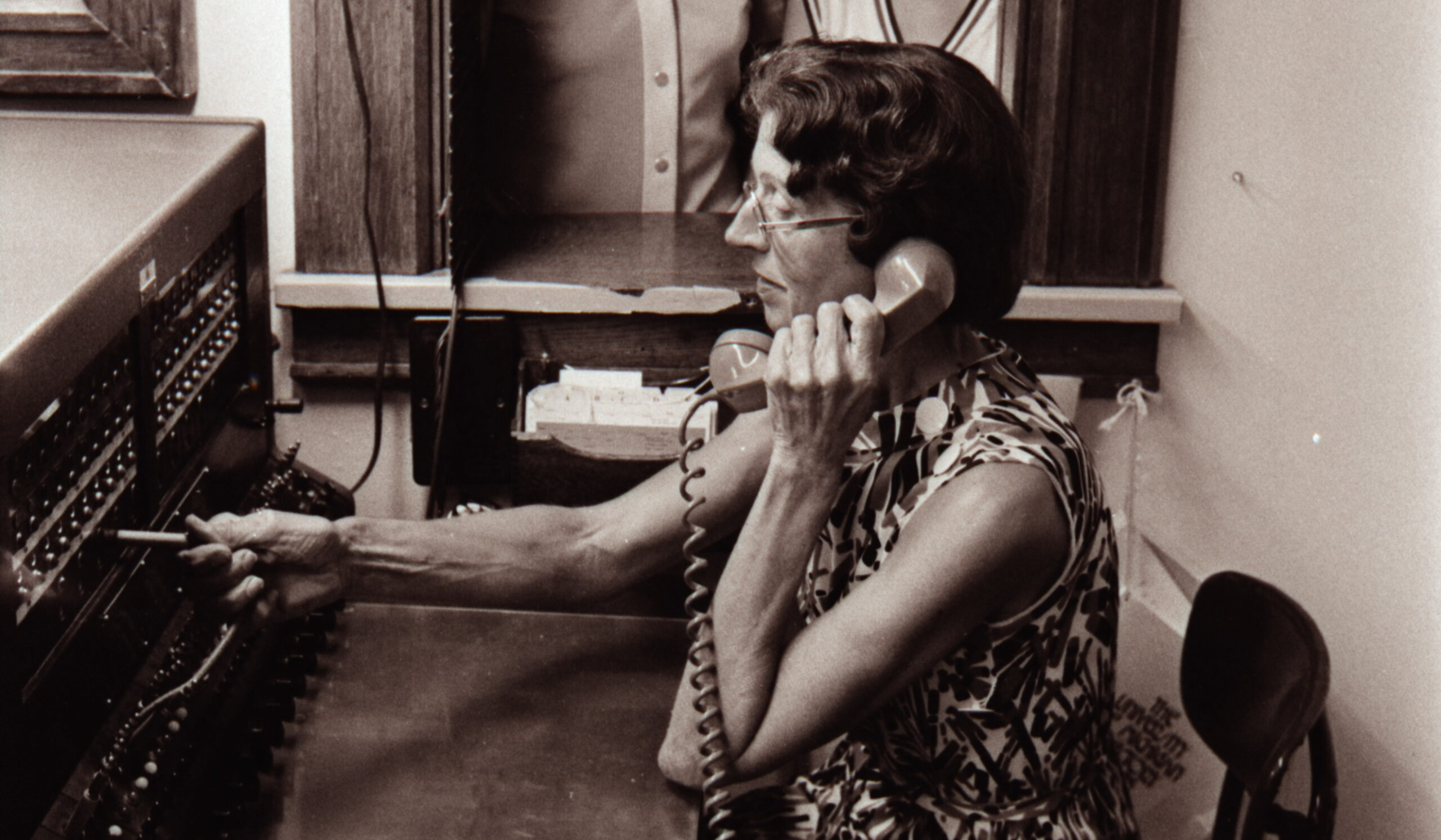
“I lived in the new Mary Markley and worked as a switchboard operator. If the phones were too busy, we announced ‘30 seconds please,’ then disconnected the call. I got called back to the switchboard during my senior year when they were changing to dial phones and did not want to train new operators.”
— Carolyn Creighton Rhode, ’64, MD’72
TODAY…
almost all students arrive on campus with personal smartphones, and phones are no longer provided in dorm rooms. Corridor phones began to arrive in University of Michigan dormitories throughout the 1910s and 1920s, with additional phone lines and switchboards frequently being added to support ever-increasing demand among students.
Callers would reach a dorm’s switchboard by dialing the dorm’s number — Helen Newberry’s, for instance, was 2338 in 1920 — which would then be answered by a resident, who would fetch the intended recipient of the call. Additional phones were available in shared spaces such as the Michigan Union, which boasted a telephone service with 20 telephone booths throughout the building.
As telephone use grew throughout the 1920s and 1930s, telephone companies continued to add phone lines to connect local and long-distance calls. In turn, switchboards were added and reorganized to improve service. For example, Stockwell and Mosher-Jordan had their own small switchboards until they were centralized at Alice Lloyd in the fall of 1949, in the hopes that three operators working together on one switchboard would be more efficient than working separately.
A 1955 Michigan Daily article reported switchboard operators in women’s dorms would sometimes report “80 to 90 busy signals in an hour” during busy weekends or bad weather. With a ratio of up to 23 women students per corridor phone, the switchboard operators’ job proved challenging, often unable to connect phone lines due to busy signals, and students complained their calls were regularly interrupted by switchboard operators with incoming calls. The solution was to add more corridor phones, suggest a three-minute call rule, and request callers dial specific lines rather than the dormitory switchboard.
Phone service began in individual dorm rooms in the fall of 1951 with the opening of South Quad, which then was a men’s-only dorm. Students were polled to gauge interest in phones for each room, though the 1952 consensus was only if they were available at no additional cost.
The first private phones in a women’s hall were added in 1958 in Mary Markley, provided alongside an Ann Arbor telephone book. The process of adding phones to each room was slow, and the update didn’t reach Martha Cook until 1975, when the switchboard was dismantled and donated to the Lydia Mendelssohn Theatre’s prop collection.
The rise of personal cell phones throughout the 2000s, as well as the introduction of smartphones, ushered in a sharp decline in landline usage, deeming in-room phones an unnecessary housing expense.
According to the National Center for Health Statistics, in 2003, fewer than 3 percent of adults lived in wireless-only households, a statistic that shot up to 73 percent by 2022. Though many older adults still have landlines, 85 percent of adults ages 18-24 are “wireless-only.”
Given the decline of phone set usage in residence halls, U-M terminated phone service to traditional and legacy halls in 2017. However, courtesy phones can still be found in certain locations within housing spaces.
Katherine Fiorillo is the senior editor of Michigan Alum.