 JOYRIDE
By Susan Orlean, ’76, HLHD’12
Avid Reader Press/Simon & Schuster, 2025
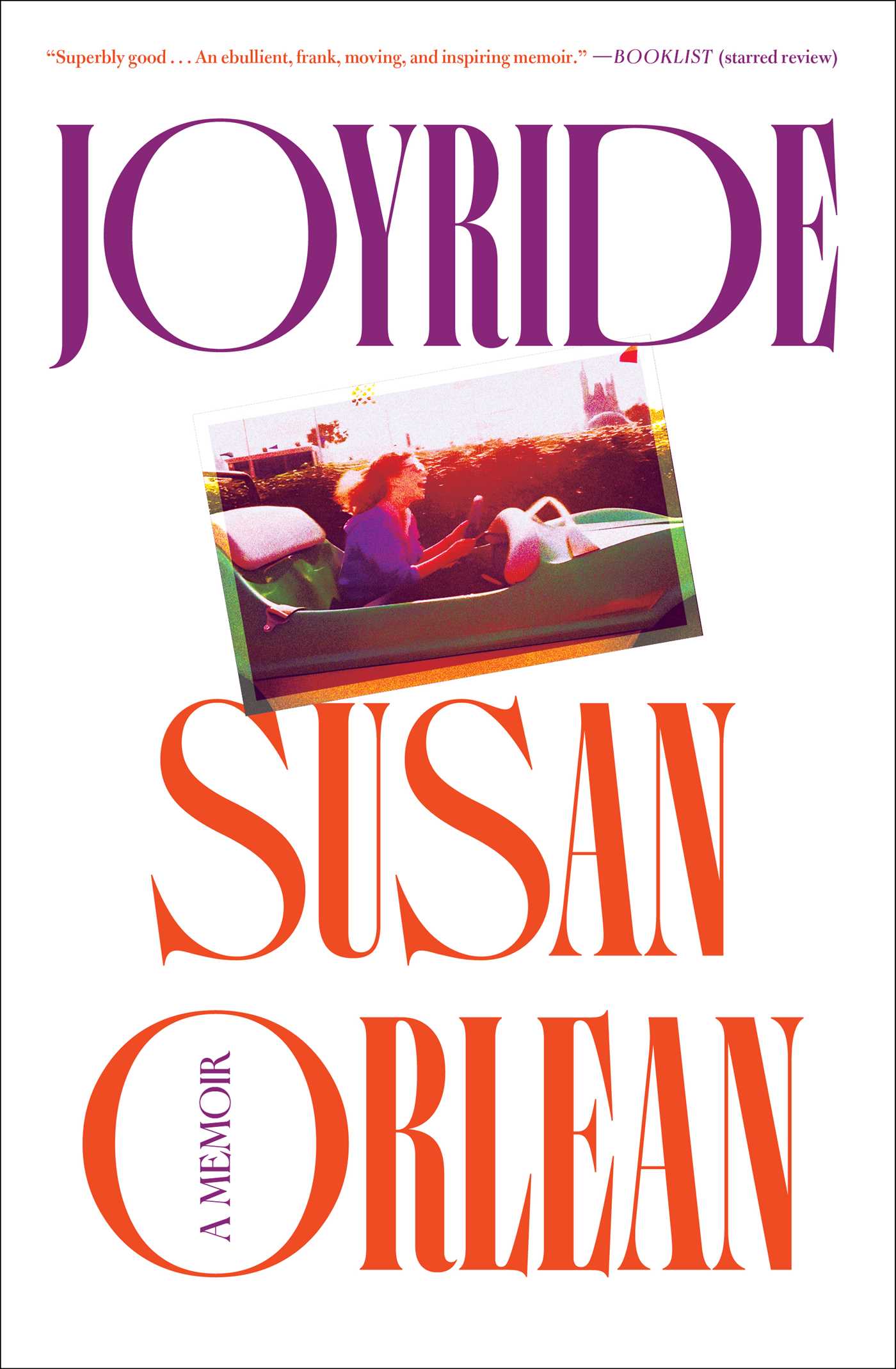
Sustained attention, in Susan Orlean’s, ’76, HLHD’12, hands, has always been a form of quirky tenderness. Settle in with a subject long enough, her work proves, and boundaries soften, allowing stories to emerge. The cover of her new book shows her, hair flying, in a bumper car, but the real collision in the pages that follow is slower as Orlean, as masterful a practitioner of narrative nonfiction as exists today, turns her lifelong project on herself.
“Joyride,” her 10th book and first memoir, began with an idea for a sentence-by-sentence autopsy of her 1992 Esquire profile “The American Man at Age Ten.” That profile opens with a still-for-the-ages first sentence — “If Colin Duffy and I were to get married, we would have matching superhero notebooks” — that contained, in miniature, everything she would ever do, playfully transgressive and otherwise. The teardown gave way to autobiography, though there are plenty of how-to and behind-the-scenes details of several of her most iconic pieces and books throughout.
Orlean has long ascended the ladder of success trifecta — literary acclaim, apparent affection by her peers and past editors, and commercial and financial rewards — in a way that’s rare for writers. But the throughline in this telling is the motivation that’s been there since her Ohio childhood, when she kept lists of beautiful words and phrases.
“Writing held things fast,” she writes. “It pinned experience down, preserving it like a butterfly on a tackboard.”
Her fans should be glad to know she still has some pins at the ready. — GEOFF KOCH
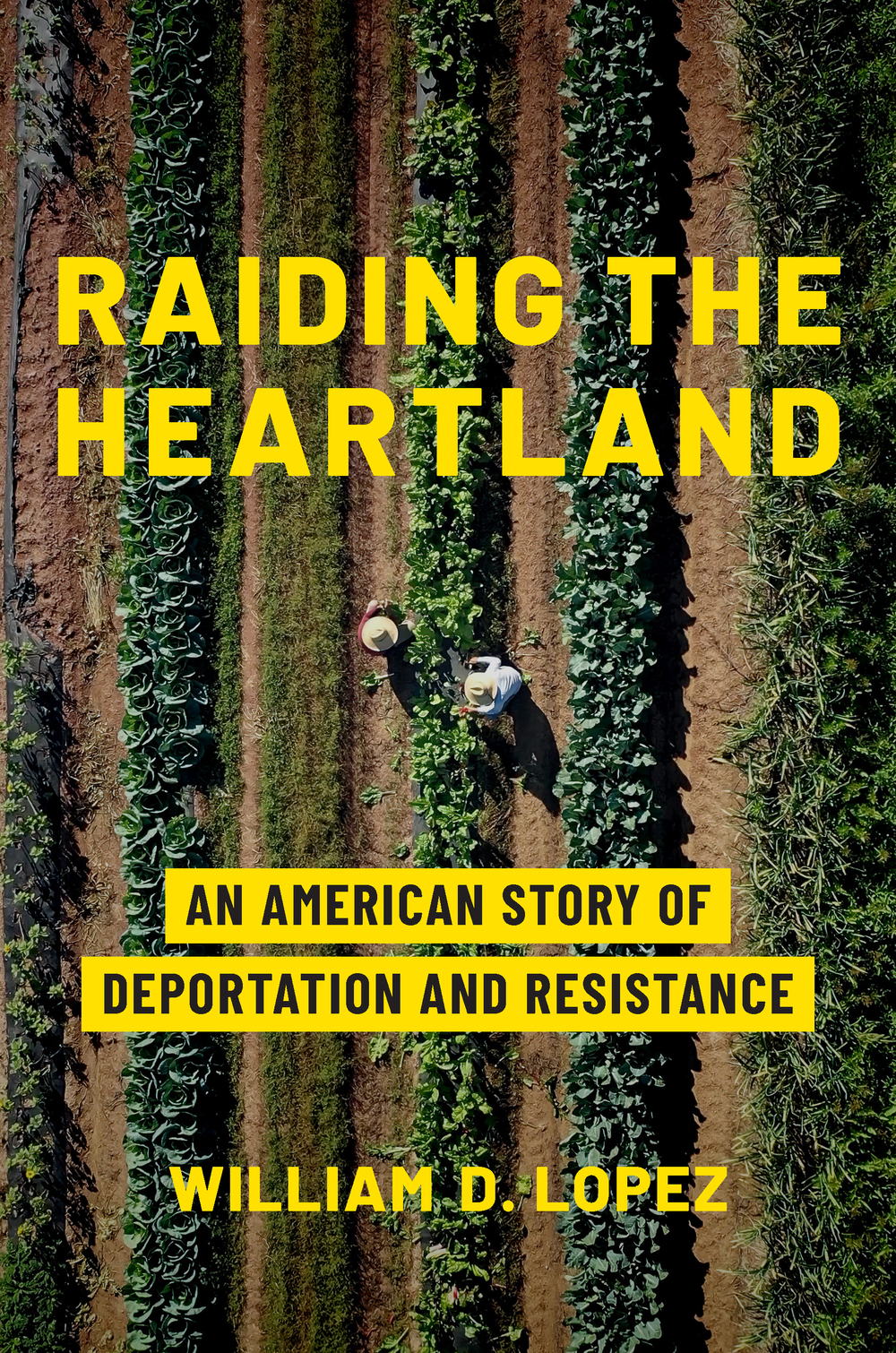 RAIDING THE HEARTLAND: AN AMERICAN STORY OF DEPORTATION AND RESISTANCE
By William D. Lopez, PHD’16
Johns Hopkins University Press, 2025
“Raiding the Heartland” is a heart-rending look at the far-reaching effects of large-scale raids by Immigration and Customs Enforcement in the Midwest during the first Trump administration. William D. Lopez, PhD’16, a clinical associate professor at U-M’s School of Public Health and a faculty associate in the Latina/o studies program, shows how these operations went far beyond immigration-policy enforcement. He traces the raids back to President Donald Trump’s 2015 “golden escalator” speech announcing his candidacy for president, in which he framed immigrants from Latin America as rapists and drug dealers, helping set the scene for a political environment where the “humanitarian disaster” (in Lopez’s words) of family separation was seemingly the intended story.
The book shines when documenting the “New Overground Railroad” — the diverse ways Americans mobilized to meet basic human needs in the wake of raids. From churches providing sanctuary to teachers checking on students and lawyers spending their weekends working pro bono, these “unlikely new alliances” across small communities highlight local resilience in the face of swift, powerful and destabilizing state action.
However, Lopez does not shy away from the region’s contradictions. A poignant example is an 83-year-old Iowan who graciously opened her home to a teenager whose father was deported, but casually claimed stealing was in Latinos’ DNA. These complexities underscore the book’s central tension: the heartland is home to both profound hospitality and persistent racism. As one of Lopez’s subjects notes, “sometimes the places that we love are also places that we criticize.” — MATT BENZ, ’98
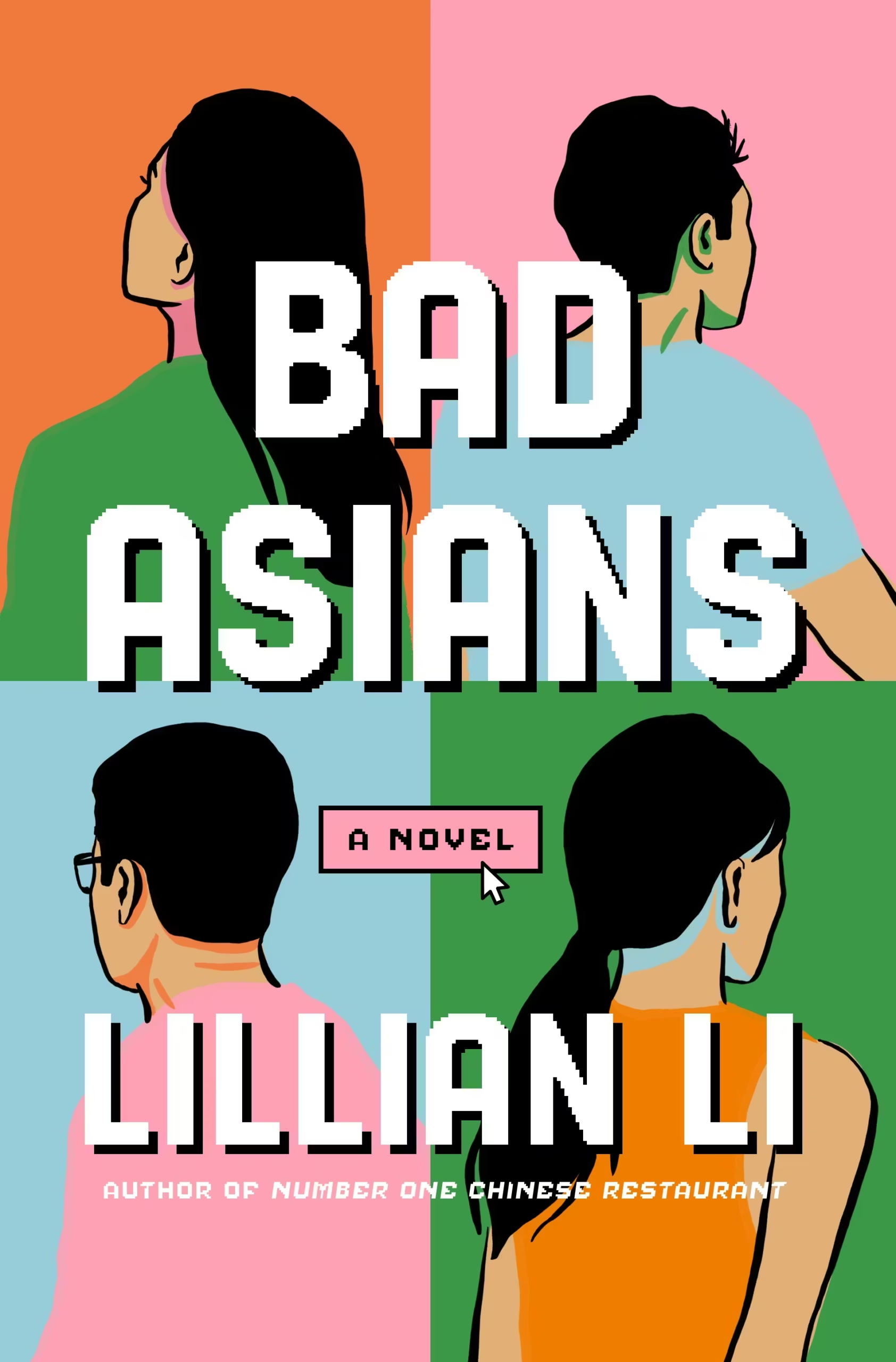 BAD ASIANS
By Lillian Li, MFA’15, MSI’21
Henry Holt & Co., 2026
Lillian Li’s, MFA’15, MSI’21, second novel is about four Chinese American friends whose lives are upended when a documentary video of them — released online without their understanding of the consequences — turns them into reluctant internet celebrities overnight.
The group has graduated college into the 2008 financial crisis, back in a community where their immigrant parents’ dreams loom over them. When Grace, an enviously achieving school friend from their past, drops out of Harvard Law to become a filmmaker, she reconnects with the friends to film a follow-up to a mini documentary they made as kids — one that contained glimpses of who they might become. But Grace “works people when they weren’t expecting it” and each friend becomes a stereotype of themselves on the screen.
When the video goes viral, the friends are rocked by seeing themselves reduced to stereotypes and personality traits they’d hoped to escape. Their attempt to reclaim the narrative only deepens the wound, as they privately confront what the footage revealed and slowly explore what it means to live a successful life. Together and apart, they measure who they are against who they hoped to be and confront how public perception influences their identities in the earliest days of viral internet fame.
Set against the rise of the internet and a shifting American dream, “Bad Asians” is a tender novel about coming of age, who we’re still trying to become, and the people who knew us before we became anything at all. — KATHERINE FIORILLO
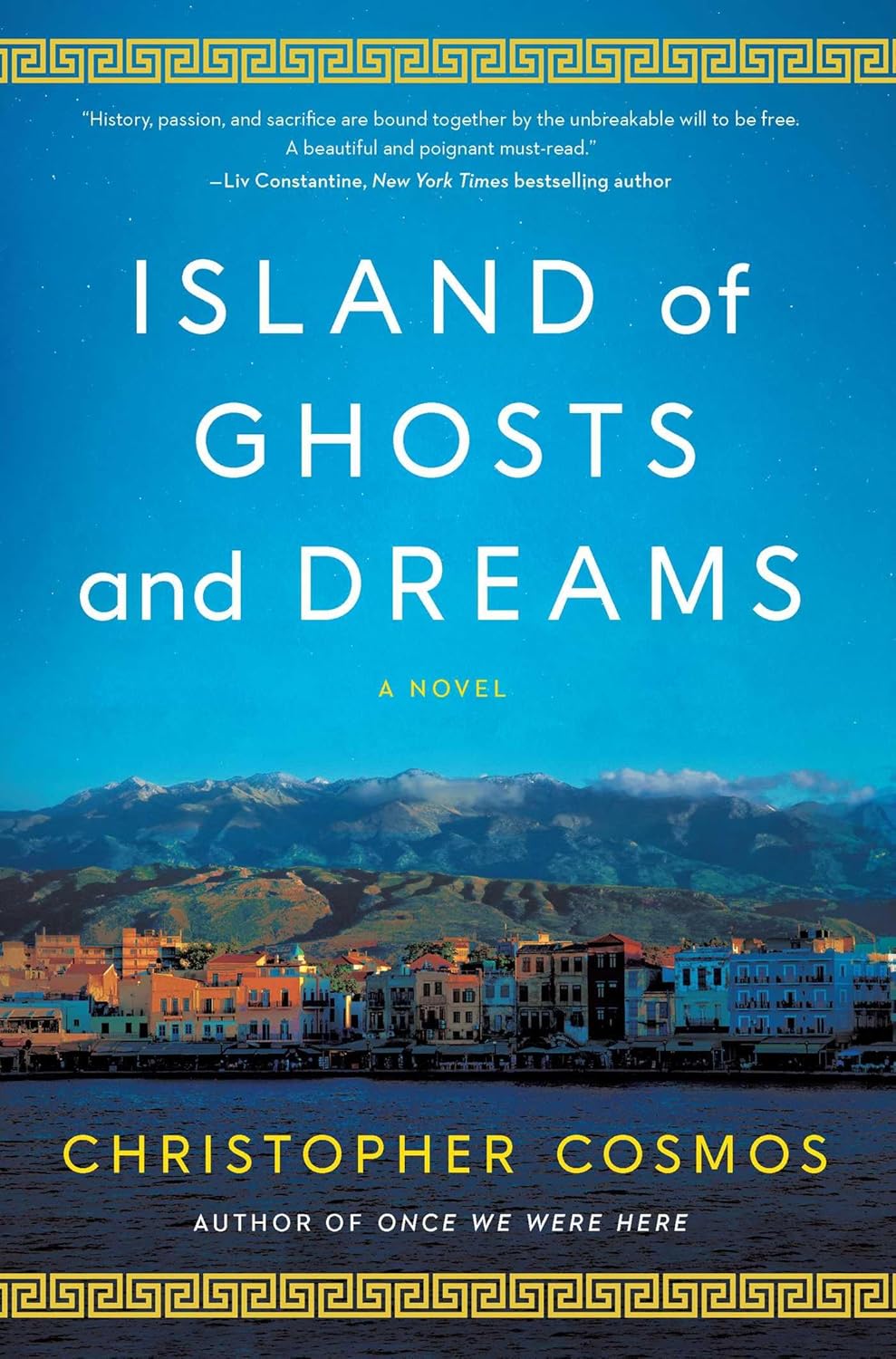 ISLAND OF GHOSTS AND DREAMS
By Christopher Cosmos, ’08
Pegasus Books, 2026
“Island of Ghosts and Dreams,” Christopher Cosmos’, ’08, third novel set in Greece, deepens the themes that animated his earlier works, while broadening their emotional and historical reach. Set on Crete during World War II, the book follows Maria, a village woman whose life is shattered by invasion, occupation, and resistance. Through her experience, and through a chorus of family members, villagers and soldiers, Cosmos explores how ordinary people respond when the moment demands extraordinary moral and physical courage.
As in his earlier novel, “Once We Were Here,” (2020) Cosmos blends intimate storytelling with sweeping history. Crete is a character all its own, both intensely alive and ancient with history — from Minoan myths to Venetian walls and Ottoman legacies. There is a fierce local pride that pulses through the novel, and that made the Battle of Crete one of the most remarkable civilian resistance movements of the war.
Cosmos writes like the screenwriter that he is. Rifle shots echo in narrow stone streets, and olive groves are sites of both labor and loss. But what lingers most is the novel’s insistence on memory: how history lives on in families, landscapes, and stories passed hand to hand. Readers come away with a deep sense of place, learning how geography, food, traditions, and centuries of conflict shaped the Cretan response to yet another would‑be conqueror in Nazi Germany. The result is a novel that educates as much as it moves, without ever feeling like a lesson. — MATT BENZ, ’98
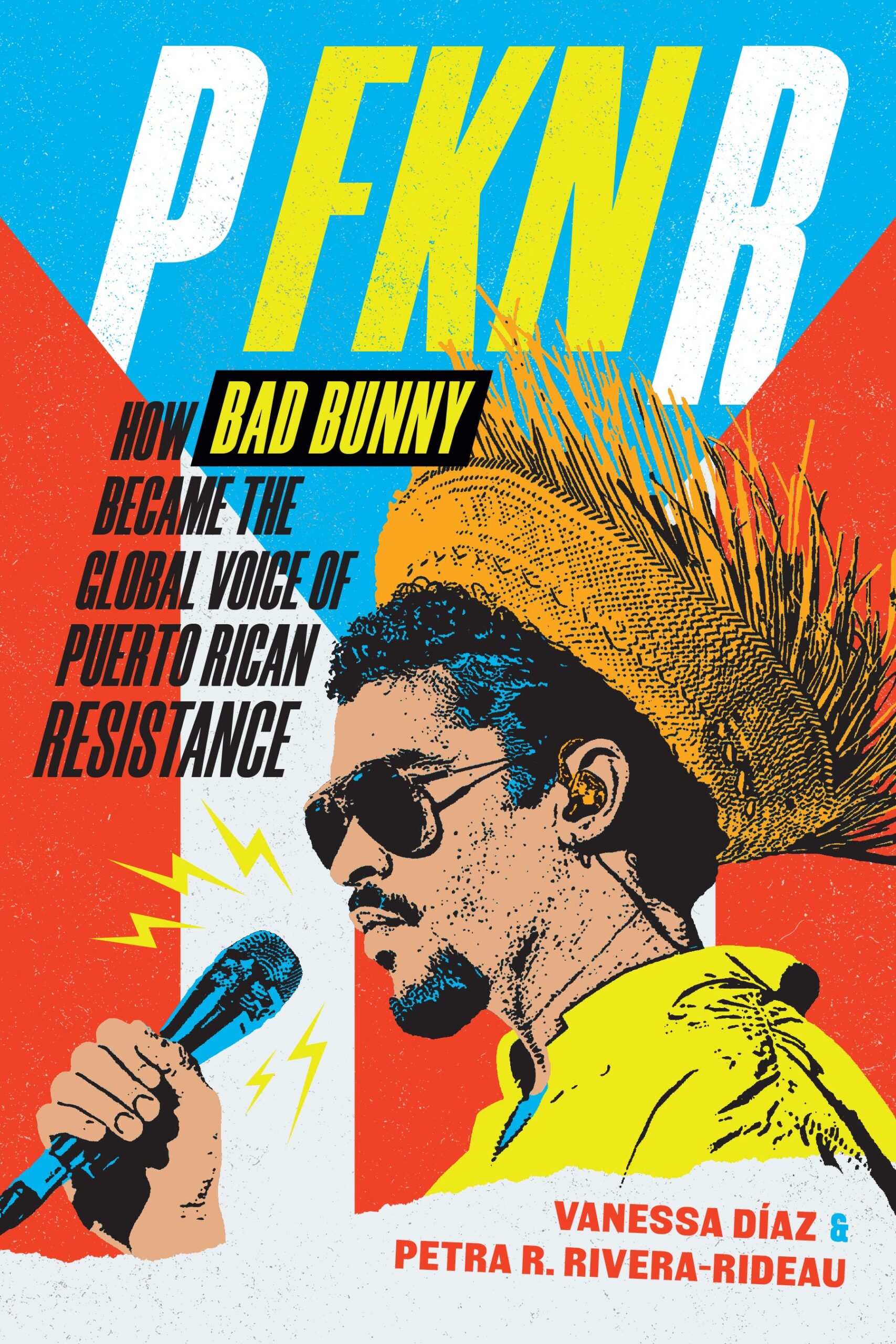 P FKN R: HOW BAD BUNNY BECAME THE GLOBAL VOICE OF PUERTO RICAN RESISTANCE
By Vanessa Díaz, MA’09, PhD’15, and Petra R. Rivera-Rideau
Duke University Press, 2026
Benito Antonio Martínez Ocasio, better known around the world as “Bad Bunny,” was already considered the “king of Latin trap” by the time his 2020 album hit No. 1 on the Billboard 200 — the first Spanish language album in history to do so.
The Puerto Rican rapper, singer, and producer has only continued to break musical and cultural barriers since then — most recently performing solo at the 2026 Super Bowl LX halftime show entirely in Spanish; and racking up 17 Latin Grammys and six Grammy wins, including the 2026 “Album of the Year.”
In her new book, “P FKN R: How Bad Bunny Became the Global Voice of Puerto Rican Resistance,” Vanessa Díaz, MA’09, PhD’15, and co-author Petra R. Rivera-Rideau dig into Bad Bunny’s meteoric rise from his early days as an underground Soundcloud rapper to the global superstar he’s become today.
Drawing from a deep well of research and insightful interviews with journalists, politicians, and some of Bad Bunny’s closest collaborators, the book offers a wealth of examples that illustrate how the young artist has consistently utilized his audacious talent, genre-defying authenticity, and unfaltering pride for his homeland to bridge cultural and social divides, and in turn, influence political discourse around Puerto Rican independence, gentrification, racism, LGBTQ+ rights, and more.
At its core, much like the Bad Bunny song of the same name, “P FKN R” serves as a powerful reminder of the archipelago’s sociopolitical challenges born out of more than 500 years of colonial rule, as well as of the immeasurable strength, joy, and resilience of the Puerto Rican people at home and in the diaspora. — JENNY SHERMAN
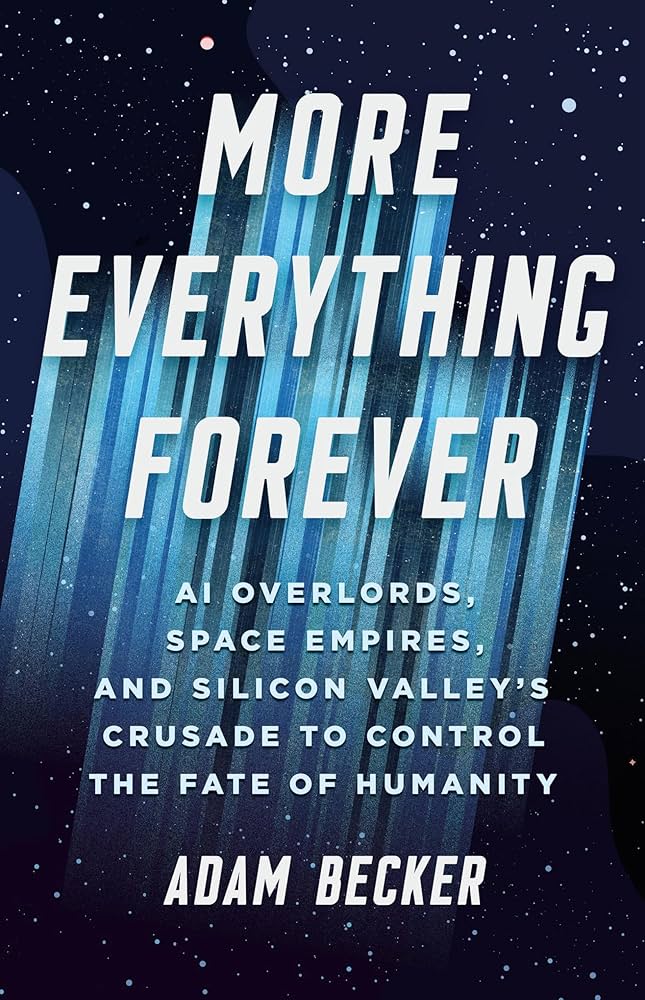 MORE EVERYTHING FOREVER: AI OVERLORDS, SPACE EMPIRES, AND SILICON VALLEY’S CRUSADE TO CONTROL THE FATE OF HUMANITY
By Adam Becker, MS’07, PhD’12
Basic Books, 2025
The future espoused by tech leaders is enticing. They often talk about a world of abundance where disease is eradicated, work for humans is optional, and food is plentiful and extremely inexpensive. This utopian existence is coming thanks to technology advances that tech billionaires are currently building.
In “More Everything Forever” Adam Becker, MS’07, PhD’12, pumps the brakes by providing a reality check on the future of artificial intelligence and potential space colonies.
While Becker describes scientific limitations to some of the predictions, he also points out the practical ones too. For instance, OpenAI CEO Sam Altman describes a future where OpenAI captures the wealth created by AI and distributes it to everyone. But as Becker points out, this would mean society would be beholden to OpenAI and effectively make Altman king.
Becker takes pains to expose the absurdity of Elon Musk’s obsession with colonizing Mars. There are very basic issues, such as toxic dust and enormous amounts of radiation, that would make Mars a terrible option. To survive, humans would likely have to live in a bunker system with regular supply missions from Earth, brought to Mars by Musk’s SpaceX, of course. At best, it would be a bleak existence. Issues arising from global warming pale in comparison to the issues humanity would face trying to survive on Mars.
In the end, Becker argues that, as a society, we shouldn’t set our gaze to far distant planets for salvation, but focus and efforts to improve humanity should be rooted right here on Earth. — JEREMY CARROLL