An American Dream Realized
•
Photo courtesy of MaryAnn Sarosi
In 1947, two years after the Allied Powers declared victory over Germany in World War II, a young Ernest Sarosi received a forlorn letter from his parents warning of the dire situation back home in Budapest, Hungary.
He had been living in a prisoner of war (POW) camp in southern Germany for the last two years, and hadn’t been able to get in touch with them since he was captured.
“They had no idea whether he was alive or dead,” says his daughter, MaryAnn Sarosi, ’84, JD’87. “His parents basically said: ‘We are two beggars on the street … and if you come back, we’ll be three.’”
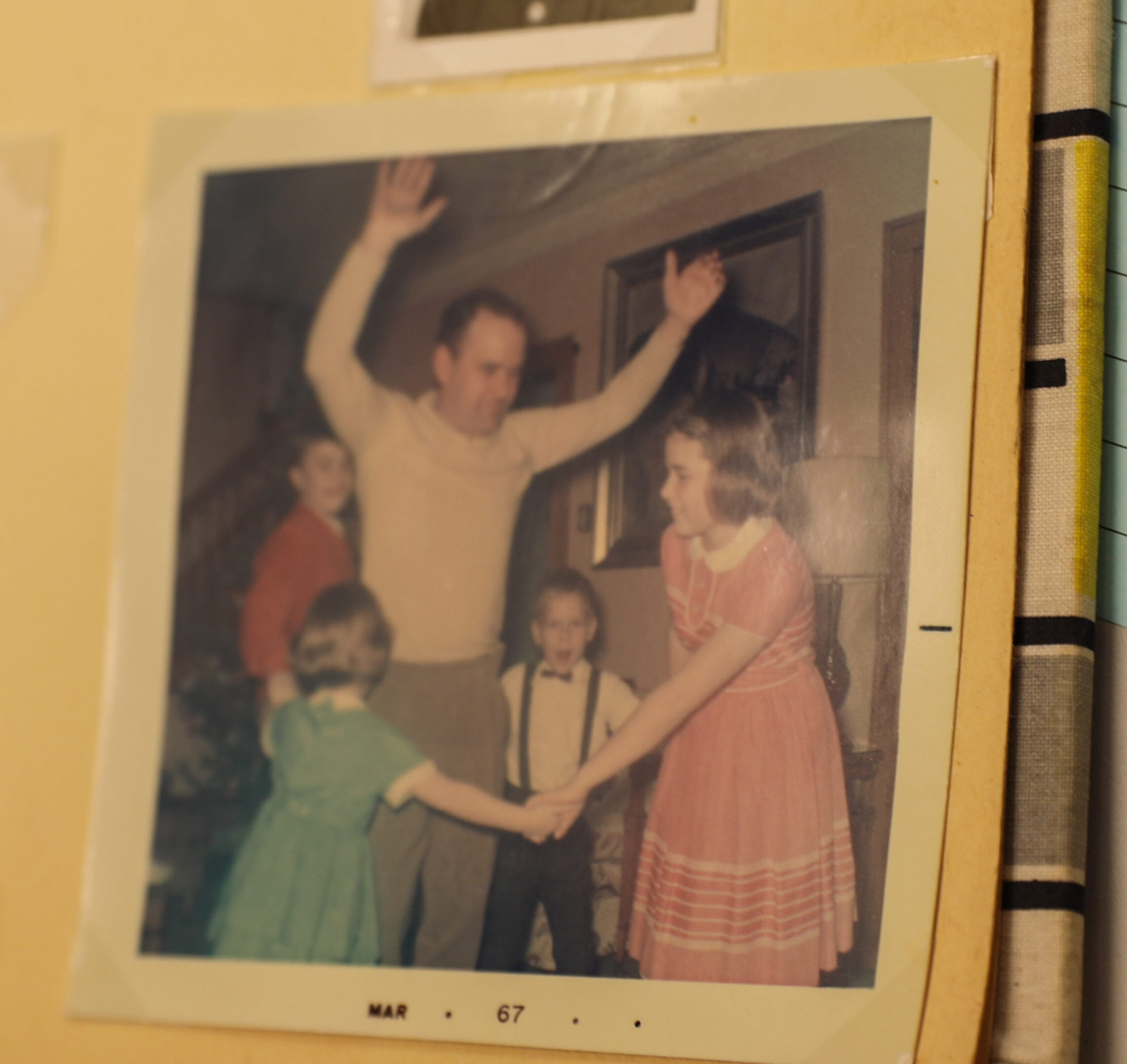
Growing up in southwest Detroit, where her parents immigrated after the war, MaryAnn and her five siblings heard countless stories about the hardships their parents faced before coming to America.
“The history was all around us,” MaryAnn says. “Those stories were sort of ever-present; in an immigrant family, you’re not divorced from that immigrant experience, it is a part of your experience.”
Arriving with little more than the clothes on their backs, Ernest and Marianne Sarosi worked tirelessly over the years to scrimp and save enough money to send all six of their children to parochial school.
“As kids, we saw how hard they were working, and to our benefit,” says Ronald Sarosi, ’77, DDS’81, their third eldest son. “You had to be [hard-working] in order to come to the U.S. without really knowing the English language, to begin a life … trying to forge your path. And they did so success-fully, in part, because of this tremendous work ethic that they had.”
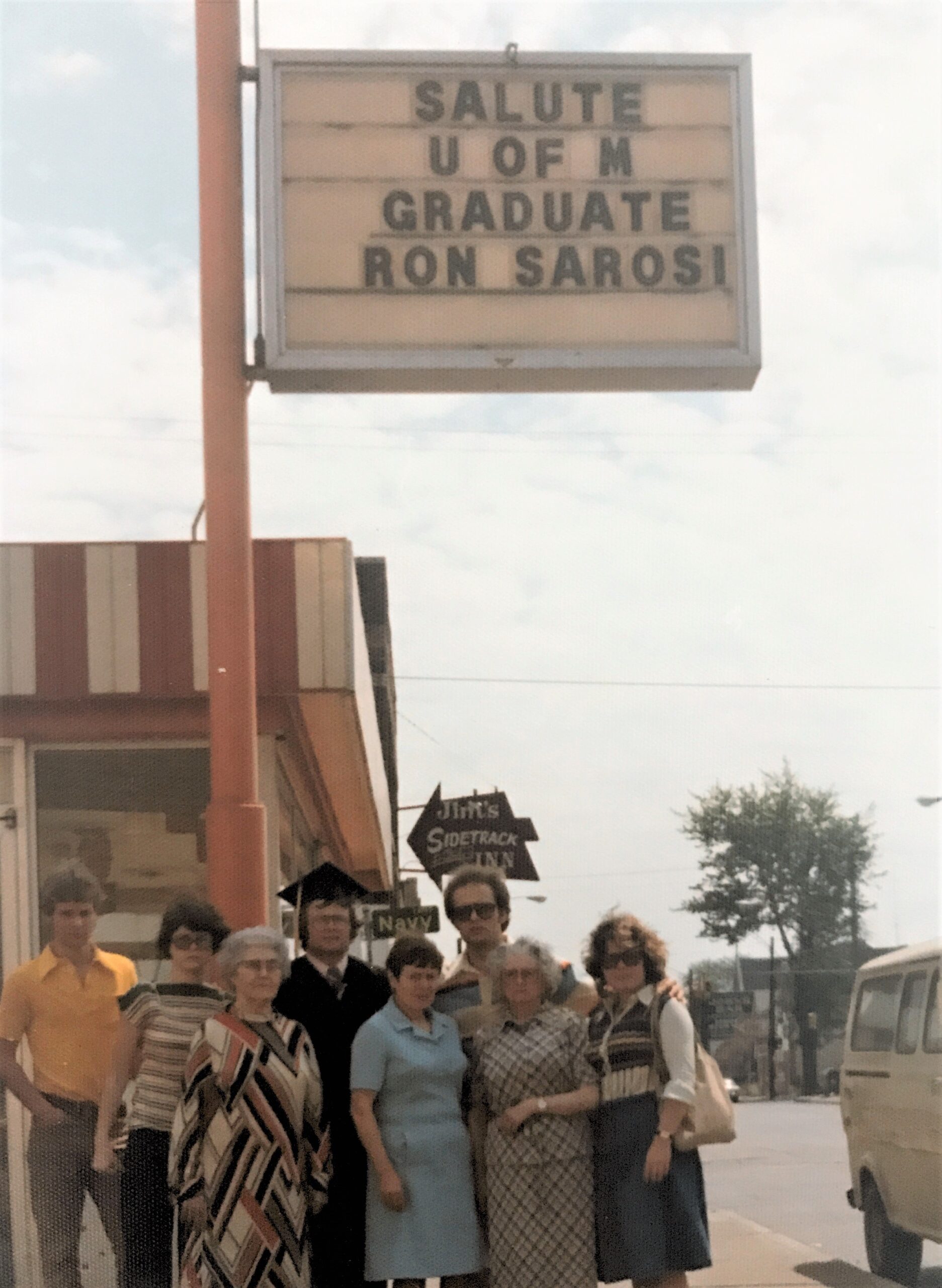
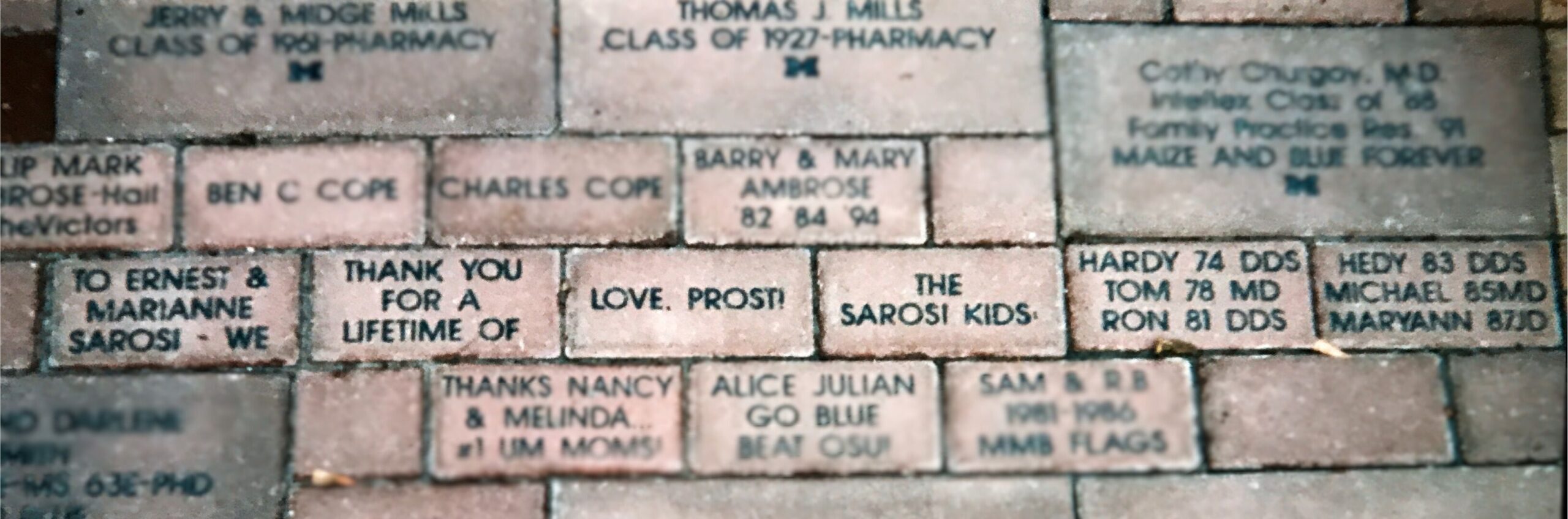
It’s a trait that all of the Sarosi children — Hardy; Thomas, ’74; Ronald; Hedy, ’78, DDS’83; Michael, ’82, MD’86; and MaryAnn — seem to have inherited. All went on to establish successful careers as dentists, doctors, and lawyers, with five of them earning their undergraduate degrees from the University of Michigan, and four receiving advanced degrees from the University.
“It became important for us as their children to accept the [American] dream, and pursue it ourselves,” Ronald says. “A standard was set by my folks — and by my older brothers and on down the line — where we grew into sort of accepting that mantle of responsibility, or potential, and realizing God’s blessings and making our best use of those blessings.”
A Long Road to Prosperity
Ernest Sarosi grew up as an only child from a poor family, and his parents had to make many sacrifices to ensure he had the opportunity to go to college and build a better life for himself.
But those hopes came to a standstill when, shortly after obtaining his business degree in Budapest, Ernest was called to join the Hungarian military in support of the Nazi war effort.
“He was conscripted on the wrong side of the war, right after he graduated,” MaryAnn says. “His unit was a bunch of recent college grads and musicians from the orchestra.”
In 1945, about a year into his service, Ernest was captured by the British. He eventually managed to escape to the American-occupied zone of Germany, where they were known to treat POWs better, hoping to make his way back home.
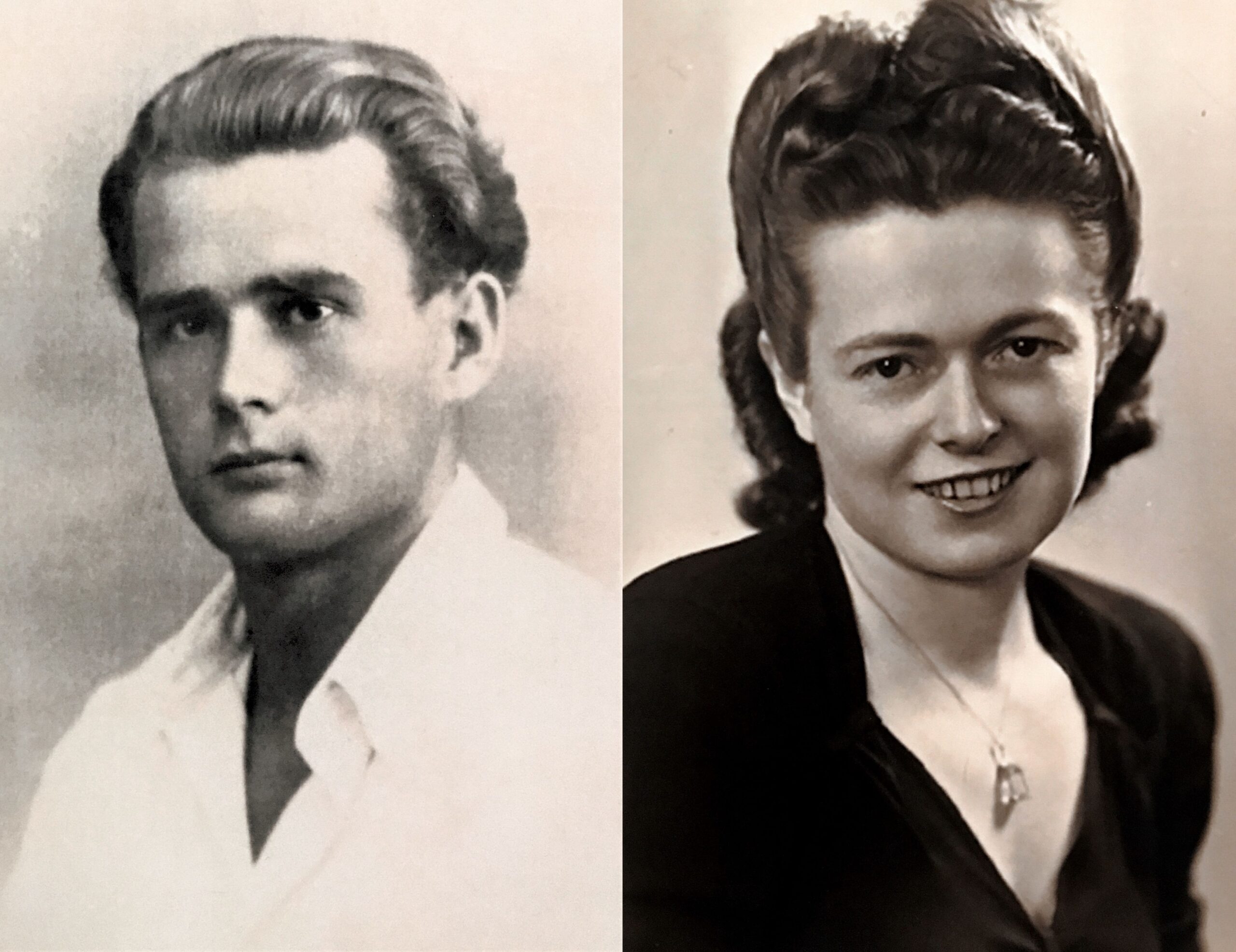
Marianne, who wouldn’t meet Ernest for another two years, grew up in Bavaria but was living with her family in Munich at the height of the war. After incessant air raids destroyed large swaths of the city, leaving her family homeless and her mother severely injured, Marianne traveled back to the Bavarian countryside to seek refuge.
“My mom and her family were literally bombed out; a bomb went off in their building, dropped by the Allies,” MaryAnn says. “They were stuck in the basement, and half of it collapsed. Some people died in the basement with them, but they made it out.”
From Darkness, Love Blooms
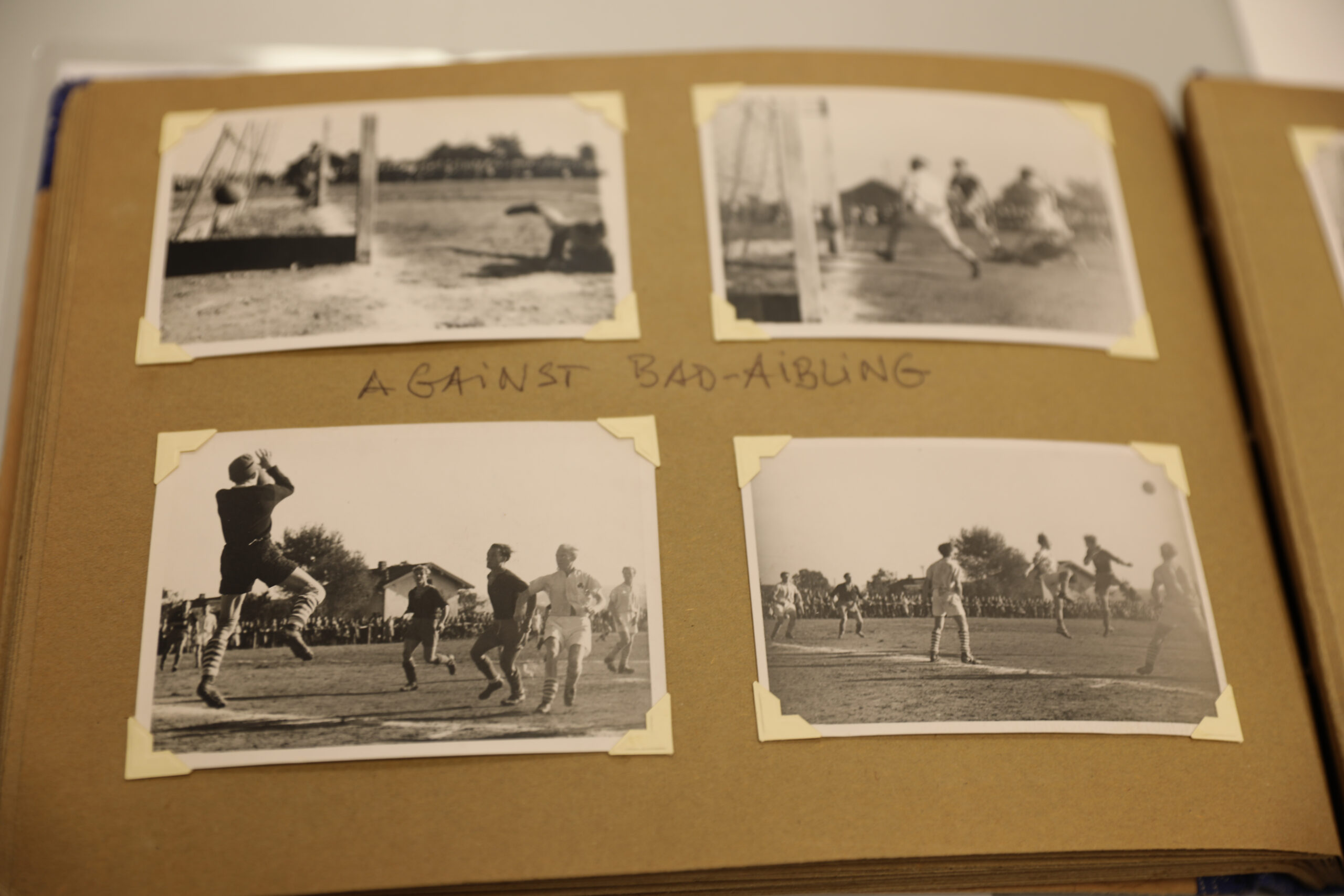
When Marianne first laid eyes on Ernest, he was playing soccer for her village’s league, which had resumed operations after the war.
He was asked to join the team by members of the Bavarian football club, who were captivated by his talent while watching him play at the POW camp nearby.
“He became their star striker,” MaryAnn says. “So my mom noticed him and a little love brewed out of that.”
By 1947, the Americans had loosened their control over the region, and the POW camp had been converted into a Displaced Persons camp operated by the United Nations. No longer considered a POW, Ernest was eligible to apply for an American visa under the Displaced Persons Act of 1948, which narrowly allowed for the resettlement of European immigrants displaced from the war to the U.S.
“But he [first] had to find a sponsor,” MaryAnn says, which took time to arrange.
Thankfully, Ernest’s stepfather had a sister who lived in the Detroit area and agreed to take him in. But Marianne didn’t have the same luck, and just a few weeks after the couple got married in 1949, they had to part ways.
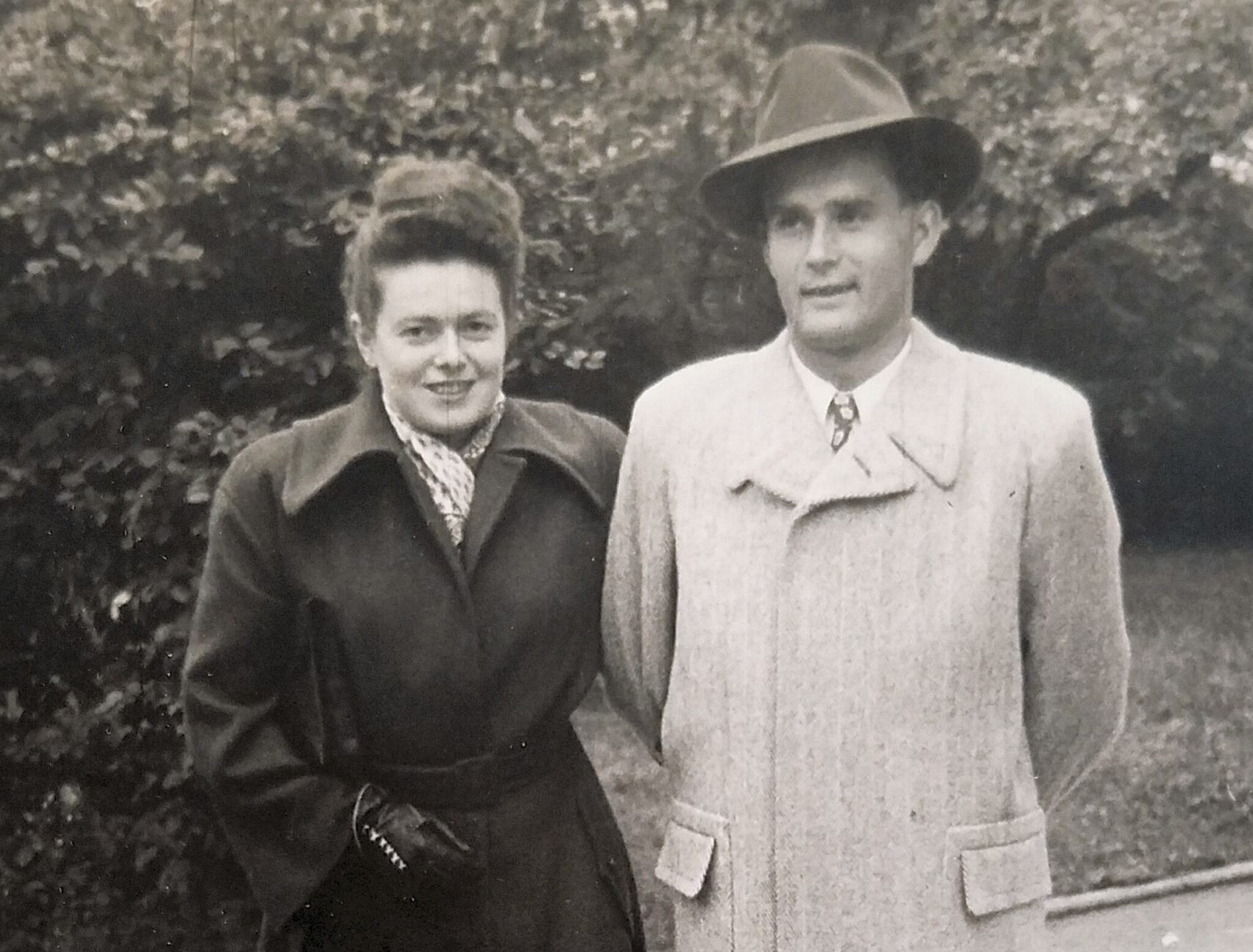
She was just 23 years old at the time, and pregnant with their first child, Hardy.
“She and my brother didn’t get the papers to come over for another year and a half,” MaryAnn says. “I can’t imagine being married for a week or two, and in that trauma of everything they’ve been through … and then you’re pregnant, your husband leaves, and you don’t know when you’re going to see him again.”
Building a Dream
Settling in southwest Detroit, Ernest struggled financially those first few years without Marianne, saving everything he could in order to provide for his family.
Though he had a college degree, he wasn’t able to access his transcripts overseas, and had to take whatever jobs he could to get by — first as a janitor at a local florist shop, and later working at the Fisher Body Fleetwood Plant on Fort Street.
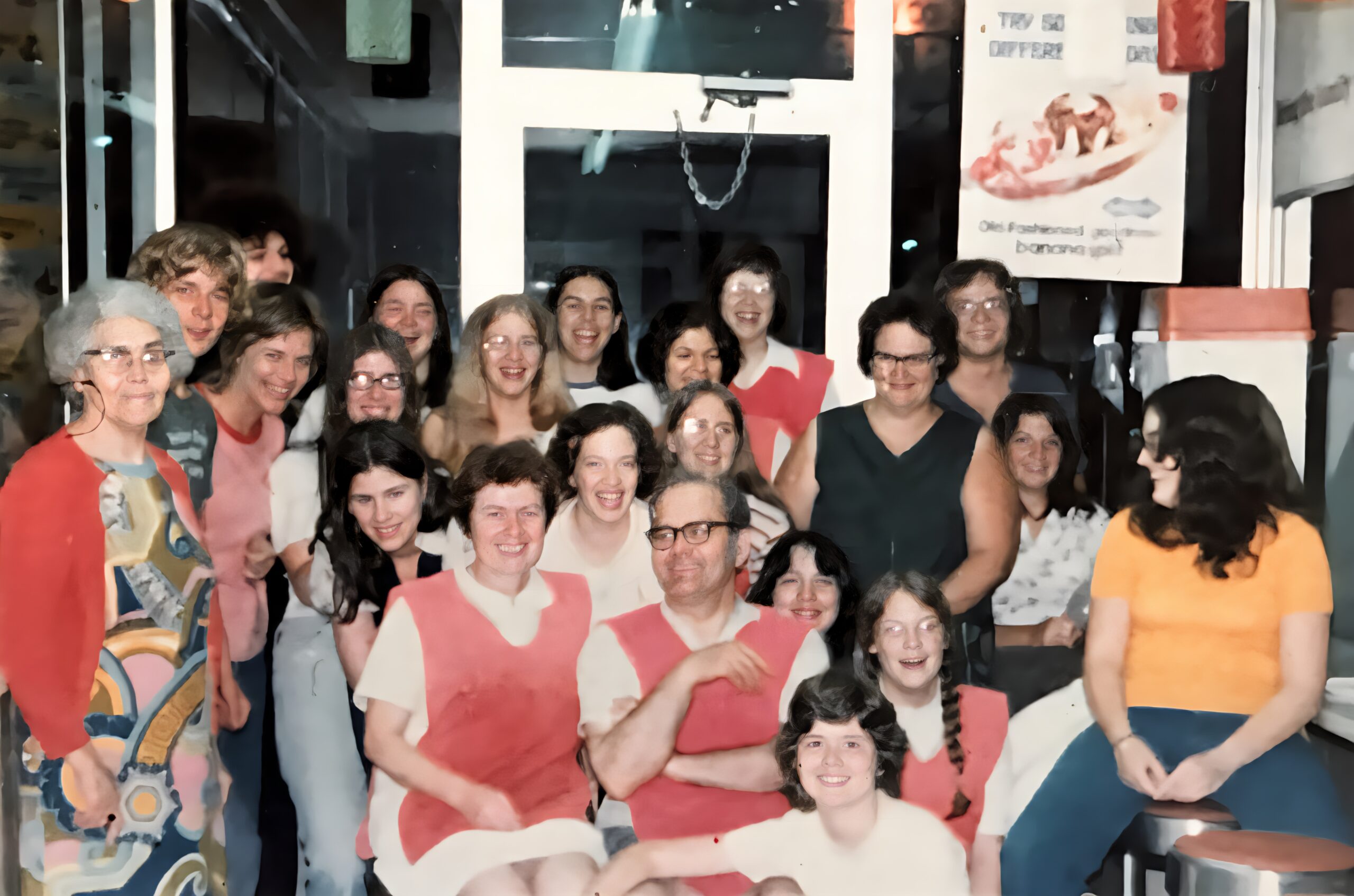
He went on to work as a door-to-door delivery man for the Sanders candy company, a job he enjoyed and stayed in for over a decade until he and Marianne managed to stow away enough money to buy a small Tastee-Freez franchise in southwest Detroit.
“We grew up working in the store,” MaryAnn says. “That’s a really hard business to run, but it was their business; and they had that until they retired.”
Ernest and Marianne always encouraged their children to get a college education, knowing how hard it can be to climb the socioeconomic ladder as first-generation Americans. Still, as a working class family with six kids, it would have been difficult to send them all to college without additional support.
Thankfully, and perhaps serendipitously, the family learned of a financial aid program called the Evans Scholarship that Ronald, Thomas, and Michael all qualified for.
How [the Evans Scholarship] impacted our family in the years following, I mean, it’s just huge. That took a tremendous burden off of my mom and dad.”
—Ronald Sarosi, ’77, DDS’81
The scholarship, supported by the Western Golf Association (WGA) Evans Scholars Foundation, provides full tuition and housing to high-achieving golf caddies who have limited financial means to attend college. Today, it is just one of several financial aid supports available to first-generation Americans and first-generation college students, including the Kessler Scholars program and the Go Blue Guarantee.
“How [that scholarship] impacted our family in the years following, I mean, it’s just huge,” Ronald says. “That took a tremendous burden off of my mom and dad.”
A Legacy Worth Preserving
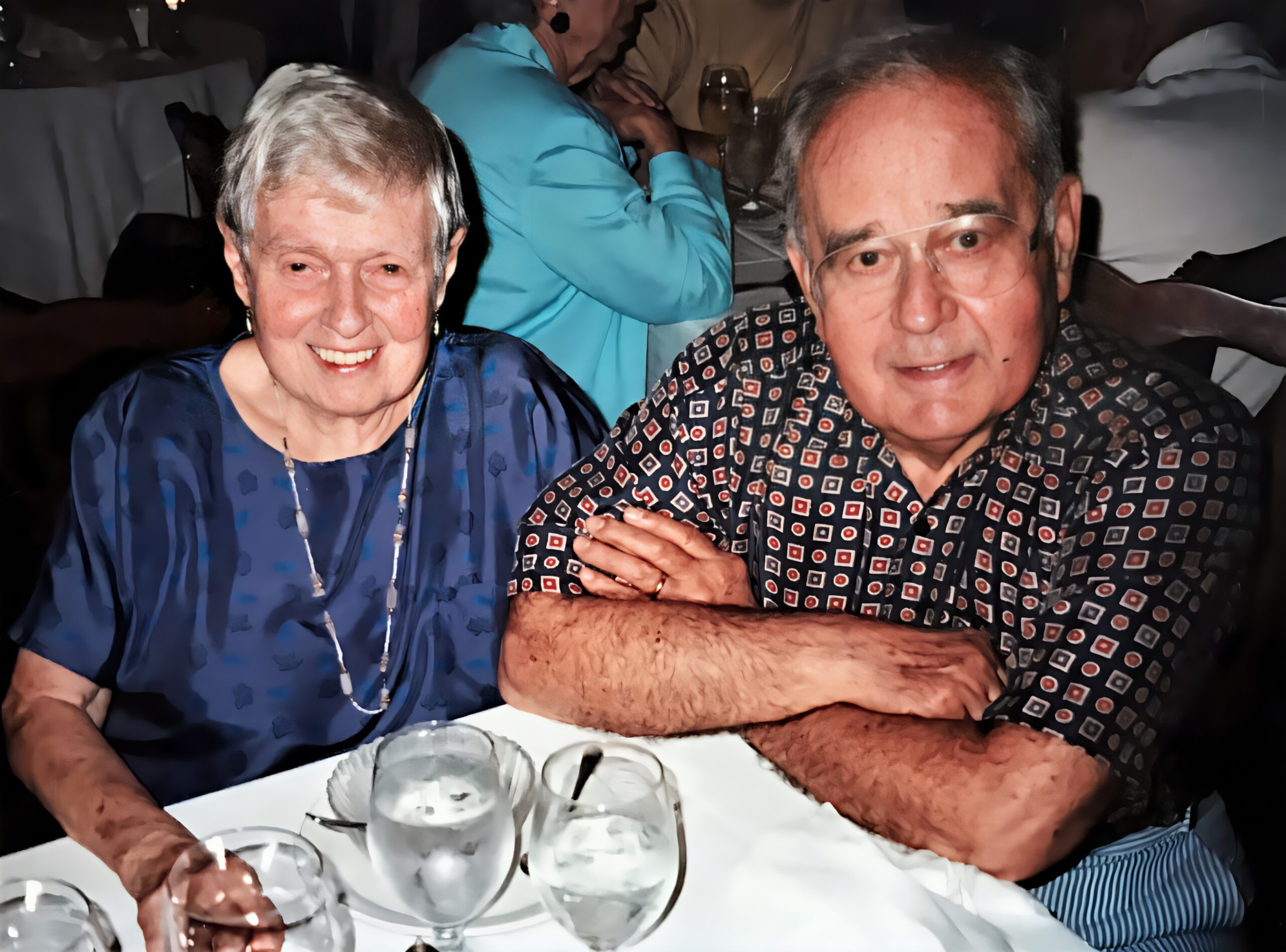
Marianne died at the age of 89 in 2011 — after 62 years of marriage — with Ernest passing five years later at age 93. MaryAnn says she feels grateful that her parents lived long enough to enjoy their retirement and the many successes of their children and grandchildren, some of whom went on to attend U-M as well.
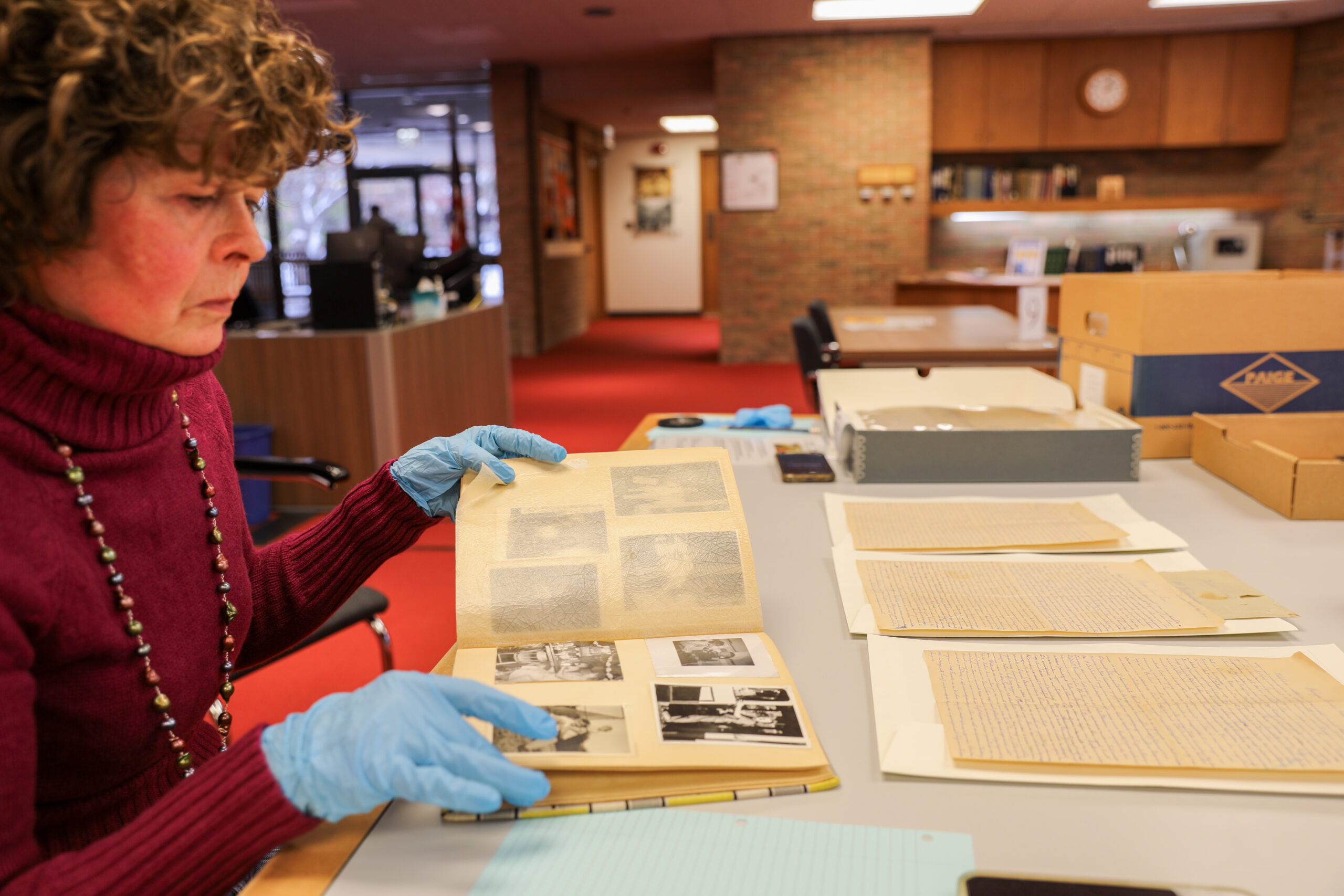
In the years succeeding her parents’ death, MaryAnn began to accumulate and meticulously organize tens of thousands of family photographs, personal letters, and official documents that span as far back as the 1850s up to the post-World War II era.
Discussing the collection with her longtime friend, James Tobin, PhD’86 — and considering her family’s strong ties to the University of Michigan — MaryAnn decided to reach out to U-M’s Bentley Historical Library in hopes they’d be interested in preserving them in their archives for generations to come.
“I was a little hesitant to give it up, because that’s my family history,” she says. “But the logical side of me, the more history-oriented side said, ‘No, it’ll be lost in a generation or two unless it’s collected in one spot by historians, by archivists.’”
As a journalist and historian himself, Tobin says he was immediately struck by the remarkable scope and uniqueness of the Sarosi collection, and helped encourage MaryAnn to donate the materials to the Bentley.
“My wife is an archivist, and when [MaryAnn] walked us through parts of the collection two or three times, our eyes sort of got wide when we saw some of the stuff that she had,” Tobin says. “The Bentley is an absolutely top-drawer archive, so I knew they’d have a good home there.”
While the collection hasn’t been made available for public research yet, the Bentley accepted the materials MaryAnn submitted in 2023.
As the collection solidifies their family’s legacy at the University, so do the Sarosi children through the educational opportunities their parents worked tirelessly to secure for them.
“People would always say, ‘Oh, your parents must be so proud,’” Ronald says. “And I, in turn, would say, ‘No, it’s the kids who are proud of their parents.’ Because, yes, we’ve achieved wonderful, tremendous levels of success in our education and our professions, but that doesn’t happen unless you have parents that create a structure by which kids can flourish.”
U-M, Michigan's History Archived
Archivists at the Bentley Historical Library have been collecting materials related to the state of Michigan and the University of Michigan for 90 years.
Michelle McClellan, MSI’22, principal archivist at the museum, says the Bentley has a dual mission: preserving historical materials with ties to Michigan and U-M and making them available for research.
Considered one of the leading archives in the country, the Bentley’s expansive collections contain everything from letters, films, and cultural histories to administrative and political documents, government records, architectural drawings, and family photographs like those of the Sarosis.
“Family collections that cover multiple generations can be fantastic, because the duration, in and of itself, conveys some important things about change over time,” says McClellan. “It also gives us insight into a lot of things in social and cultural history, in gender norms, in child rearing, as well as whatever kind of larger events that family seems to intersect with over time.”
When searching for personal collections to incorporate into the museum’s archives, McClellan says they try to look for materials that are both unique and have long term research value.
“A shoebox of photos that nobody knows who the people are, or when they were taken, has much less research value than scrapbooks that somebody took the time to label names, dates, places, and so on,” she says. “In many cases, when a multigenerational family history comes to us, it’s because somebody has been caring for it for a long time … and they want this to be available to other people who might want to study whatever of the many issues that collection can help illuminate.”
Interested in creating your own archive collection? Information and best practices on digitizing photographs and textual documents, creating audio files, selecting sustainable, preservation-quality file formats and more, can be found on the Bentley Historical Library’s website at bentley.umich.edu.
Jenny Sherman is a writer and copy editor for Michigan Alum.