As the “psychedelic ’60s” ripped into the next decade, I faced a daunting task as the new editor-in-chief of the Michiganensian. How could I possibly capture these tumultuous times in the iconic yearbook? My term was about to begin and I wondered what should be included — idyllic days on campus or the trauma of a nation at war?
In what turned out to be a valuable prerequisite, I was recruited to work as the Ensian’s copy editor the year before. As a journalism major, I thought the experience might be worthwhile. Thus began my and the yearbook’s metamorphosis. I had written a few newspaper articles and school essays before, but never anything on such a grand scale.
Fortunately, I was granted poetic license for the text. The previous editor experimented with format and innovative design that opened my eyes to the possibility of even further change and a new direction for the yearbook.
For the 1969-70 Ensian, I spent countless hours interviewing University of Michigan coaches, professors, students, radicals, and researchers. In an essay titled “Goodbye Columbus,” I documented Bo Schembechler’s, HLLD’05, glorious 24-12 victory over Ohio State — the first Buckeye loss in two years. I wrote about dorm life and ROTC, The Beatles and Vice President Spiro Agnew’s rotten apples. The yearbook covered historic events, including man’s first walk on the moon and the 1969 peace march on Washington. That fall, I joined 6,400 fellow U-M students to protest the war in Vietnam, a journey that defined my political beliefs to this day.
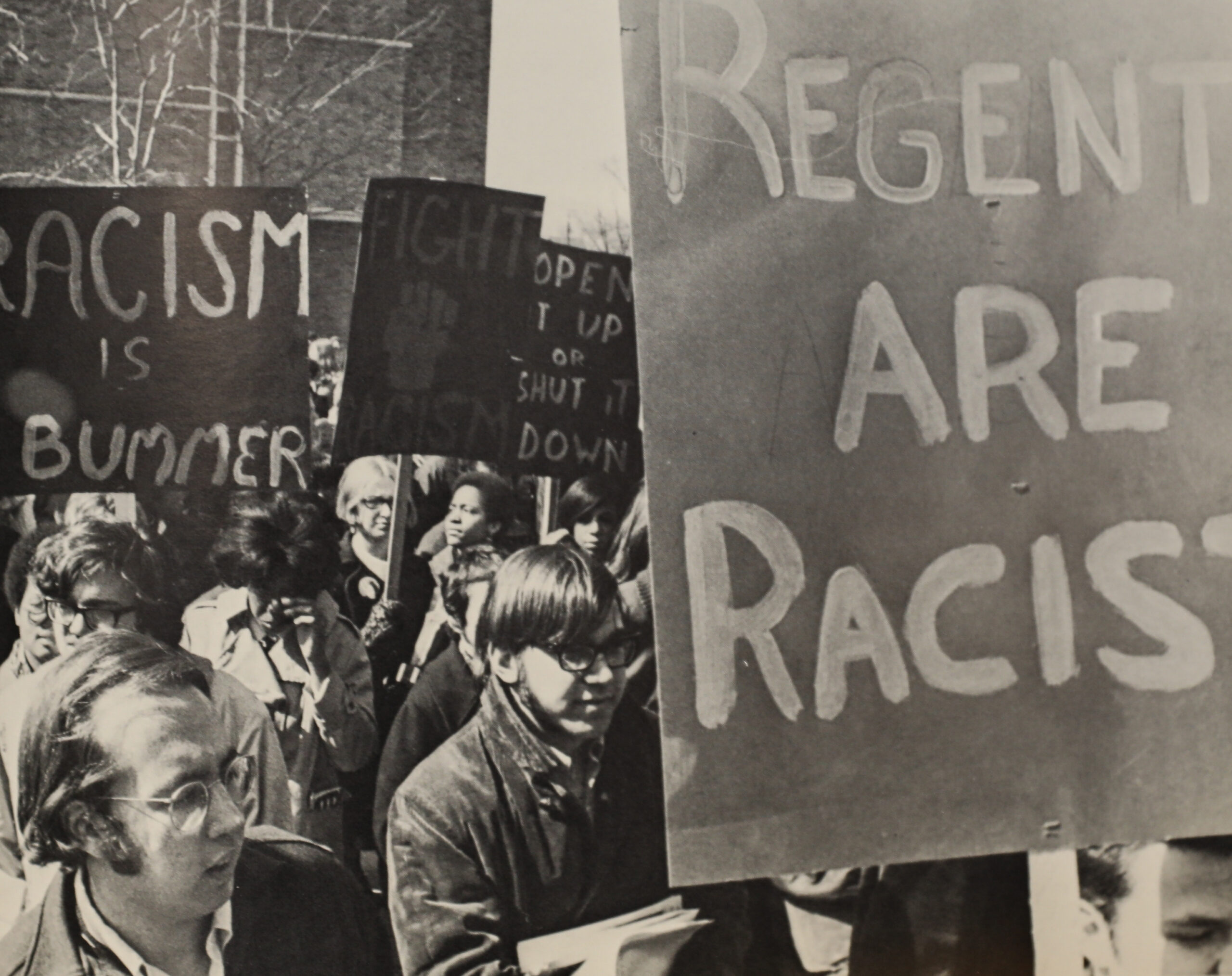
Then, in May 1970, the shootings at Kent State just a short distance away tore a hole in the fabric of college life and removed any vestige left of our innocence. It was too late to cover the tragedy that year, but, as we left school for the summer, I decided that under my editorship, the Ensian must change from memory book to time capsule.
It was my turn to record all the motion and emotion of life at U-M in the early 1970s. My senior year sped by with anti-war protests, feminist speeches, Black Action Movement (BAM) sit-ins, Students for a Democratic Society demonstrations, and candlelight vigils. Outsiders’ voices reverberated across the campus. George McGovern, Jane Fonda, Angela Davis, William Kuntsler, Ralph Nader, and the Chicago Seven spoke to us, to name just a few.
Ann Arbor vibrated as a political hub of independent thought. It was a thrilling time to be alive, ironic since many of our peers were dying in Vietnam. News of the war penetrated the insular Midwest, yet we still managed to celebrate our college days with football games, fraternity parties, sex, drugs, and rock and roll. I hoped to indelibly stamp the yearbook pages with these experiences.
The journalism school taught me many of the skills needed to publish a yearbook, but the challenge of actual production remained. My first task was to review bids from publishers and select one. I had to then work within a budget, pick paper stock and material for the cover, and try to meet deadlines along the way. Professor Edward Bassett, MA’55, my journalism mentor, provided encouragement and valuable advice.
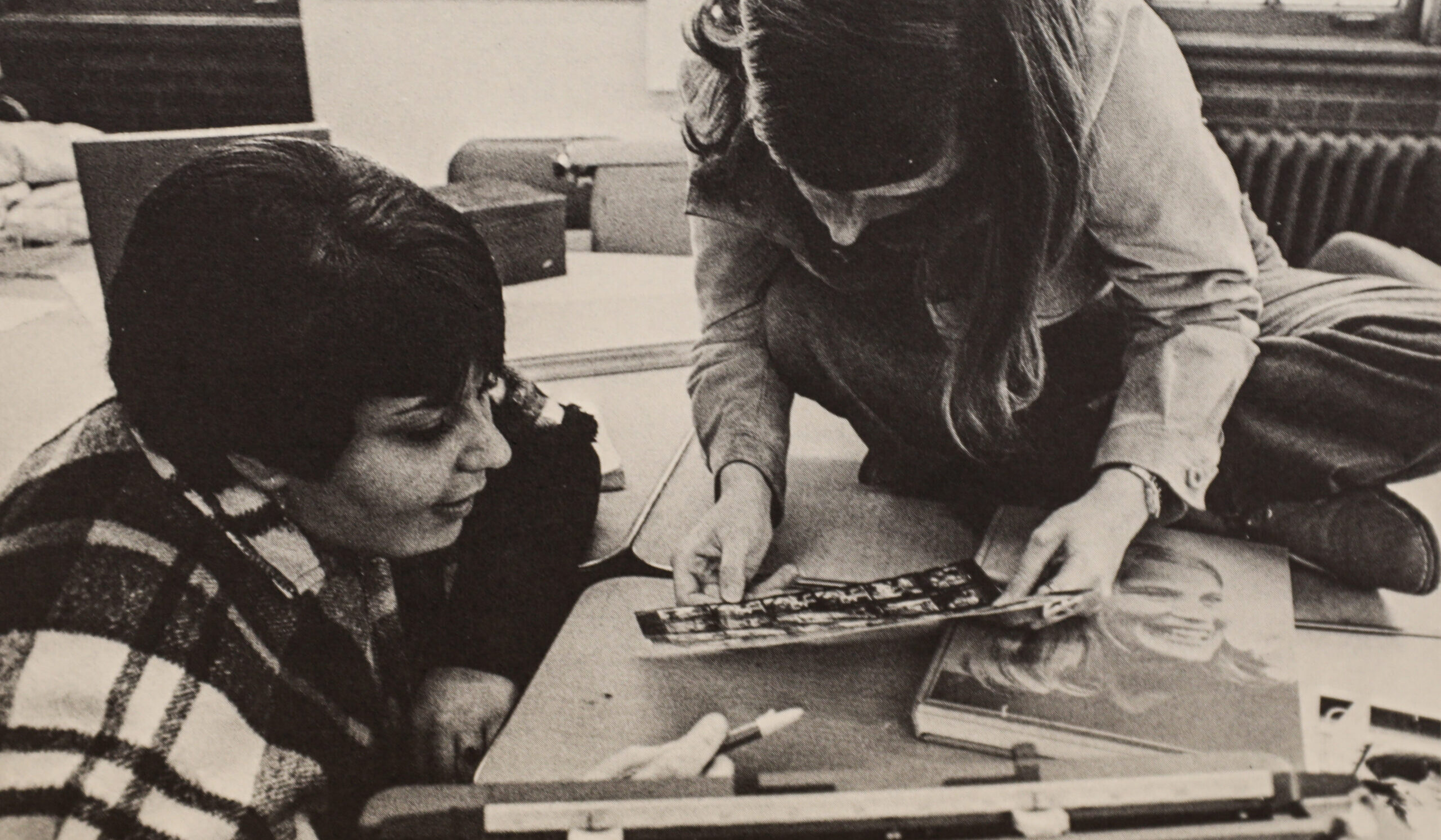
I also had the good fortune to work with a talented staff that loved the Ensian as much as I did. Patty Major, ’71, a friend from our freshman year in Stockwell dorm, agreed to provide the prose. Dave Thoits, ’71, my hometown neighbor from Grand Rapids, Michigan, assisted with sports. Randy Edmonds, ’73, our “commando” photographer, seemed to surface everywhere at once to capture defining moments on film. He trailed students through clouds of tear gas and strolled through the arboretum to get the photographs we wanted.
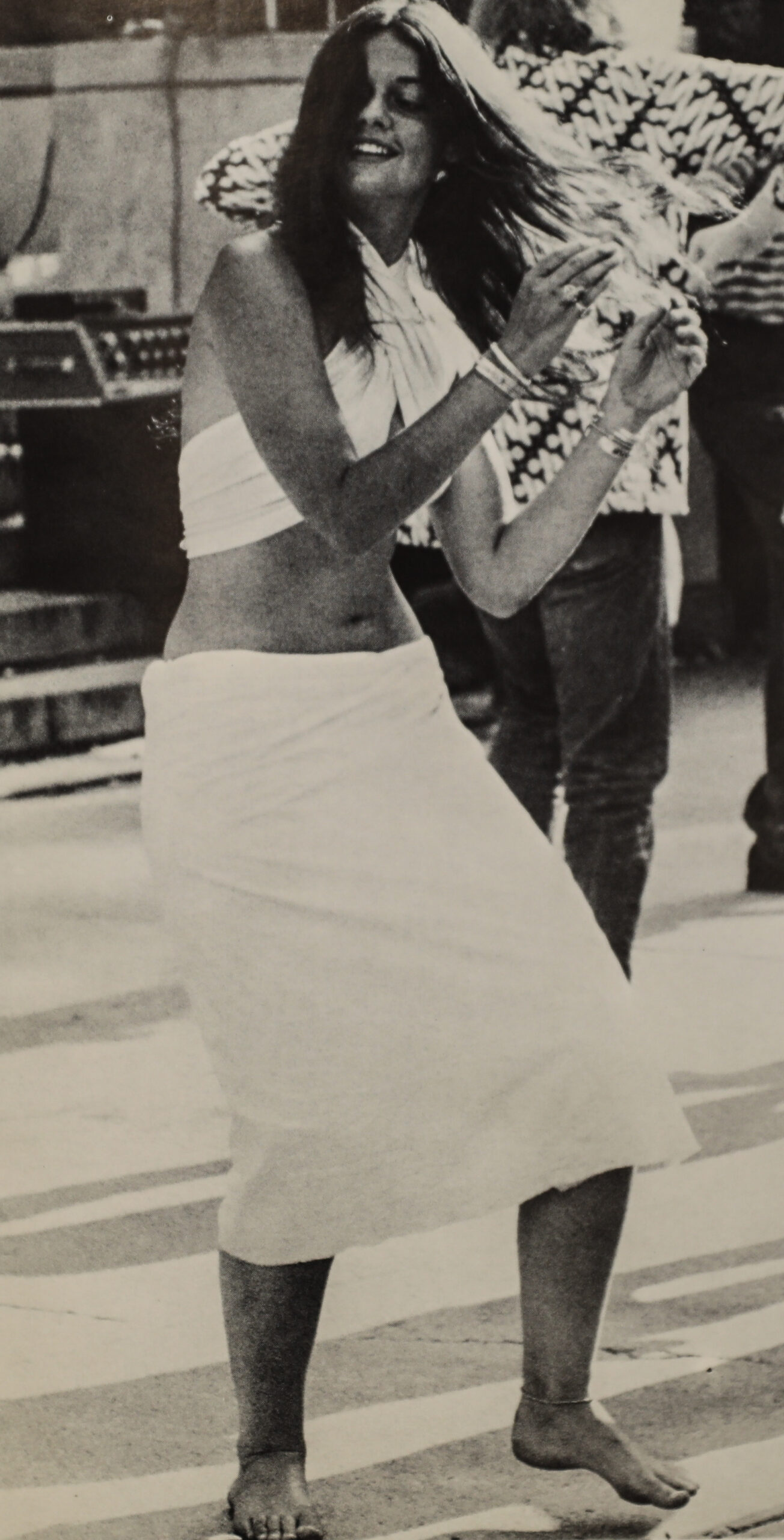
Collectively, the staff decided to remove color from the yearbook and use only black and white images. The only visible hue would be a deep red cover to signify the lifeblood of the University of Michigan. Since stark scenes of the war and international events kept bombarding us, we decided to include AP Wire photos from The Flint Journal, The Grand Rapids Press, and The Ann Arbor News along with local pictures. In addition to current events, we wanted to show the softer side of Ann Arbor at play with music, dance, and sports.
In the layout, we juxtaposed hippies with hockey players, BAM with blues singers, and “Madame Butterfly” with the Michigan Marching Band. Our goal was to create a partnership of scenes on and off campus. The boldest move we made was to eliminate all the Greek fraternities and sororities. Breaking this tradition proved difficult, but we agreed to abandon yearbook convention.
Working on the Michiganensian consumed my senior year. After painstaking photo selection, copy editing, and layout decisions, it was time to send the book off to the publisher. I awaited the finished product with a mixture of anticipation and apprehension. Would students accept and like the new yearbook? When the shipment finally arrived in May, we tore the boxes open like Christmas packages.
As editor, my job also included marketing. I set up a table on the Diag each day to promote sales. One spring afternoon, a woman stooped with age approached me. She introduced herself as an alum from the class of 1913 and asked if she could take a look at the new yearbook. I handed her a copy and watched her move into the shade of a nearby tree. As she began to leaf through page by page, her wrinkled face betrayed no reaction.
I was getting nervous. Had she seen the nudes, the pot smokers, the peace symbols? I sensed this sweet little old lady was about to rip me in half for toying with a sacred Michigan tradition. I braced myself for the worst. After careful study, she walked back over to the table and looked me straight in the eye.
“This is the best yearbook this university has ever had.”
That single sentence continues to carry me through my journalism career. Since graduation, I have written a book, film and video scripts, and articles for newspapers and magazines. Every time I struggle with self-doubt or risk-taking, I recall and take strength from those words of affirmation unexpectedly given that spring day on the Diag.
Joey Porcelli, ’71, is an author and journalist. She hails from Golden, Colorado.