
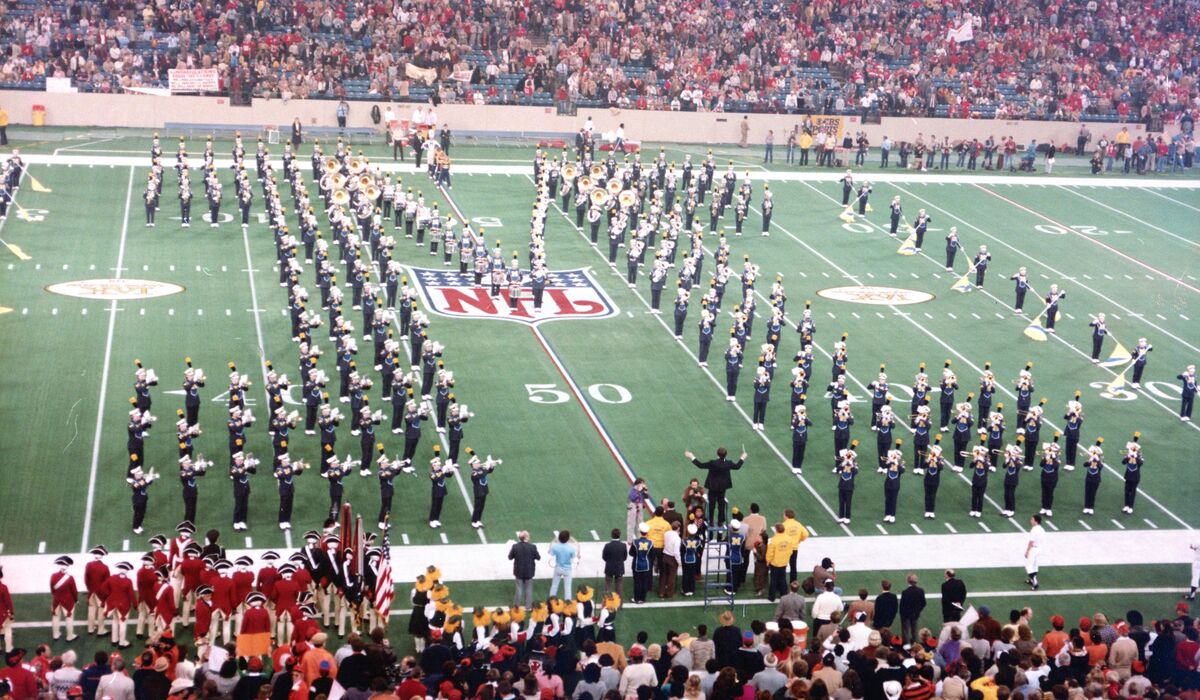
The Super Bowl is one of the United States’ iconic sports traditions, and the NFL’s championship has naturally intersected the Wolverine football tradition in the athletes, coaches, staff, and fans that have built their lives around the sport. This also includes the esteemed Michigan Marching Band (MMB), which performed at Super Bowl VII on Jan. 14, 1973, and Super Bowl XVI on Jan. 24, 1982.
When the Los Angeles Memorial Coliseum hosted the first inter-league AFL-NFL World Championship Game in 1967 — retroactively recognized as Super Bowl I, following the 1970 merger of the leagues into the modern NFL — ceremonies and musical performances came baked into the idea of this ultimate pro football contest. Marching bands from the University of Arizona and Grambling College performed alongside trumpeter Al Hirt, establishing a tradition of collegiate accompaniment for the early years of the event.
The MMB was tapped for the 1973 game between the Miami Dolphins and the Washington, D.C. team, held in Los Angeles. The pre-game ceremonies were a tribute to the Apollo 17 lunar mission, with the crew of astronauts present and the MMB providing music. The band was also featured in the halftime performance alongside jazz musician Woody Herman, singer Andy Williams, and singers from Citrus College of Florida. The theme, “Happiness Is,” included the MMB performing drill routines to songs such as “Put on a Happy Face” and “This Land is Your Land.”
The MMB returned to the Super Bowl stage in 1982, as the San Francisco 49ers faced off against the Cincinnati Bengals at the Silverdome in Pontiac, Michigan, though the band’s performance was limited to pre-game ceremonies, including an untelevised playing of the Canadian national anthem.
As the NFL and the Super Bowl grew into titans of U.S. popular culture and the economic landscape over the 1990s and to today, big-name musical artists such as Michael Jackson, Madonna (a former Wolverine), U2, Prince, Beyoncé, Kendrick Lamar, and Bad Bunny became the headline acts of increasingly spectacular halftime shows. Collegiate marching bands, however, continue to play a part; for the 2024 Super Bowl halftime, Jackson State University’s Sonic Boom of the South performed alongside Usher and Alicia Keys. There may yet come a day that the Wolverines return to the Super Bowl’s performance spotlight.
Gregory Lucas-Myers, ’10, is the senior associate editor of Michigan Alum.