Introduction
There are many reasons for embarking on a career change. You’re feeling the effects of boredom, burnout from your responsibilities, underappreciation for what you bring to your organization, and/or not utilizing your strengths at work. These feelings and circumstances are normal! The reality is this: today’s workforce climate is conducive to career changes.
While there can be several catalysts for a career change, they’re commonly grouped into two categories: reasons pushing you to a pivot and pulling you to a pivot.
PUSH: What is nudging you out of your current position?
External Reasons:
- Unanticipated layoffs related to downsizing or unexpected changes in your industry
- If working in the nonprofit or public sector, a lack of funding for your position
- Limited opportunities for growth within the organization
Internal Reasons:
- Wonder/curiosity about how your skills and experience translate to other industries
- Transitioning to a new phase in your life
- New social or familial responsibilities that demand your attention
PULL: What is propelling you to a new position?
- A position that aligns with your long-term career goals and aspirations
- New demand in a different industry for people with your skills
- The opportunity to work and reunite with previous colleagues in a different sector
Career Change Realities
When assessing the viability of a career change, be aware of some common realities:
- You may not have the necessary skills to be effective in a new role.
- The pivot you’re looking for might be too much, too soon.
- There might be low demand in your prospective job market.
There may be situations where you’re simply not competitive for a role because of a skill gap.
- Situation: “I have an intermediate understanding of Excel, but this industry requires full fluency in Excel.”
- Solution: Take a four-week program that elevates your Excel skills and puts them in a place for success. From there, ensure your resume reflects this upskilling.
There may be situations where the job you want is simply out of reach without a bridge pivot.
- Situation: “I currently help manage public relations for several mid-sized businesses and want to work in finance.”
- Solution: Seek a job in public relations at a bank or financial firm, and then look for opportunities in the larger world of finance.
- Situation: “I currently work in communications for a large university but want to get into hospitality.”
- Solution: Seek a job in communications for a resort, hotel, etc., and then look for opportunities in the larger world of hospitality.
Ask yourself: what’s this industry’s outlook? Is there a demand for people like me? Key tips:
- Use hiring market trackers like Layoffs.fyi and Jobscan.
- Search for your dream role on a large job board such as Indeed. Finding 10 roles that match what you aspire to in a fairly easy fashion indicates a demand for that role.
- Review our Market Analysis Guide for more information on this topic.
Bridge Pivot
If you’re looking to make a significant career change, a bridge pivot allows you to take a role similar to your current one, but in a position that helps you gain the necessary exposure and build the required skills for your intended career change.
What Does This Look Like for My Resume?
Focus on Skills
- If the job posting heavily emphasizes a skill you have experience with, ensure that skill is near the top of your resume.
- Ensure your resume highlights any related certifications.
Reframe Your Identity
- Use broader terms such as “education practitioner” or “financial specialist” if trying to pivot within those industries instead of more niche terms like “first-grade teacher” or “accounts payable manager.”
Consider the overall format of your resume. While a reverse chronological format is standard — where experience is listed by roles, with your most recent position first — career changers may consider using a functional format. A functional format resume highlights your transferable skills first, grouping your experience under categories of skills with roles listed toward the bottom. The functional format helps recruiters and hiring managers more easily see that the breadth of your knowledge, often across various roles, has prepared you with the skills necessary for the job you’re seeking. Don’t forget that both resume formats should still utilize the ACTION-CONTEXT-RESULTS framework when describing your experience.
*Our Resume Guide includes an example of a resume in a functional format.
What Does This Look Like for My LinkedIn Profile?
Generally speaking, your resume and LinkedIn profile will inform each other and look similar. Keep these items in mind as you embark on a career pivot:
- Like you would with your resume’s professional summary, when putting together your LinkedIn “About Me” section, focus on terminology relevant to the jobs you’re searching for.
- Ensure your certifications and skills are up to date in your profile.
- Update your “Open to” status to “Finding a new job.”
- List out your professional experience with ACTION-CONTEXT-RESULTS language.
- Make your header forward-facing — “Aspiring Program Director” or “Aspiring Financial Planner” — to ensure recruiters can find you using their search terms.
Networking for the Career Change
Building out and leveraging your network is crucial in any job search, especially for those looking to make a career change. You want to build meaningful connections with people in the industry you’re looking to enter. Not only can these contacts offer helpful guidance and advice, but once you’ve established a rapport, you may ask them to serve as referrals for open positions. Remember, you want to think about quality, not quantity here.
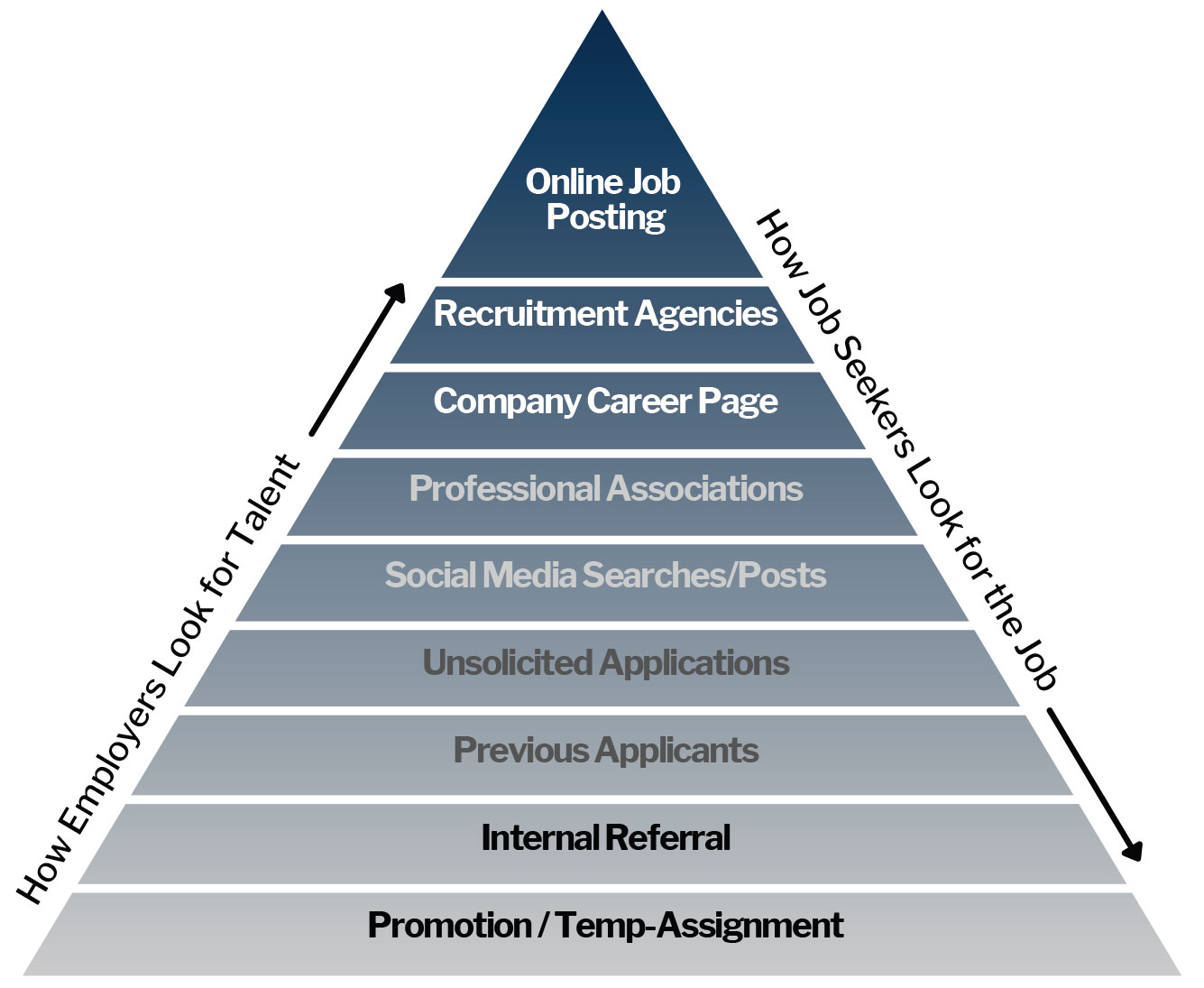
As you assess the positions you’re interested in, understand that employers place more value on candidates they know from an internal referral or previous applications. Despite this, most job seekers make the mistake of submitting many job applications online without prior contact, relationship, or connection within that company or organization. This is illustrated below.
Three Steps For Networking as a Career Changer
1. Search for Contacts
- Identify the industry you want to work in and the specific role you hope to land. From there, identify people who occupy that role or serve as supervisors.
- Look for people who have made a career pivot to the industry you are targeting.
- Don’t be afraid to contact current colleagues who may be able to speak to your applicable strengths in your targeted industry.
2. Reach Out
- Do you have a shared career trajectory with the person you are contacting? Are they a Michigan alum? Do they add value and guidance to your career pivot? These are reasons for reaching out!
- Prepare a succinct email/LinkedIn message asking for a few minutes of their time to learn more about their experience in the role/industry.
- Review our Approach Emails and Messages Guide for templates to get you started.
3. Connect Over an Informational Interview
- Informational interviews are key in gathering information to ensure a field is right for you.
- Ensure you ask relevant and informed questions focusing on trends within the industry, insights on what they’ve learned in their role or about the industry in general, advice on what you should be doing, resources for professional growth, and assignments or projects they have found valuable or recommend (upskilling, book recommendations, etc.). You can remember this with the acronym “TIARA” — Trends, Insights, Advice, Resources, and Assignments — as developed by career expert Steve Dalton in “The 2-Hour Job Search: Using Technology to Get the Right Job Faster.”
*View our Networking Guide to explore these concepts further.
The Cover Letter in a Career Change
- Address the gap in your resume or the reason for a career change. Why were you out of the workforce? Why are you shifting from role “A” to seeking a role in “Z”?
- Have you done any upskilling (e.g., learning a new language or completing a technical course)?
- Outline a value validation project you’ve completed (see below).
*Explore our Cover Letter Guide for more information on crafting a cover letter.
Value Validation Project
A value validation project is a term developed by Cultivated Culture founder Austin Belcak to describe a deliverable that helps demonstrate your skills to an influential person at the company or organization you want to work for. Offering such a project can help you stand out from other traditional applicants and clearly articulate your value. Additionally, it’s especially beneficial to nontraditional applicants because it demonstrates you know this new industry and can be a self-starter.
Example One
Mason left his job in hospitality six years ago to care for his family. While away, Mason volunteered for his children’s school as a fundraiser. He is now interested in applying for a full-time development/fundraising position at a nearby college. Using this experience, Mason can create a value validation project centered around an outreach and fundraising campaign, demonstrating his ability to think through marketing, event planning, volunteer management, and programming.
Example Two
Sally works in international relations and wants to shift into finance. Sally upskilled by taking two finance courses through Michigan Online to prepare for this shift. After identifying an open position that manages finances for key projects in a specific geographic area that she has experience with, Sally can offer her advice on reducing expenditures within that part of the world. Providing her potential employer with an analysis of the region and outlining areas for cost savings and increased revenue flows will be a beneficial value validation project.
Branding for a Career Change
You’ll need to adjust your outward “brand” when making a career change. This is your opportunity to develop a clear and concise narrative that aligns who you are with where you want to be. Reworking your resume, cover letter, LinkedIn profile, and how you present your professional story is essential to an effective career pivot. Here’s how:
- Think skills rather than educational degrees.
- Think continuous learning with a growth mindset.
- Think about your core competencies.
Three Steps for Effective Personal Branding
1. Identify Keywords
- Look up a job posting you are interested in.
- Copy and paste the job description and qualifications into a word cloud program.
- Ask what words and phrases are commonly emphasized and utilized. Am I familiar with these skills? Do I already have these skills?
- Move forward with these keywords and phrases in mind.
2. Prioritize Keywords
- Use the common keywords and phrases you identified in your resume and LinkedIn profile. Focus on including them in your headline, professional summary, and experience.
- Your professional summary on your resume and “About” section on your LinkedIn profile are your opportunities to drive home these keywords (and also a place to demonstrate your clear writing skills, professionalism, and personality).
3. Incorporate Keywords
- Ensure these keywords are used in your external communications with potential employers and colleagues.
- Use simple, easy-to-understand keywords you are comfortable with.
- Remain authentic — don’t go out of your way to use them as buzzwords.
Interviewing During a Career Change
Whether it’s the first, second, or third round of interviews with a company or organization, expect a question on the gap in your resume or the shift in role/industry. If returning to the workforce after a break, feel free to address why you exited the workforce on a personal level. Let them know if you helped raise a family or cared for a family member.
From there, it is good to address any upskilling you have done during your time away from work. For example, you may have learned a new language, developed your Excel skills, or mastered coding. You may want to address what you enjoyed during your previous role(s) and how this new position reunites you with the things you liked. For example, if you enjoyed putting together annual reports for your nonprofit’s board, that is relevant for putting together quarterly reports for your new company.
*Our Interview Guide explores these concepts in greater detail.
Negotiating During a Career Change
When negotiating after landing a job offer, don’t forget to do these simple, yet effective, things:
- Articulate your value. Describe how your experience will provide value to your new team and organization.
- Talk about how you plan to take the skills you acquired from your previous roles and apply them to your newly anticipated projects.
- Advocate for yourself. Just because you’re changing industries or roles doesn’t mean you don’t bring value to the table or that your previous experience is negated. Don’t accept a low salary package that doesn’t align with what you believe is fair.
- Do not minimize the soft skills and perspective gained from taking time off.
- Utilize tools like Salary.com or Glassdoor to get an idea of a fair entry point in your discussion — just because you’re entering a new field doesn’t mean you should accept entry-level pay.
*Learn more effective strategies to negotiate the salary you deserve in our Negotiation Guide.