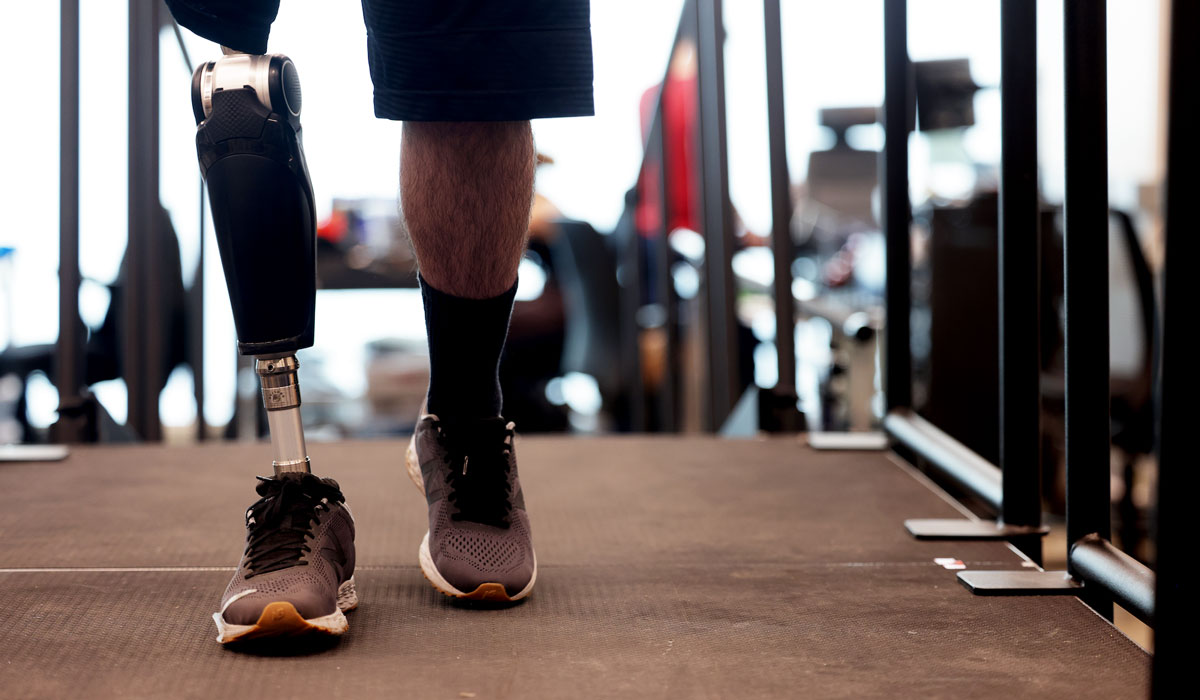
University of Michigan researchers have demonstrated that a commercial robotic leg can improve mobility and reduce strain for amputees, especially when paired with a new U-M control algorithm that better synchronizes movement with the user’s natural gait. The study compared U-M’s adaptive control strategy with the manufacturer’s system, finding benefits for both high- and low-mobility users. The work advances efforts to make powered prosthetics more natural, effective, and accessible for everyday use.