Engineering Every Frame
•
Photo Credit can go here
Rabbits driving cars at breakneck speed, giant pit vipers flying through the air, and a fox wearing a police uniform — these circumstances aren’t uncommon for Amy Tseng, ’18, a technical director for Walt Disney Animation Studios.
In fact, this was a typical day for the U-M engineering alum while working on “Zootopia 2,” the sequel to the animated buddy-cop adventure set in an urban metropolis where animals live like humans. As a technical director, or TD, Tseng helped turn the film’s furry, fast-moving world into something artists could actually create on screen.
“A lot of people say, ‘This must be your dream job.’” To that, Tseng says, “I really do think it is.”
Still early in her career, Tseng has already found her niche in an industry where the intersection of her love of art and talent for tech is not only possible, but essential.
Her path also reflects a larger shift, as rapidly evolving technology continues to challenge what we thought we knew about traditional careers and highlights the importance of multidisciplinary studies.
The Road to Disney
Long before animated characters race through city streets or twitch perfectly rendered whiskers and tails, technical directors like Tseng help build the pipeline that makes those moments feel lifelike.
In animation, a pipeline is the digital workflow that carries a project from concept to the final on-screen image, connecting modelers, animators, effects artists, and lighting teams along the way. TDs maintain and troubleshoot that workflow by writing code, building tools, fixing bugs, automating tasks, and solving technical problems.
As Tseng explains, she “bridges the gap” between artists and software engineers to tackle specific challenges, like determining how a rabbit’s floppy ears should move in the wind during a high-speed car chase.
For TDs, there’s a certain sense of fulfillment that comes with being part of the behind-the-scenes problem-solving most moviegoers never see (and that every frame of the film depends on) — in this case, for a film that went on to become the second-highest-grossing animated film of all time. Since its release, “Zootopia 2” has earned roughly $1.8 billion globally.
“I’ve always had a lot of general interest in what makes animation great,” Tseng says, remembering herself as a “well-rounded kid” who loved performance and music, but was also interested in the science and medical fields. “I think all of that has tied together.”
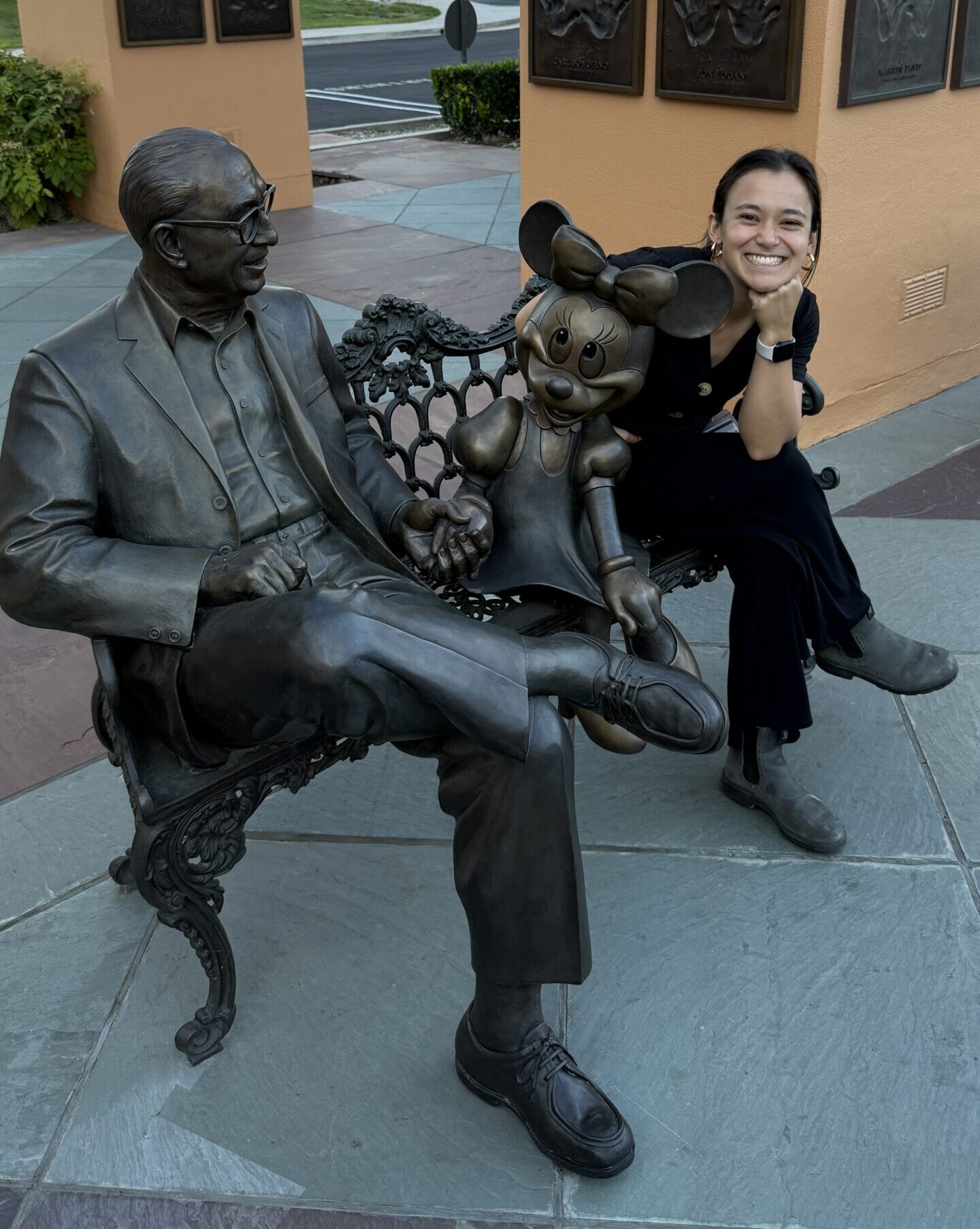
While studying engineering and computer science at the University of Michigan, Tseng made a point of “branching out” through other classes, such as performance art. She was in the Women in Science and Engineering Residence Program (WISE RP), where she was surrounded by women in STEM who were also athletes or involved in student theater.
“It was really empowering to see and understand that … yeah, you kind of can do it all,” she says.
Another turning point came while studying abroad in Hong Kong in 2016, when Tseng met another engineering student whose father was one of Pixar’s first employees.
“It just blew my mind,” she recalls. “I had never met someone who actually worked in [that field]. It just humanized it so much more, and I [realized] that’s actually possible, and I could do that.”
After graduating in 2018, Tseng began working as a software engineer at Nordstrom’s corporate offices. She enjoyed it, but something was missing: it didn’t scratch her creative itch. She didn’t know exactly what she was looking for, “but somehow I stumbled into it and found it,” Tseng says.
“It” happened in 2021, when she met a Walt Disney Animation Studios recruiter at a conference. They were looking for “good problem solvers with good technical fundamentals, little animation experience required” — a perfect fit for Tseng’s skills.
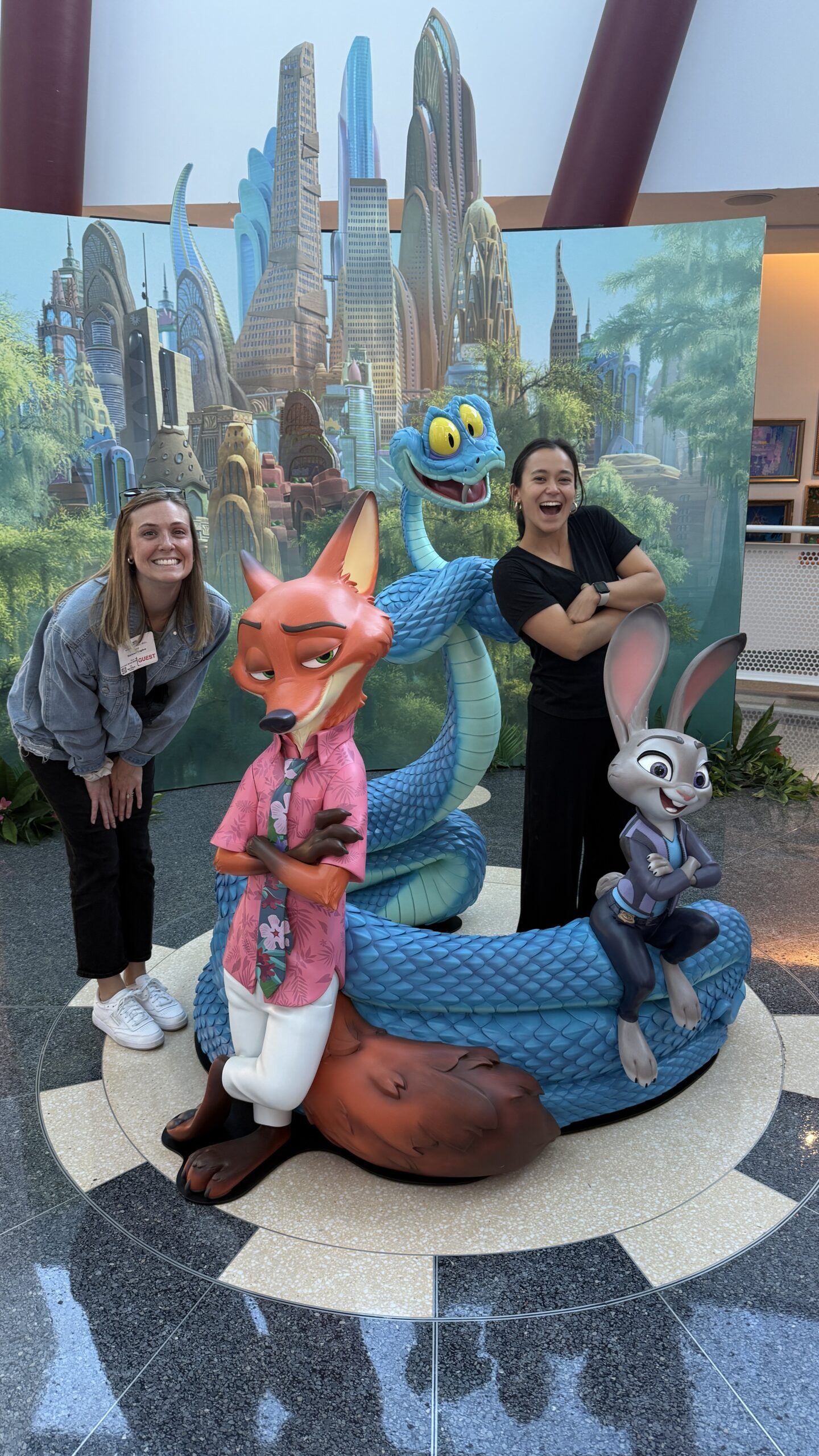
Since joining Disney, Tseng has worked on several projects, including films such as “Wish” and “Moana 2,” as well as the “Zootopia+” series on the studio’s streaming platform. Five years in, and she still remembers the thrill of realizing where her career path led her.
“The first time you see your name on the credits, and you see everyone that it took to make a movie, and you’re a part of it … it’s surreal.”
Pursuing the Unconventional
For students drawn to both technology and art, the challenge doesn’t have to be about choosing between disciplines, but finding opportunities where they intersect.
“I’ve talked to many students who feel like they ‘know’ they should be going into engineering or they should be doing a STEM type of career, but they really just have that urge to do something creative,” Tseng says. “And there are opportunities for that.”
While she didn’t fully see that as a student, her career has shown her how the field blends technical and creative work. “Now I realize that people [who are technical directors] all come from different backgrounds, but we have the shared mentality of, ‘I love computer games and making movies and art, but I’m also pretty good at computer programming,’” she says.
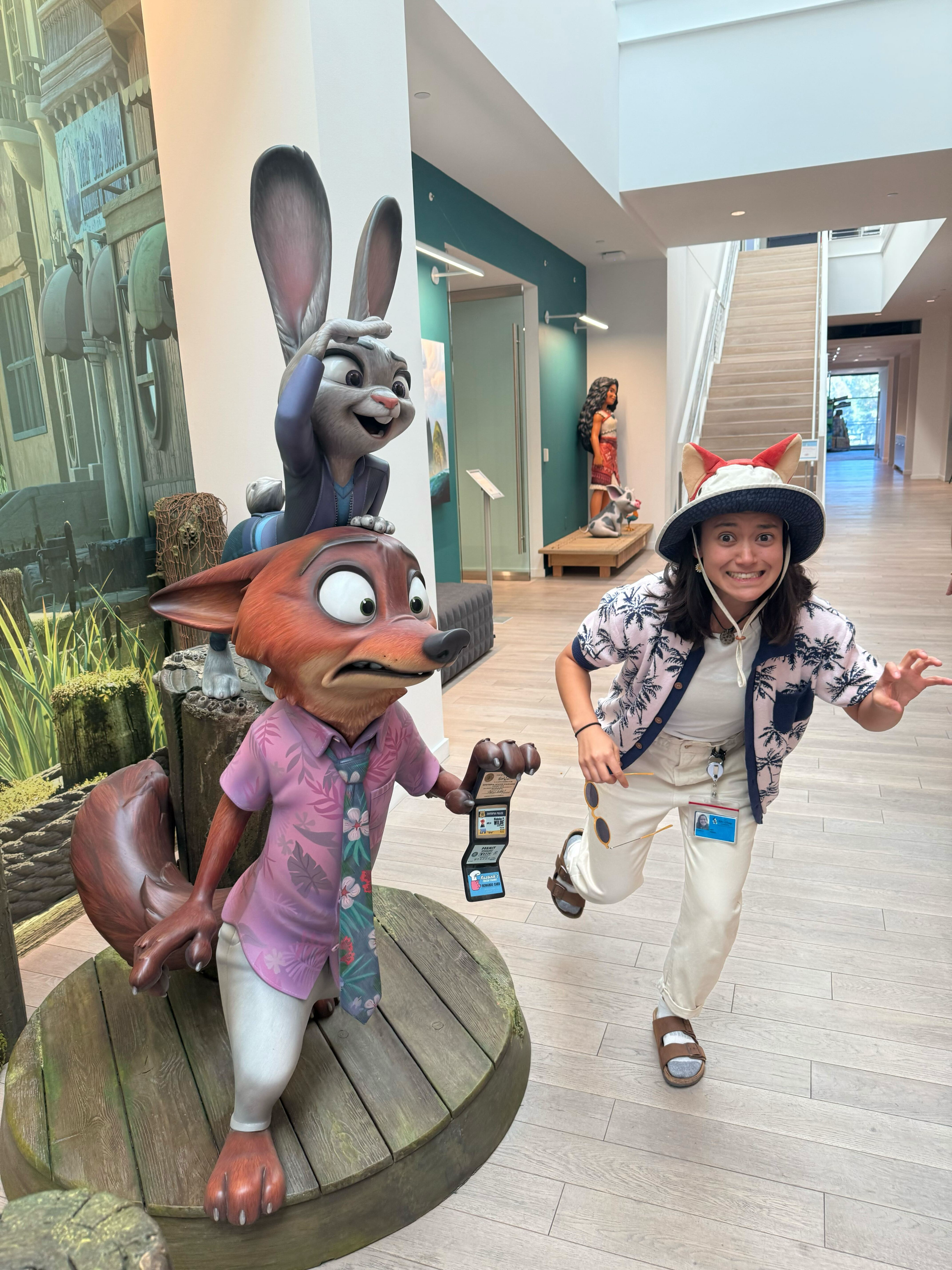
Austin Yarger, ’15, MSE’18, a U-M lecturer in computer science and engineering, has helped make that intersection more visible to U-M students by spearheading new courses such as EECS 298: 3D Technical Art and Animation, which teaches students how to design 3D characters, objects, environments, animations, and more. Unlike many of Yarger’s other courses, EECS 298 has no prerequisites, making it accessible to all students. Amy Tseng worked as a technical director for Disney’s “Zootopia 2,” “Wish,” “Moana 2,” and more. Amy Tseng joined Walt Disney Animation Studios in 2021 after meeting a recruiter at a conference.
The field is often described as technical art, or tech art — the same kind of space where Tseng has built her career, and a skill set Yarger calls “rare.”
After its debut in fall 2025, the course quickly became Yarger’s most popular, attracting students who are aspiring video game artists, architects, mechanical engin- eers, aerospace engineers, environmental artists, and Ph.D. candidates. It also addresses a gap Yarger felt personally when he arrived on campus as an undergraduate in 2011, unable to find a single course focused on animation or 3D modeling.
“I didn’t want that to be the fate of students following me,” he says.
In earlier years, students who were “obsessed and just totally in love with this topic” often had to cobble together their own education — hunting down tutorials, teaching themselves without formal guidance, and building portfolios independently.
EECS 298 : 3D Technical Art and Animation
In EECS 298, students learn how to create 3D characters, objects, environments, materials, armatures, animations, and more in Blender. Then, they explore how to integrate these assets into technical ecosystems such as the Unity game engine, bringing them to life — such as dynamic hair, flowing lava, characters that respond interactively to look at nearby objects, and more.
“The resources, the infrastructure, the courses were not there to support their journey,” Yarger says.
Those students helped reveal a growing demand and need. And as industries like animation, gaming, virtual production, and extended reality continue to grow, so does the need for people who can translate between creative vision and technical execution.
“A lot of the innovation happening today is at the boundaries of disciplines,” Yarger says, requiring people who are “very in love with two things that feel very far apart.”
During the first semester of EECS 298, Yarger says several students came to him with their own version of Tseng’s realization: There was a name, and a path, for the work they wanted to do. Some asked how they could switch majors, telling him, “This is the thing. I found it.”
The response is gratifying, Yarger says, but also bittersweet. Seeing alumni like Tseng thrive makes him wonder what clearer pathways might have been made possible sooner.
“How many additional Amys could we have had if we were a little bit faster on the draw?” he says, thinking of the past 20 years when courses like this weren’t available to students. “Hopefully, we will start to see a little bit more of a pipeline form, and students who love this topic will find us … and eventually be able to make their dreams come true.”
Katie Frankhart is the marketing communications manager for the Alumni Association of the University of Michigan.