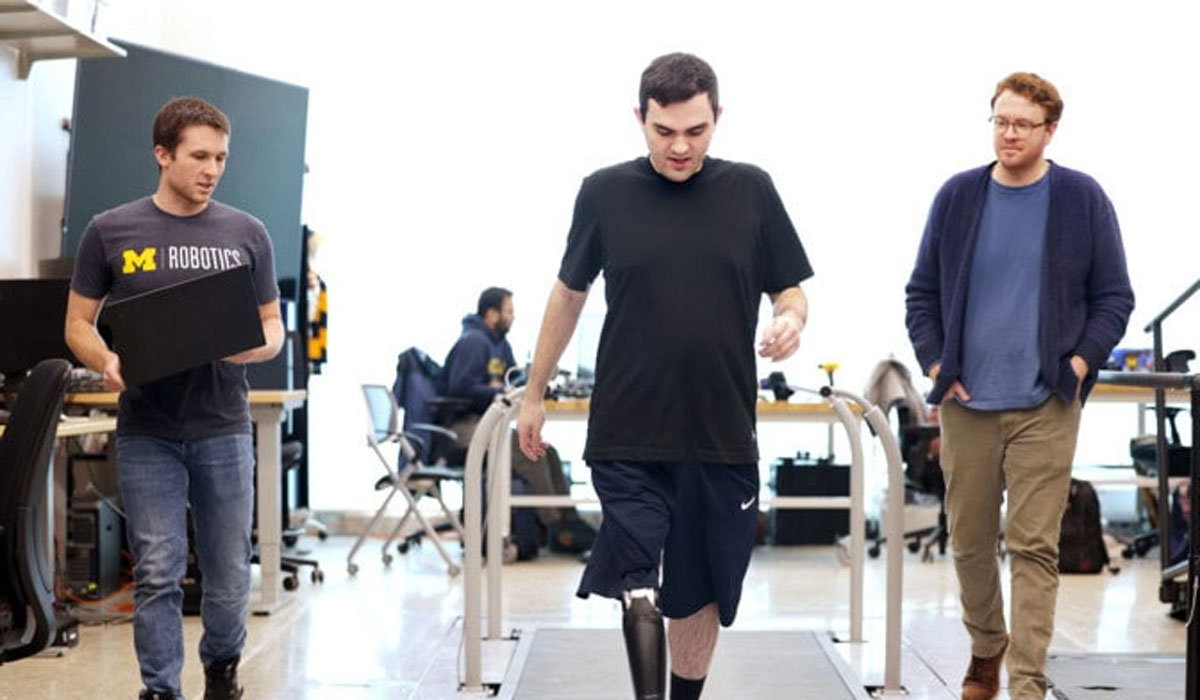
University of Michigan researchers have shown that a powered robotic leg can improve balance, reduce strain, and create a more natural gait for amputees, benefiting both high- and low-mobility users. By applying their new control algorithm to Össur’s Power Knee, the team enabled smoother, more lifelike movement that may help reduce injury risk and fatigue. The findings bring robotic prosthetics closer to everyday use and insurance coverage.